An MBA degree can open doors to high-paying careers, leadership opportunities, and global business exposure. However, in today’s competitive job market, having an MBA alone is no longer enough. Companies now prefer candidates who possess practical business knowledge, leadership qualities, communication abilities, and problem-solving skills.
Also read: What is an MBA?
Modern organizations are shifting toward skill-based hiring, where employers focus more on what candidates can actually do rather than just their academic qualifications. Whether you want to work in a multinational company, become a consultant, or launch your own startup, developing the right MBA skills is essential for long-term success.
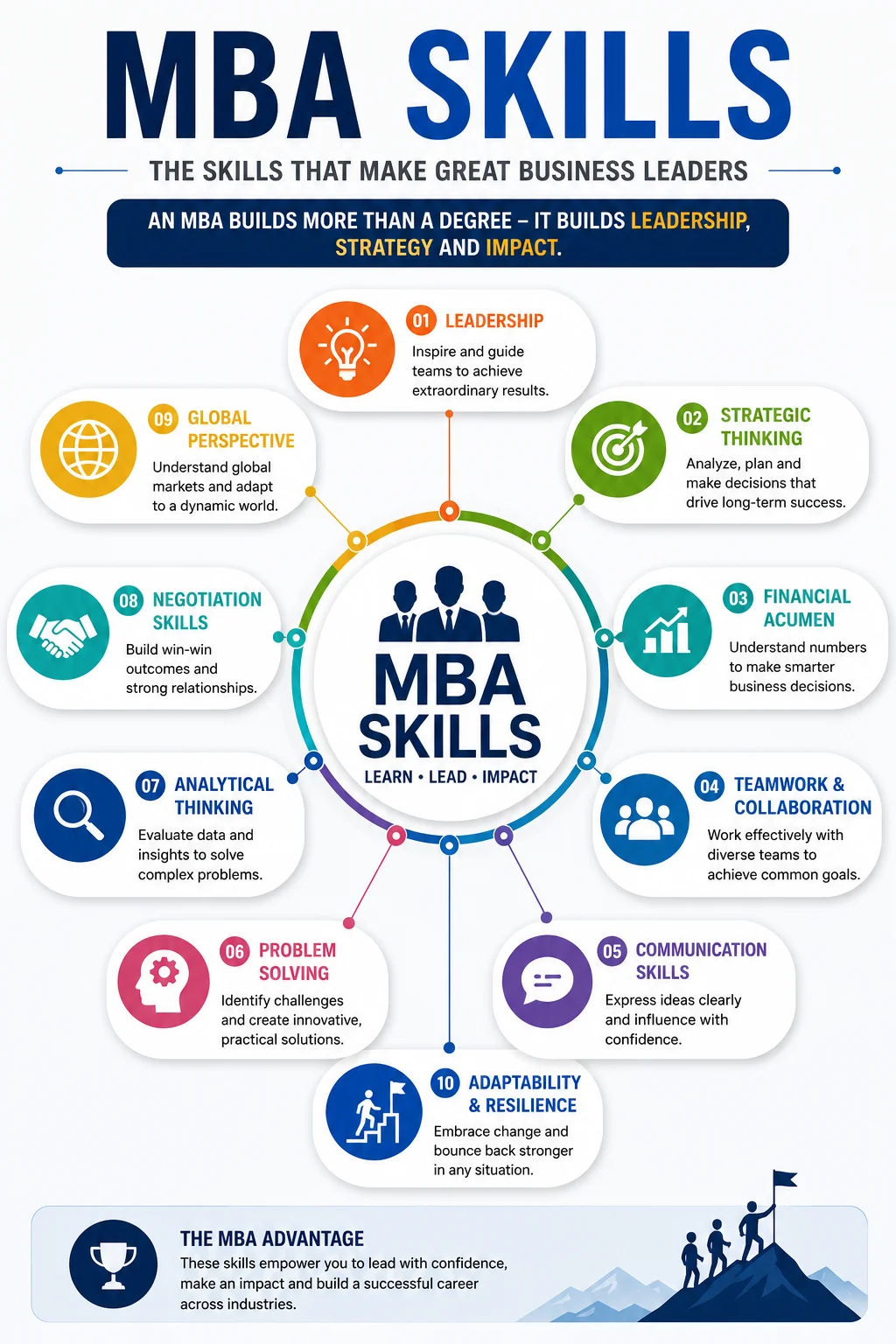
From financial management and strategic thinking to networking and adaptability, MBA students must build a combination of technical and soft skills to stay ahead in the business world.
In this article, you’ll learn about the 12 most important MBA skills every student should master, how to develop them, common mistakes to avoid, and the career benefits these skills can bring.
Why Skills Matter More Than an MBA Degree Alone
The MBA job market has become highly competitive. Thousands of graduates enter the workforce every year, but recruiters often select candidates who demonstrate real-world business capabilities instead of relying solely on academic performance.
Today’s employers value:
- Leadership potential
- Communication abilities
- Data-driven decision-making
- Team collaboration
- Problem-solving mindset
- Digital and analytical skills
Internships, business projects, and practical exposure have become just as important as classroom learning. Companies want MBA graduates who can immediately contribute to organizational growth.
Another major factor is digital transformation. Businesses are rapidly adopting AI, automation, analytics, and digital marketing. MBA students who understand modern business tools and technologies gain a significant advantage during placements and promotions.
12 MBA Skills Every Student Must Learn
Both technical skills and soft skills now play a critical role in career success. While technical knowledge helps solve business problems, soft skills improve teamwork, leadership, and workplace relationships.
1. Leadership Skills
Leadership is one of the most valuable skills MBA students can develop. Businesses need professionals who can guide teams, make confident decisions, and motivate employees toward organizational goals.
Strong leadership skills help managers:
- Handle team challenges
- Improve productivity
- Build employee trust
- Manage workplace conflicts
- Drive innovation
Great leaders are not born overnight. MBA students can improve leadership abilities through group projects, student clubs, internships, and event management activities.
Tips to Improve Leadership Skills During MBA
- Volunteer for leadership roles in college events
- Participate in case competitions
- Learn decision-making techniques
- Observe successful business leaders
- Practice accountability and responsibility
Real-world leadership experience during an MBA can significantly improve confidence and employability.
2. Communication Skills
Communication is one of the most essential skills for MBA students because business success depends heavily on clear interaction.
MBA students must develop:
- Verbal communication
- Business writing skills
- Presentation abilities
- Public speaking confidence
Whether attending interviews, pitching ideas, managing clients, or leading meetings, communication directly impacts professional growth.
How MBA Students Can Improve Communication
- Practice speaking English daily
- Read business articles and books
- Improve email writing skills
- Participate in debates and presentations
- Record and analyze your speaking style
Strong communication skills help MBA graduates appear more confident, professional, and persuasive.
3. Strategic Thinking
Strategic thinking allows MBA students to analyze problems, identify opportunities, and create long-term business plans.
Companies rely on strategic thinkers to:
- Understand market trends
- Analyze competitors
- Solve business challenges
- Increase profitability
- Plan future growth
Businesses like Apple, Amazon, and Tesla use strategic planning to maintain competitive advantages and expand globally.
Strategic thinking also improves decision-making under pressure and helps managers align business goals with market demands.
4. Financial Management Skills
Financial knowledge is important for almost every business role. Even non-finance managers need to understand budgets, profits, investments, and business performance.
MBA students should learn:
- Budgeting basics
- Reading financial statements
- Investment concepts
- Profit and loss analysis
- Cost management
Financial management skills help professionals make informed business decisions and avoid unnecessary risks.
For entrepreneurs, financial understanding becomes even more important because startups depend heavily on cash flow management and investment planning.
5. Teamwork and Collaboration
Modern businesses operate through teamwork. MBA students regularly work on group assignments, presentations, and projects, making collaboration skills extremely important.
Effective teamwork involves:
- Working with diverse personalities
- Managing group responsibilities
- Resolving conflicts professionally
- Supporting team members
- Building workplace relationships
Companies prefer employees who can collaborate effectively because teamwork improves productivity and innovation.
Learning how to cooperate with different people also prepares MBA students for multicultural work environments.
6. Time Management Skills
MBA programs are demanding. Students often balance classes, assignments, internships, networking events, and personal responsibilities simultaneously.
Good time management helps students:
- Meet deadlines efficiently
- Reduce stress levels
- Improve productivity
- Maintain work-life balance
- Focus on important priorities
Popular Productivity Methods
- Pomodoro Technique
- Eisenhower Matrix
- Time Blocking
- Daily Task Planning
Students who manage time effectively usually perform better academically and professionally.
7. Networking Skills
Professional networking can create career opportunities that academic qualifications alone cannot provide.
MBA students should actively build relationships with:
- Professors
- Alumni
- Industry experts
- Recruiters
- Fellow students
Platforms like LinkedIn make networking easier than ever before.
Tips for Strong Business Networking
- Attend seminars and business events
- Connect with professionals on LinkedIn
- Engage in industry discussions
- Follow up after meetings
- Build genuine relationships
A strong professional network can help students discover internships, mentorship opportunities, and job openings.
8. Data Analysis Skills
Data-driven decision-making has become a core part of modern business management. Companies now rely heavily on analytics to improve operations, marketing, and customer experiences.
MBA students should understand:
- Business analytics basics
- Excel and spreadsheet tools
- Data visualization
- Market research analysis
- AI and analytics fundamentals
Analytics skills help businesses identify trends, reduce costs, and increase efficiency.
With the rise of artificial intelligence and automation, analytical thinking is becoming one of the most valuable MBA skills worldwide.
9. Negotiation Skills
Negotiation is a powerful business skill that helps professionals secure better deals, salaries, partnerships, and contracts.
MBA students should learn:
- Persuasion techniques
- Client communication strategies
- Salary negotiation methods
- Conflict resolution approaches
Strong negotiators create win-win outcomes that benefit both parties.
Negotiation skills are especially valuable in sales, consulting, management, entrepreneurship, and leadership roles.
10. Marketing and Branding Skills
Every business depends on effective marketing to attract customers and grow revenue. MBA students should understand both traditional and digital marketing strategies.
Important areas include:
- Consumer behavior
- Brand positioning
- Social media marketing
- Content marketing
- Digital advertising basics
Marketing knowledge is useful for both corporate professionals and entrepreneurs.
In today’s digital world, personal branding has also become important. MBA students who build strong professional profiles online often gain better career opportunities.
11. Adaptability and Problem-Solving
Businesses constantly face market changes, economic uncertainty, and technological disruption. MBA graduates must learn how to adapt quickly and solve complex problems effectively.
This skill includes:
- Creative thinking
- Crisis management
- Flexibility in changing situations
- Analytical problem-solving
- Innovation mindset
Adaptable professionals remain valuable even during uncertain economic conditions.
Companies prefer employees who can stay calm under pressure and develop practical solutions during challenges.
12. Entrepreneurial Skills
Entrepreneurship is no longer limited to startup founders. Even corporate companies value employees who think like entrepreneurs.
Entrepreneurial skills include:
- Innovation and creativity
- Risk management
- Business planning
- Opportunity identification
- Strategic execution
A startup mindset encourages proactive thinking and continuous improvement.
Even if MBA students do not plan to launch businesses immediately, entrepreneurial thinking can help them become future leaders within organizations.
How MBA Students Can Develop These Skills
Learning MBA skills requires more than classroom lectures. Students must actively participate in practical activities that improve real-world business understanding.
Here are some effective ways MBA students can develop professional skills:
1. Internships
Internships provide hands-on industry experience and help students understand how businesses operate in real environments.
Benefits include:
- Exposure to workplace culture
- Practical problem-solving experience
- Improved communication and teamwork
- Better placement opportunities
Even short internships can significantly improve confidence and professional readiness.
2. Online Certifications
Online learning platforms offer specialized business courses that help MBA students stay updated with modern industry trends.
Popular certification areas include:
- Business analytics
- Digital marketing
- Financial modeling
- Leadership and management
- Project management
Certifications also strengthen resumes and LinkedIn profiles.
3. Business Case Studies
Case studies improve analytical thinking and strategic decision-making skills.
MBA students can learn:
- How companies solve business problems
- Real-world management strategies
- Competitive analysis techniques
- Leadership approaches used by global businesses
Many business schools use Harvard-style case studies to build practical management knowledge.
4. Group Discussions and Presentations
Participating in discussions improves communication, confidence, and critical thinking.
Students should regularly:
- Join classroom debates
- Present business ideas
- Participate in competitions
- Practice public speaking
These activities improve interview performance and workplace communication.
5. Networking Events
Industry events, webinars, seminars, and alumni meetups help students connect with professionals and recruiters.
Networking activities provide:
- Career guidance
- Internship opportunities
- Industry exposure
- Mentorship connections
Building relationships early can create long-term career advantages.
6. Leadership Clubs and Student Committees
MBA students should actively participate in:
- Entrepreneurship cells
- Marketing clubs
- Finance associations
- Event management committees
These platforms offer leadership experience and improve teamwork skills.
7. Practical Projects
Working on live business projects allows students to apply theoretical concepts to real situations.
Projects help students develop:
- Business strategy skills
- Research abilities
- Data analysis experience
- Problem-solving confidence
Employers often prefer candidates who have practical project experience.
Common Mistakes MBA Students Should Avoid
Many MBA students focus only on academics and ignore skill development, which can negatively affect placements and career growth.
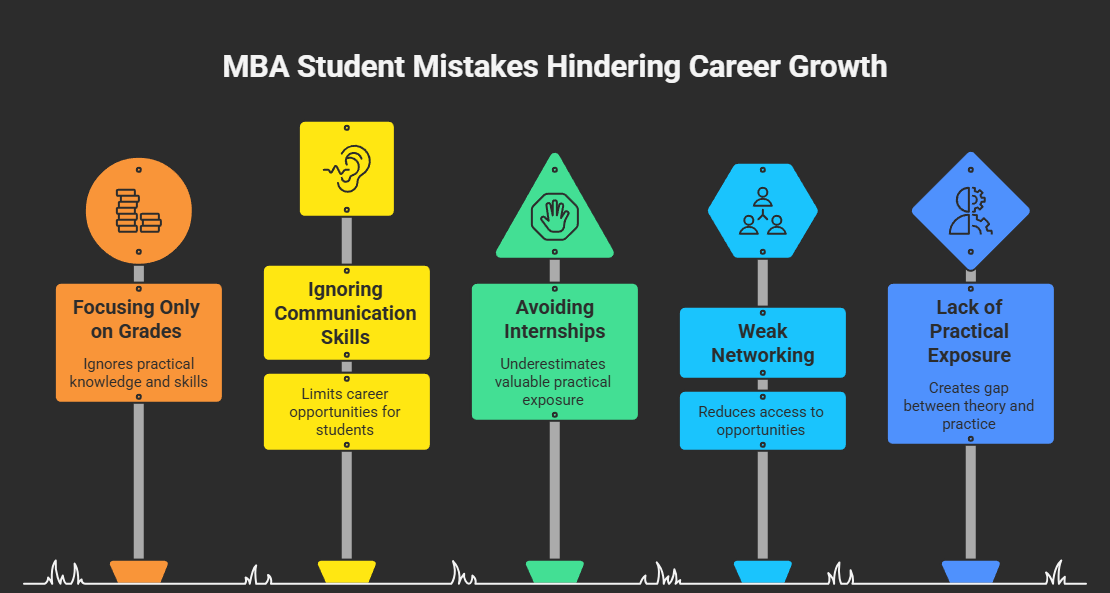
Here are some common mistakes students should avoid:
1. Focusing Only on Grades
Good grades are important, but employers also evaluate practical knowledge, leadership ability, and communication skills.
Students who only study theory may struggle during interviews and workplace challenges.
2. Ignoring Communication Skills
Poor communication can limit career opportunities even for academically strong students.
Students should continuously improve:
- Public speaking
- Presentation skills
- Email writing
- Business communication
3. Avoiding Internships
Some students underestimate the importance of internships. However, internships provide valuable practical exposure that recruiters highly appreciate.
Real industry experience improves employability significantly.
4. Weak Networking
Many MBA students fail to build professional connections during college.
Ignoring networking can reduce access to:
- Mentorship opportunities
- Industry knowledge
- Job referrals
- Career guidance
5. Lack of Practical Exposure
Only relying on classroom learning can create a gap between theory and real business practices.
Students should participate in:
- Business competitions
- Workshops
- Live projects
- Industry certifications
Practical exposure makes MBA graduates more industry-ready.
Best Online Platforms to Learn MBA Skills
Online learning platforms help MBA students gain additional knowledge and industry-specific expertise.
Here are some of the best platforms:
| Platform | Best For |
|---|---|
| Coursera | Business analytics, leadership, finance |
| Udemy | Affordable skill-based courses |
| LinkedIn Learning | Professional development and communication |
| Harvard Business School Online | Advanced business strategy and management |
| Google Certifications | Digital marketing and analytics |
These platforms offer flexible learning opportunities that students can complete alongside their MBA programs.
Career Benefits of Learning MBA Skills
Developing professional MBA skills can significantly improve long-term career growth and employability.
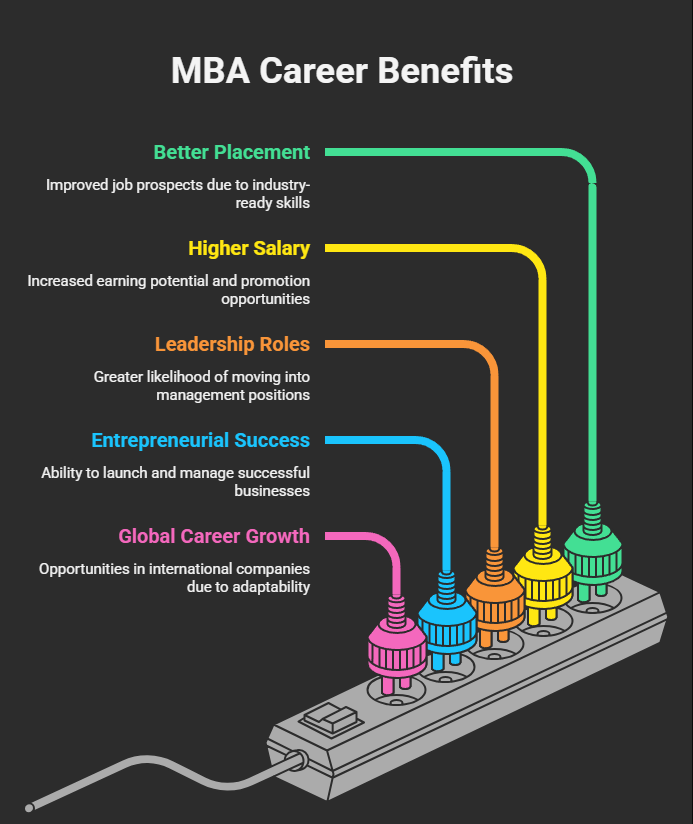
1. Better Placement Opportunities
Students with practical skills often perform better during campus placements because recruiters prefer industry-ready candidates.
2. Higher Salary Packages
Strong leadership, communication, and analytical skills increase earning potential and improve promotion opportunities.
3. Leadership Roles
Professionals with management and teamwork abilities are more likely to move into leadership positions.
4. Entrepreneurial Success
MBA students who develop entrepreneurial thinking can successfully launch startups or manage businesses effectively.
5. Global Career Growth
Companies operating internationally prefer professionals who possess adaptability, communication, and strategic thinking skills.
These abilities help MBA graduates succeed in global business environments.
Summary
An MBA degree can create excellent career opportunities, but long-term success depends on the skills students develop throughout their journey.
The business world is evolving rapidly, and companies now seek professionals who can lead teams, communicate effectively, solve problems, analyze data, and adapt to changing market conditions.
By mastering these 12 essential MBA skills, students can become future-ready professionals capable of thriving in both corporate and entrepreneurial careers.
Instead of focusing only on academic performance, MBA students should actively invest time in internships, networking, leadership activities, certifications, and practical business exposure.
The earlier students begin developing these skills, the stronger their career foundation will become.
FAQs
Which skill is most important for MBA students?
Leadership and communication skills are considered the most important because they impact teamwork, management, decision-making, and career growth.
How can MBA students improve leadership skills?
Students can improve leadership skills by participating in group projects, managing events, joining student clubs, and taking initiative during internships.
Are communication skills necessary for MBA?
Yes, communication skills are extremely important for interviews, presentations, networking, client meetings, and workplace collaboration.
Which technical skills should MBA students learn?
MBA students should learn business analytics, Excel, financial analysis, digital marketing, and basic AI-related business tools.
How do MBA skills help in placements?
Strong MBA skills improve interview performance, increase employability, demonstrate practical knowledge, and help students stand out from competitors.
Can MBA students learn entrepreneurship skills?
Yes, MBA programs provide excellent opportunities to develop entrepreneurial skills through startup projects, innovation activities, networking, and business planning exercises.