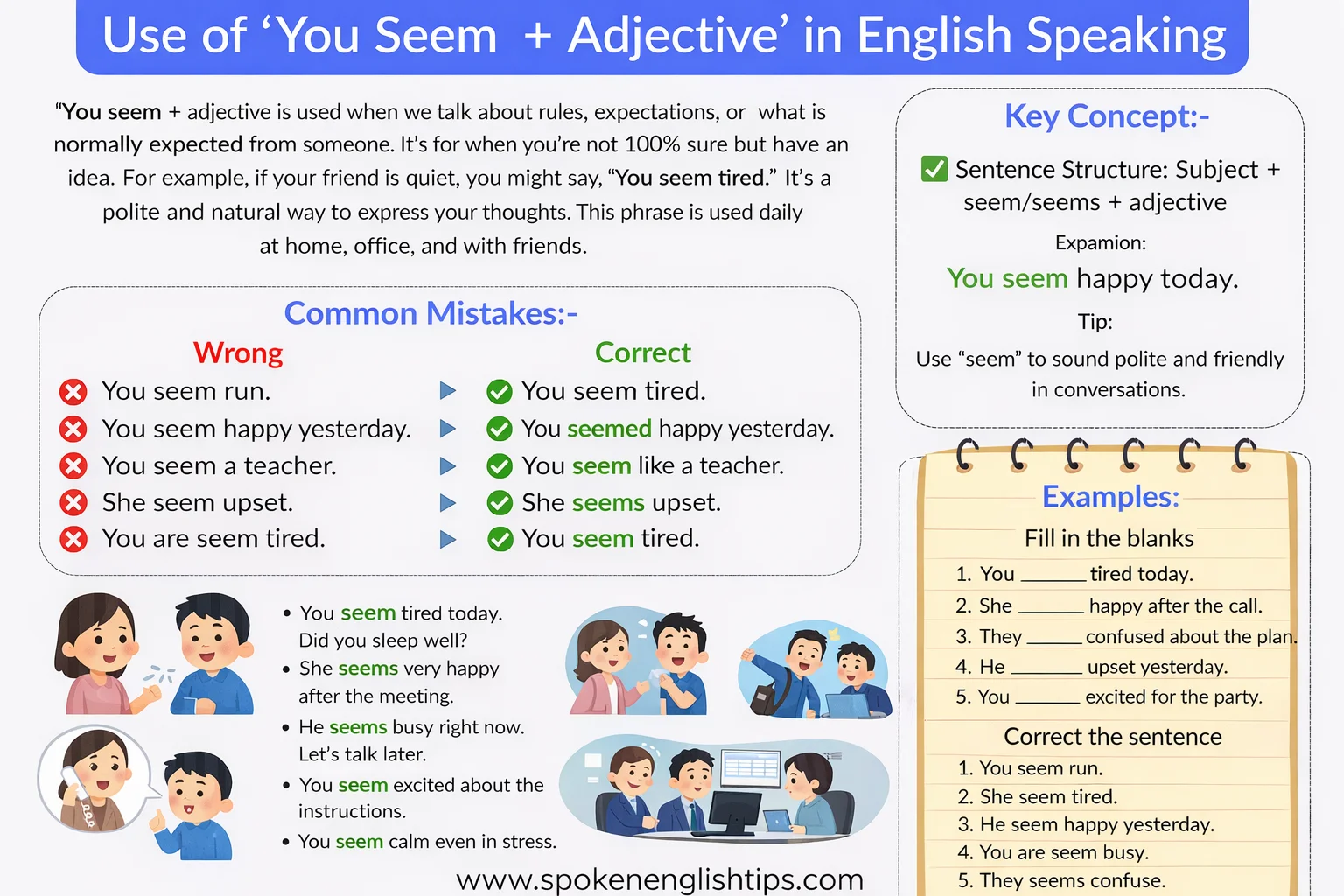
“You seem + adjective” is a very common and useful way to describe how someone looks, feels, or behaves. We use it when we are not 100% sure, but we have an idea based on what we see or hear. For example, if your friend is quiet, you can say, “You seem tired.” It is polite and soft, so it sounds more natural in conversation. People use this structure in daily life at home, office, and with friends. It helps you express your thoughts without sounding too direct or rude.
◎ Important Points
- “Seem” shows an idea or impression, not a confirmed fact
- Always use an adjective after “seem”
- It is softer and more polite than direct statements
- Common adjectives: happy, tired, upset, busy, confused
- Can be used in present and past (seem/seemed)
- Often used in conversations to show care or observation
➤Key Concept
✅ Sentence Structure: Subject + seem/seems + adjective
Example: You seem happy today.
“You seem” is used when you observe something about a person but are not completely sure.
Tip: Use “seem” to sound more polite and friendly in conversations.
➤ Common Mistakes To Avoid
| Common Mistake | Wrong Example | Correct Example |
|---|---|---|
| Using verb instead of adjective | You seem run. | You seem tired. |
| Missing “seem” verb form | You seem happy yesterday. | You seemed happy yesterday. |
| Using “seem” incorrectly with noun | You seem a teacher. | You seem like a teacher. |
| Forgetting “s” with he/she | She seem upset. | She seems upset. |
| Using “is” instead of “seem” | You are seem tired. | You seem tired. |
➤ Examples
- You seem tired today. Did you sleep well?
- She seems very happy after the meeting.
- You seem worried. Is everything okay?
- He seems busy right now. Let’s talk later.
- You seem excited about the trip!
- They seem confused about the instructions.
- You seem upset. Do you want to talk?
- She seems nervous before the interview.
- You seem calm even in stress.
- He seems interested in this project.
➤ Practice Examples
Fill in the blanks
- You ______ tired today.
- She ______ happy after the call.
- They ______ confused about the plan.
- He ______ upset yesterday.
- You ______ excited for the party.
Change incorrect sentence to correct one
- You seem run.
- She seem tired.
- He seem happy yesterday.
- You are seem busy.
- They seems confuse.
Speak this sentence aloud
- You seem very happy today.
- You seem a little worried.
- She seems tired after work.
- He seems excited about the game.
- You seem calm and confident.