Writing a prescription is one of the most important responsibilities of a doctor. A small mistake in a prescription can lead to confusion, delayed treatment, or even harm to a patient. That is why every doctor, whether a medical student, intern, or experienced practitioner, must know how to write a clear, accurate, and professional prescription.
Imagine a patient visiting your clinic with trust and hope. They rely on your knowledge not only to diagnose their condition but also to provide clear instructions for treatment. A well-written prescription helps pharmacists understand exactly what medicine to dispense and guides patients on how to take their medications safely.
In today’s healthcare environment, proper prescription writing is more important than ever. Good prescribing reduces medication errors, improves patient safety, and ensures better treatment outcomes. They also help maintain legal and professional standards in medical practice.
Understanding Prescription Writing
A prescription is a written instruction from a licensed doctor that tells a pharmacist which medication to give a patient and how to use it. It serves as an official communication between the doctor, pharmacist, and patient.
A proper prescription contains several important elements. These include patient information, diagnosis (when appropriate), medication name, strength, dosage, route of administration, frequency, duration, and the doctor’s details.
Step-by-Step Guide to Writing a Prescription
Writing a prescription becomes easy when you follow a structured process.
Step 1: Write Patient Information
Include the patient’s full name, age, gender, and date.
Step 2: Add the Date
Always mention the date when the prescription is issued.
Step 3: Write the Medication Name
Use the generic name whenever possible to avoid confusion.
Step 4: Mention Strength and Dosage
Clearly state the medicine strength, such as 500 mg or 10 mg.
Step 5: Specify Instructions
Explain how and when the medicine should be taken.
Step 6: Include Duration
Mention the number of days, weeks, or months the medication should be used.
Step 7: Add Additional Advice
Provide any important instructions regarding meals, hydration, or precautions.
Step 8: Sign the Prescription
Include your name, qualification, registration number, signature, and clinic information.
A structured approach ensures clarity, professionalism, and patient safety.
The Prompt Template
Patient: [PATIENT NAME], Age: [AGE], Gender: [GENDER], Date: [DATE]
Medicine: [MEDICATION NAME] [STRENGTH] – Take [DOSAGE] via [ROUTE] [FREQUENCY] for [DURATION]. Special Instructions: [INSTRUCTIONS]
Doctor: [DOCTOR NAME], [QUALIFICATION], Registration No: [NUMBER], Signature: [SIGNATURE]
Example Prompts to Try
Below are practical prescription examples that demonstrate different clinical situations.
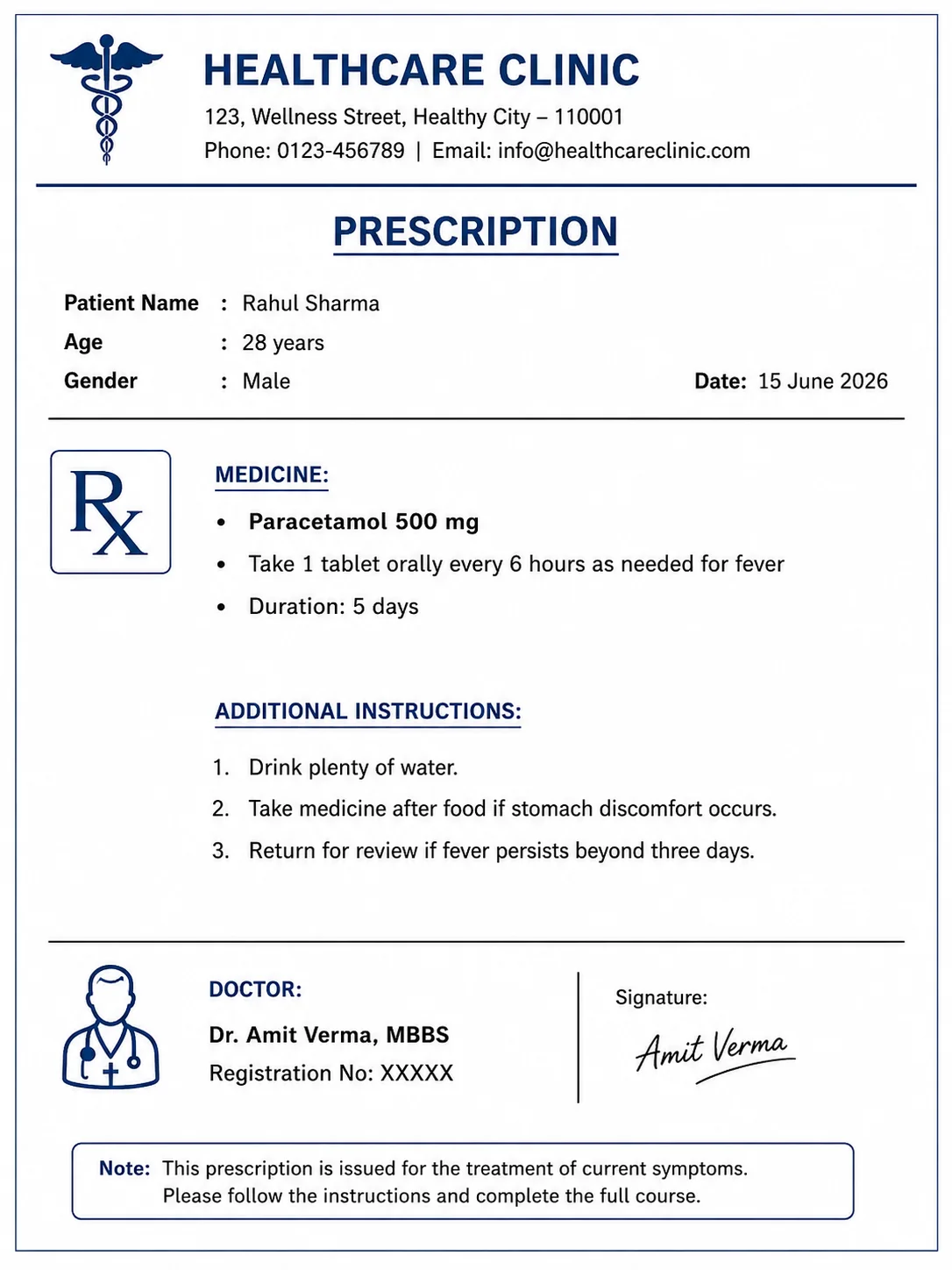
1. Acute Fever and Body Pain
Patient: Rahul Sharma, Age: 28 years, Gender: Male, Date: 15 June 2026
Medicine:
- Paracetamol 500 mg
- Take 1 tablet orally every 6 hours as needed for fever
- Duration: 5 days
Additional Instructions:
- Drink plenty of water.
- Take medicine after food if stomach discomfort occurs.
- Return for review if fever persists beyond three days.
Doctor:
Dr. Amit Verma, MBBS
Registration No: XXXXX
Signature
This prescription is simple, clear, and focuses on symptom relief. It includes dosage, frequency, and duration, helping both the pharmacist and patient understand the treatment plan.
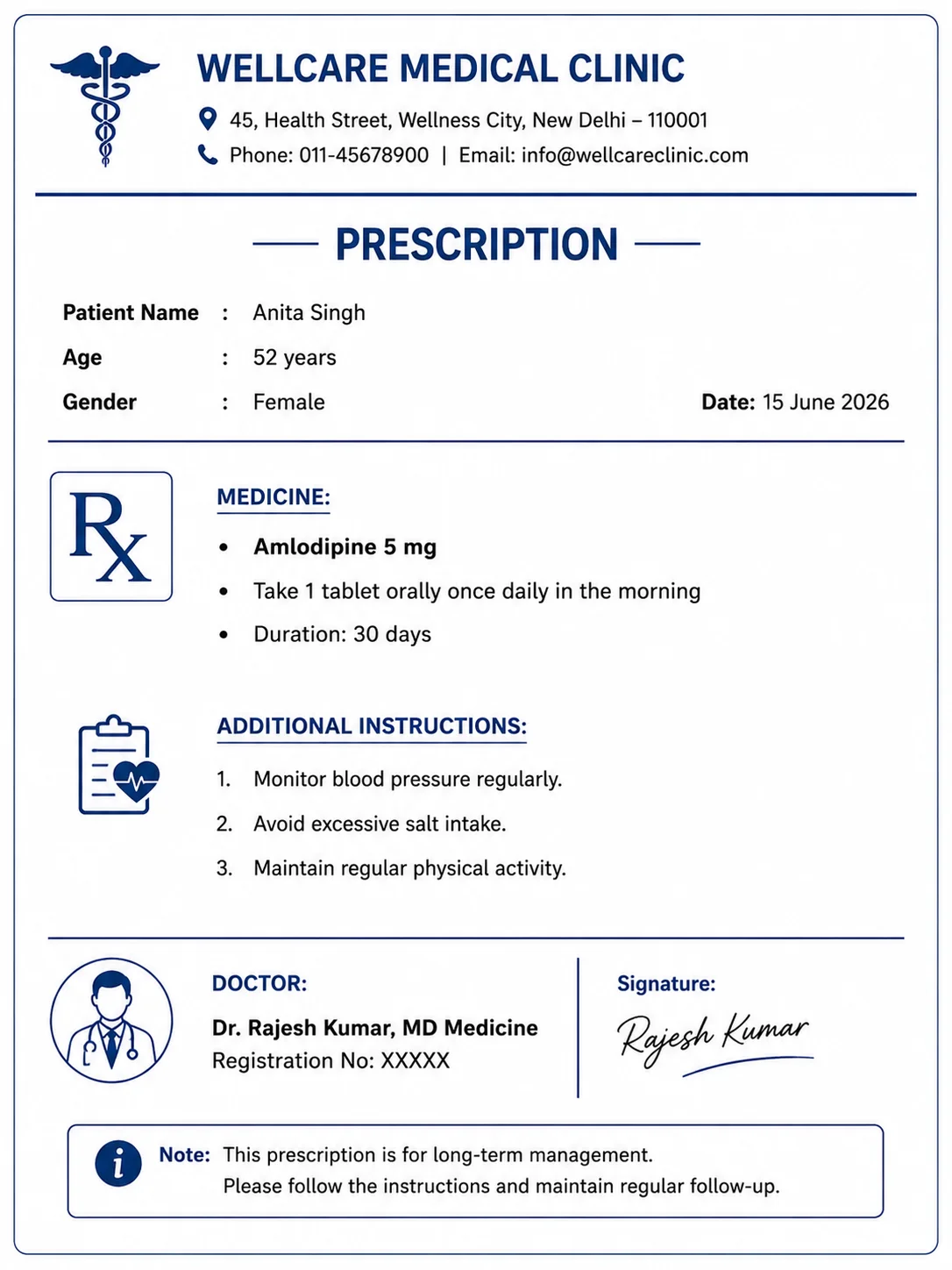
2. Hypertension Management
Patient: Anita Singh, Age: 52 years, Gender: Female, Date: 15 June 2026
Medicine:
- Amlodipine 5 mg
- Take 1 tablet orally once daily in the morning
- Duration: 30 days
Additional Instructions:
- Monitor blood pressure regularly.
- Avoid excessive salt intake.
- Maintain regular physical activity.
Doctor:
Dr. Rajesh Kumar, MD Medicine
Registration No: XXXXX
Signature
This example demonstrates a long-term medication prescription. It includes lifestyle recommendations that support medical treatment and improve patient outcomes.
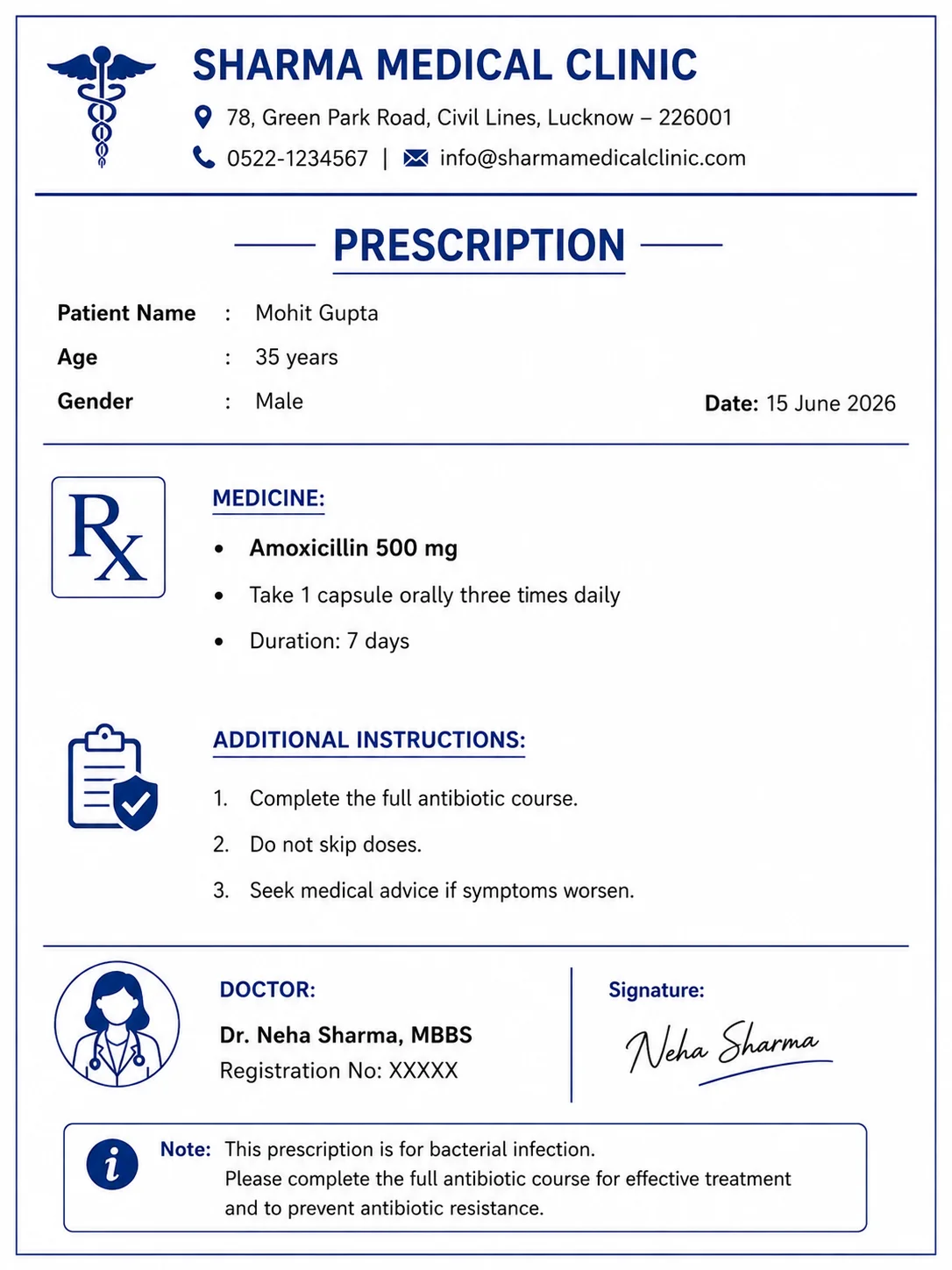
3. Bacterial Throat Infection
Patient: Mohit Gupta, Age: 35 years, Gender: Male, Date: 15 June 2026
Medicine:
- Amoxicillin 500 mg
- Take 1 capsule orally three times daily
- Duration: 7 days
Additional Instructions:
- Complete the full antibiotic course.
- Do not skip doses.
- Seek medical advice if symptoms worsen.
Doctor:
Dr. Neha Sharma, MBBS
Registration No: XXXXX
Signature
This prescription emphasizes antibiotic compliance, which is essential for effective treatment and preventing antibiotic resistance.
Tips for Better Results
- Always write clearly and legibly.
- Use generic drug names whenever possible.
- Double-check medicine strength before signing.
- Avoid unclear abbreviations that may confuse pharmacists.
- Include complete dosage instructions.
- Mention treatment duration clearly.
- Add important patient counseling notes when needed.
- Review the prescription before handing it to the patient.
Conclusion
A well-written prescription is more than just a list of medicines. It is a critical communication tool that ensures patients receive safe and effective treatment. By following a structured format, including all necessary details, and reviewing your work carefully, you can reduce medication errors and improve patient care. Whether you are a medical student or an experienced practitioner, mastering prescription writing is an essential skill that supports professionalism, patient safety, and better healthcare outcomes.
You can use these authoritative sources as references in your article: