
Thinking about getting an MBA, but wondering whether it’s worth your time and money? That’s a sensible question! A degree can be valuable, but only when it supports your career goals.
The benefits of a master’s in business administration extend beyond a better job title. You can learn how businesses work, build useful relationships, and become more confident about making decisions. Here are 21 practical advantages—along with a few things worth considering before you enroll.
What Is a Master of Business Administration?
An MBA (Master of Business Administration) is a postgraduate degree focused on managing businesses and organizations. Students usually study finance, marketing, operations, strategy, and leadership. Some programs also offer specializations, internships, or projects with companies.
MBA programs can suit working professionals, career changers, and aspiring entrepreneurs. However, admission requirements, teaching quality, and career outcomes vary between institutions.
Career and Salary Benefits
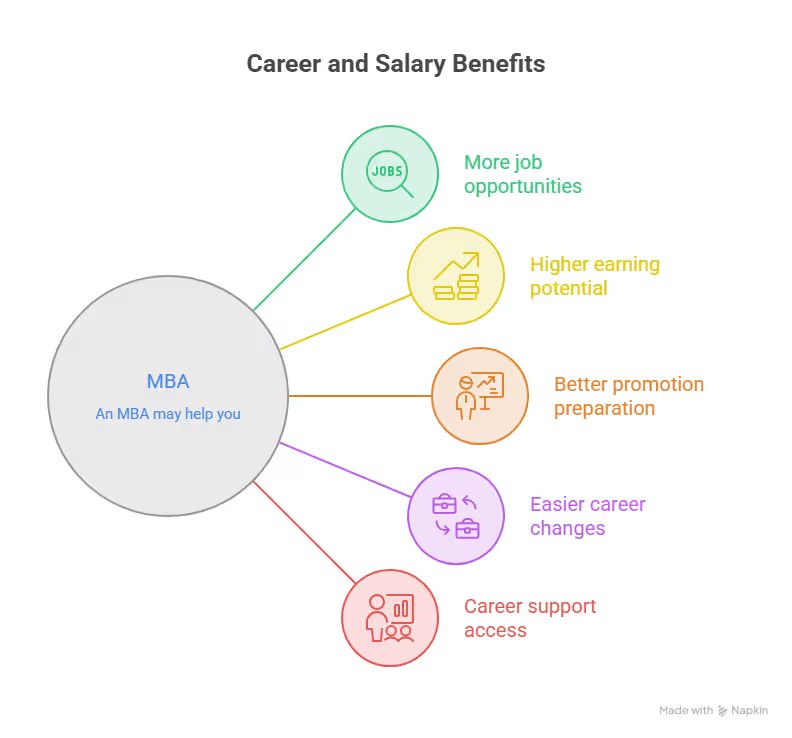
1. More job opportunities. An MBA may help you qualify for positions in consulting, operations, finance, marketing, and general management. Employers still consider your experience and practical skills.
2. Higher earning potential. In its 2026 employer survey, GMAC reported a projected U.S. median starting salary of $120,000 for MBA hires, compared with $72,000 for bachelor’s-level hires. These are recruiter estimates—not guaranteed salaries or proof that the MBA caused the difference.
3. Better preparation for promotions. Studying budgets, strategy, and team management can help you prepare for greater responsibilities. A promotion, though, still depends on your performance and available positions.
4. Easier career changes. Want to move from engineering into product management, or from sales into consulting? An MBA can introduce you to new fields and recruiters.
5. Access to career support. Some business schools provide interview coaching, job fairs, employer introductions, and internship opportunities. Check the school’s actual placement record before applying.
Business and Leadership Skills
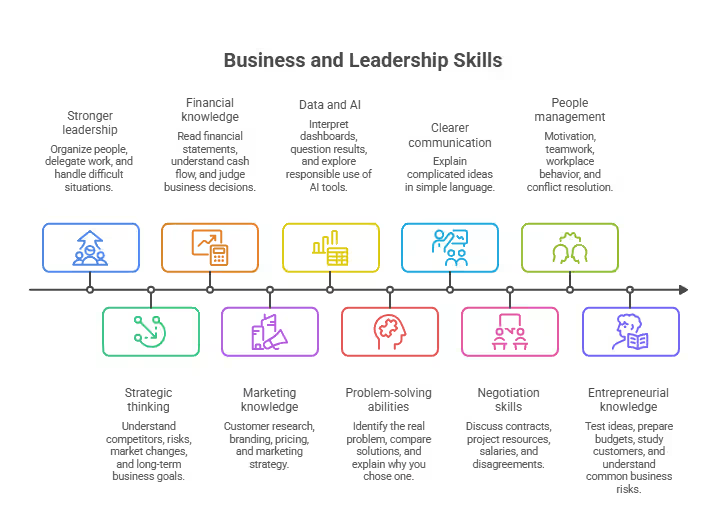
6. Stronger leadership skills. Group projects and leadership exercises give you opportunities to organize people, delegate work, and handle difficult situations.
7. Better strategic thinking. You’ll practice looking beyond today’s problems to understand competitors, risks, market changes, and long-term business goals.
8. Improved financial knowledge. Learn to read financial statements, understand cash flow, and judge whether a business decision makes financial sense.
9. Practical marketing knowledge. MBA courses can introduce customer research, branding, pricing, and marketing strategy—useful even when marketing isn’t your main job.
10. More confidence with data and AI. Business analytics classes can teach you to interpret dashboards and question results. Modern programs may also explore responsible use of AI tools.
11. Stronger problem-solving abilities. Case studies challenge you to identify the real problem, compare solutions, and explain why you chose one.
12. Clearer communication. Presentations, reports, and classroom discussions help you explain complicated ideas in simple language—an important skill for managers.
13. Better negotiation skills. You may practice discussing contracts, project resources, salaries, and disagreements while searching for outcomes that work for both sides.
14. Improved people management. Learn about motivation, teamwork, workplace behavior, and conflict resolution. These skills matter when you’re responsible for other people.
15. Useful entrepreneurial knowledge. Planning to start a business? MBA projects may help you test ideas, prepare budgets, study customers, and understand common business risks.
Networking and Personal Development Benefits
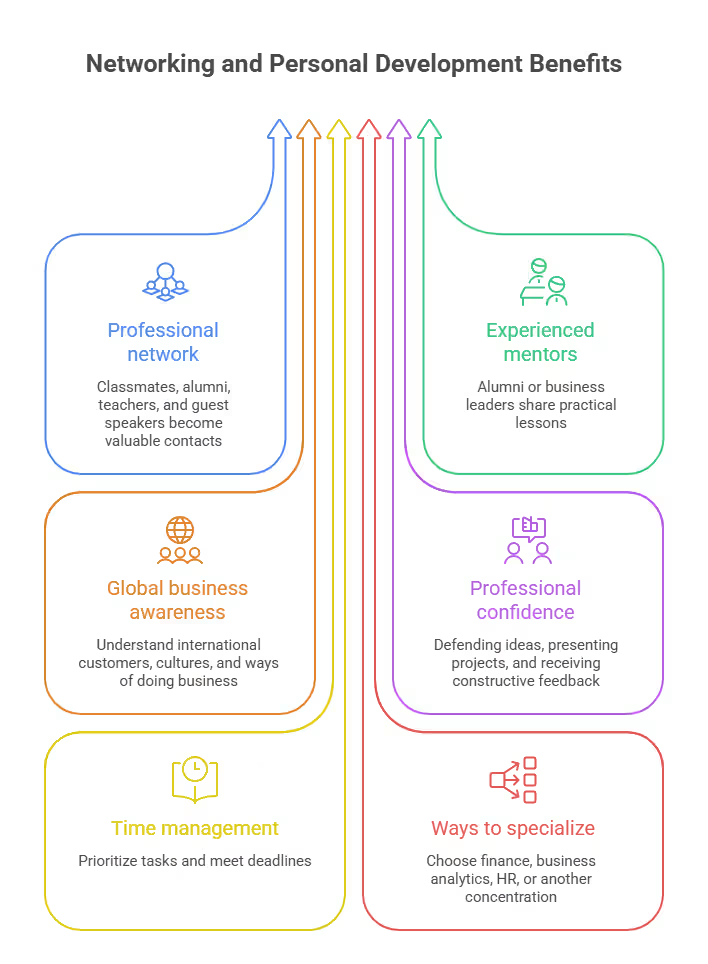
16. A broader professional network. Classmates, alumni, teachers, and guest speakers can become valuable contacts for advice, collaboration, or future opportunities.
17. Access to experienced mentors. Some programs connect students with alumni or business leaders who share practical lessons from their careers.
18. Greater global business awareness. Working with classmates from different countries can help you understand international customers, cultures, and ways of doing business.
19. More professional confidence. Defending your ideas, presenting projects, and receiving constructive feedback can make unfamiliar business situations feel less intimidating.
20. Better time management. Balancing assignments, group work, and possibly a job teaches you to prioritize tasks and meet deadlines.
21. More ways to specialize or study. Depending on the school, you might choose finance, business analytics, HR, or another concentration. Full-time, part-time, and online formats also offer different levels of flexibility.
What Do Employers Value in 2026?
The GMAC Corporate Recruiters Survey 2026, based on 621 recruiters and hiring managers across 39 countries, identified communication, problem-solving, and adaptability as especially important hiring skills. Data analysis and AI-related skills also grew in importance.
That means a useful MBA experience should involve more than memorizing business theories. Look for practical projects, feedback, technology awareness, and opportunities to work with real business problems.
Is an MBA Worth the Cost?
Possibly—but calculate the investment first. Tuition isn’t the only expense. Consider accommodation, travel, loan interest, and income you might lose if you stop working.
Then examine the school’s accreditation, graduate employment reports, median salaries, employer partnerships, and alumni outcomes. Compare those findings with your current salary and realistic career plans.
An MBA may be worthwhile when you need structured management education or access to a particular recruiting network. If you’re exploring business basics, shorter courses or relevant work experience could be more affordable starting points.
Frequently Asked Questions
Is an MBA useful without work experience?
Yes, some programs accept fresh graduates. However, many MBA courses are designed around professional experience, so compare them with master’s in management programs.
Can an MBA guarantee a high-paying job?
No. Salary depends on your location, school, previous experience, industry, and skills.
Is an online MBA valuable?
It can be, especially for working professionals. Verify the institution’s recognition, teaching quality, career support, and outcomes.
Final Thoughts
The biggest MBA benefit isn’t simply adding three letters after your name. It’s learning how to make better business decisions—and knowing people who can help you grow.
Choose a program that fits your career direction, budget, and learning needs. That’s a better reason to pursue an MBA than chasing a degree alone.