Choosing what to do after the 12th standard is like standing at a massive crossroads with many different paths to take. This is one of the most important decisions you will ever make because it sets the stage for your future career and adult life. For many students, the three most popular paths are Bachelor of Arts (BA), Bachelor of Science (BSc), and Bachelor of Commerce (BCom).
However, picking between these three can be very confusing because each one offers something different. You might wonder which degree will give you a better job, which one is the hardest, or which one will help you earn more money. This article is designed to clear up that confusion by explaining the differences between these streams, the career options they lead to, and how you can choose the right one for yourself.
Why Career Choice After 12th Matters
The path you choose after 12th has a long-term impact on your life, affecting your career growth and how much you will eventually earn. If you pick a subject you truly enjoy, you are more likely to have high job satisfaction and feel happy going to work every day. On the other hand, choosing a career only for the money or because someone else told you to can lead to feeling stuck later on.
Many students make the mistake of simply following what their friends are doing, which is often called “peer pressure”. Others might choose a stream just because they got high marks in it, without researching if they actually like the daily work of that career. Some students fail to do proper research and don’t realize that one stream might offer more flexibility than another. It is essential to look at your own strengths rather than just following trends.
Overview of BA, BSc, and BCom
What is BA (Bachelor of Arts)?
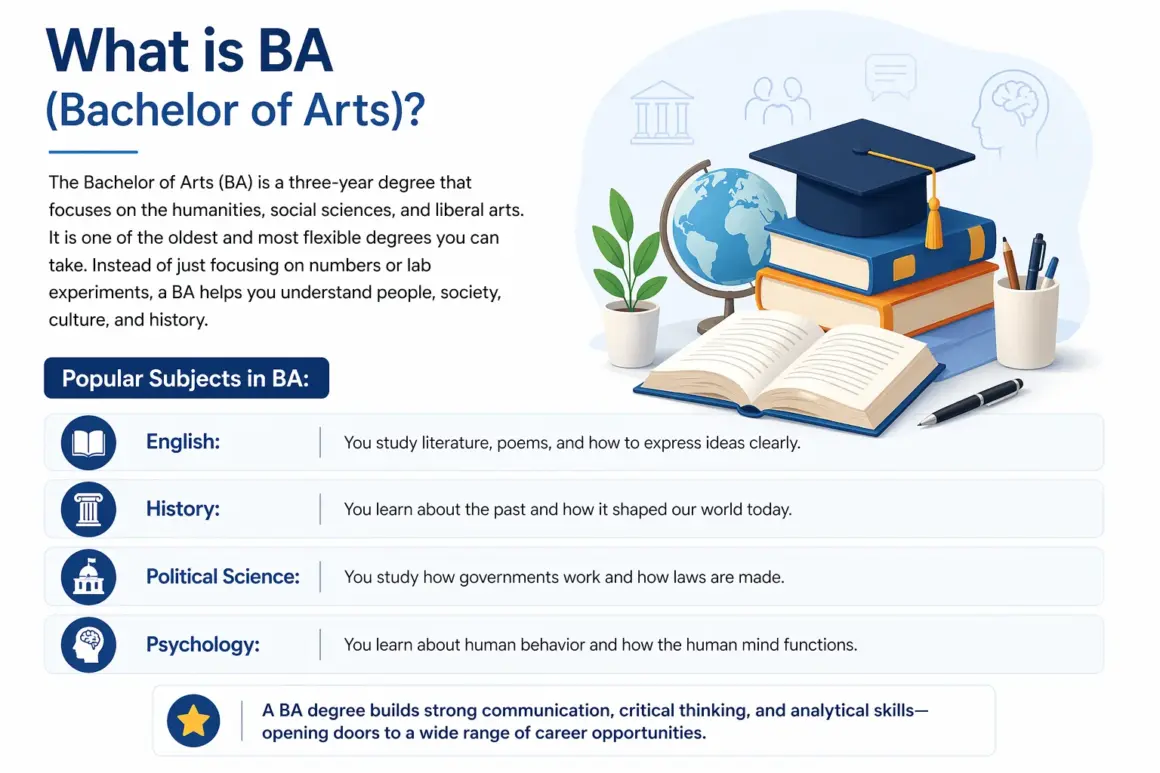
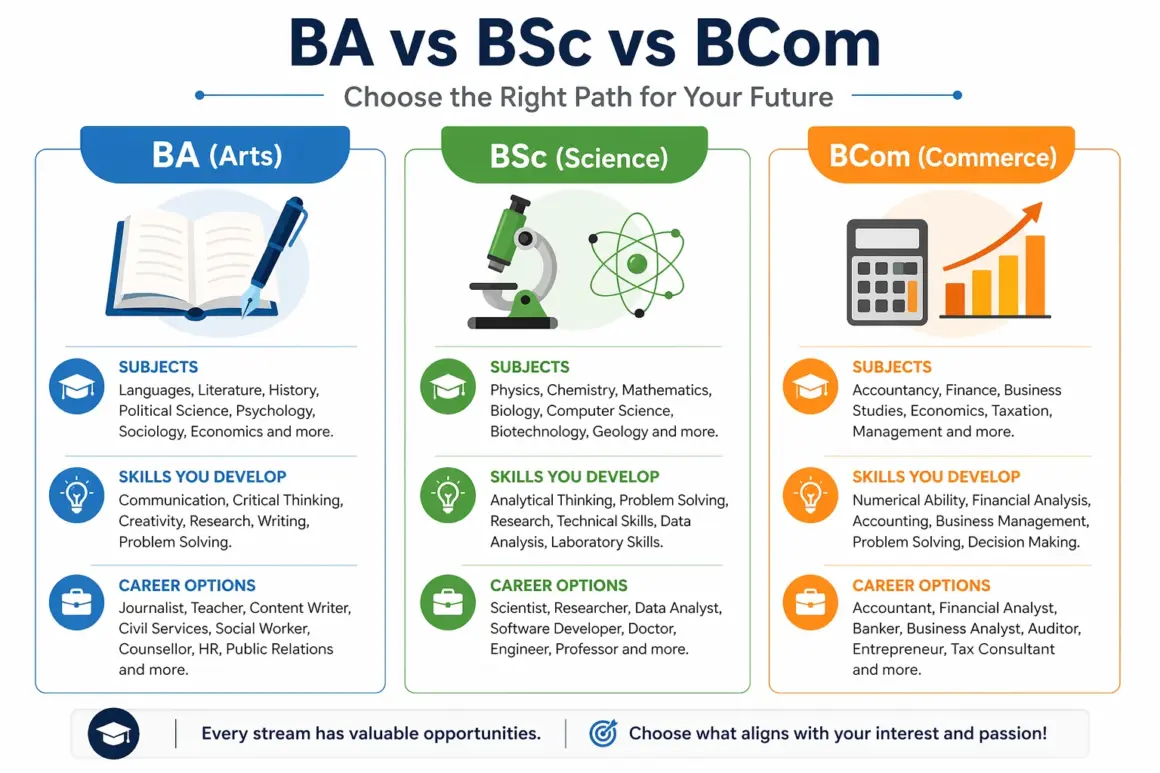
The Bachelor of Arts (BA) is a three-year degree that focuses on the humanities, social sciences, and liberal arts. It is one of the oldest and most flexible degrees you can take. Instead of just focusing on numbers or lab experiments, a BA helps you understand people, society, culture, and history.
Popular Subjects in BA:
- English: You study literature, poems, and how to express ideas clearly.
- History: You learn about the past and how it shaped our world today.
- Political Science: You study how governments work and how laws are made.
- Psychology: You learn about human behavior and how the human mind functions.
Skill Development in BA: A BA course teaches you how to think critically and analyze complex information. You will develop excellent communication and writing skills, which are useful in almost every job. It also encourages creative expression and research into social issues.
What is BSc (Bachelor of Science)?
The Bachelor of Science (BSc) is a degree focused on science, technology, and research. In India, it is usually a three-year course, though some programs now last four years under new education rules. This stream is perfect for students who love to ask “why” things happen and enjoy doing practical experiments.
Popular Subjects in BSc:
- Physics: You study energy, matter, and the laws of the universe.
- Chemistry: You learn about chemicals, reactions, and the building blocks of matter.
- Biology: You study living organisms, from tiny cells to huge animals.
- Information Technology (IT): You learn about computers, software, and how digital data works.
Skill Development in BSc: A BSc degree helps you develop strong analytical thinking and technical skills. You will learn how to solve problems using logic and math. It also trains you in research methods and how to conduct experiments in a laboratory.
What is BCom (Bachelor of Commerce)?
The Bachelor of Commerce (BCom) is a three-year program that focuses on business, finance, and how money moves in the world. It is a very career-specific degree designed to prepare you for the business and corporate world.
Popular Subjects in BCom:
- Accounting: You learn how to keep track of a company’s money and expenses.
- Economics: You study how markets work and how countries manage their resources.
- Business Studies: You learn about how companies are managed and run.
- Taxation: You study the laws about how people and businesses pay taxes to the government.
Skill Development in BCom: BCom students develop high financial literacy and numeracy, meaning they become very good with numbers. You will learn management skills and how to handle business data. It also teaches you about business laws and how to make smart financial decisions.
Key Differences: BA vs BSc vs BCom
| Feature | BSc (Science) | BCom (Commerce) | BA (Arts) |
|---|---|---|---|
| Eligibility | Must have Science in 12th | Usually any stream, but Commerce is preferred | Any stream can join |
| Main Subjects | Physics, Chemistry, Biology, IT | Accounting, Finance, Business Law | History, English, Political Science |
| Focus | Technical and Experimental | Financial and Analytical | Theoretical and Human-focused |
| Difficulty | Often considered high due to math and labs | Moderate; focus on concepts and logic | Moderate; focus on reading and writing |
| Salary (Entry) | ₹2 LPA – ₹4 LPA | ₹2.5 LPA – ₹6 LPA | ₹1.5 LPA – ₹4 LPA |
5. Career Options After BA
Government Jobs
A BA is a fantastic choice if your dream is to work for the government. Many students prepare for the UPSC (Civil Services) exam to become IAS or IPS officers. Studying subjects like History and Polity in your BA gives you a huge head start for these exams. You can also try for SSC (Staff Selection Commission) or State PSC exams for other government officer roles.
Private Sector Roles
In the private sector, BA graduates are highly valued for their ability to communicate.
- Content Writing: You can write stories, blogs, and articles for websites.
- Journalism: You can work for newspapers or TV channels as a reporter or editor.
- HR (Human Resources) Roles: You can help companies hire people and manage their employees.
Higher Studies Options
Many BA graduates choose to study further to get better jobs.
- MA (Master of Arts): You can specialize deeply in one subject like English or Psychology.
- MBA (Master of Business Administration): Even with an Arts background, you can learn to manage businesses.
- Law (LLB): You can take an integrated law course or do an LLB after your BA.
Emerging Career Fields
New types of jobs are opening up for BA students.
- Digital Marketing: You can help brands grow online through social media and ads.
- Public Relations (PR): You can manage the image of famous people or big companies.
- Social Work: You can work for NGOs or the government to help people in need.
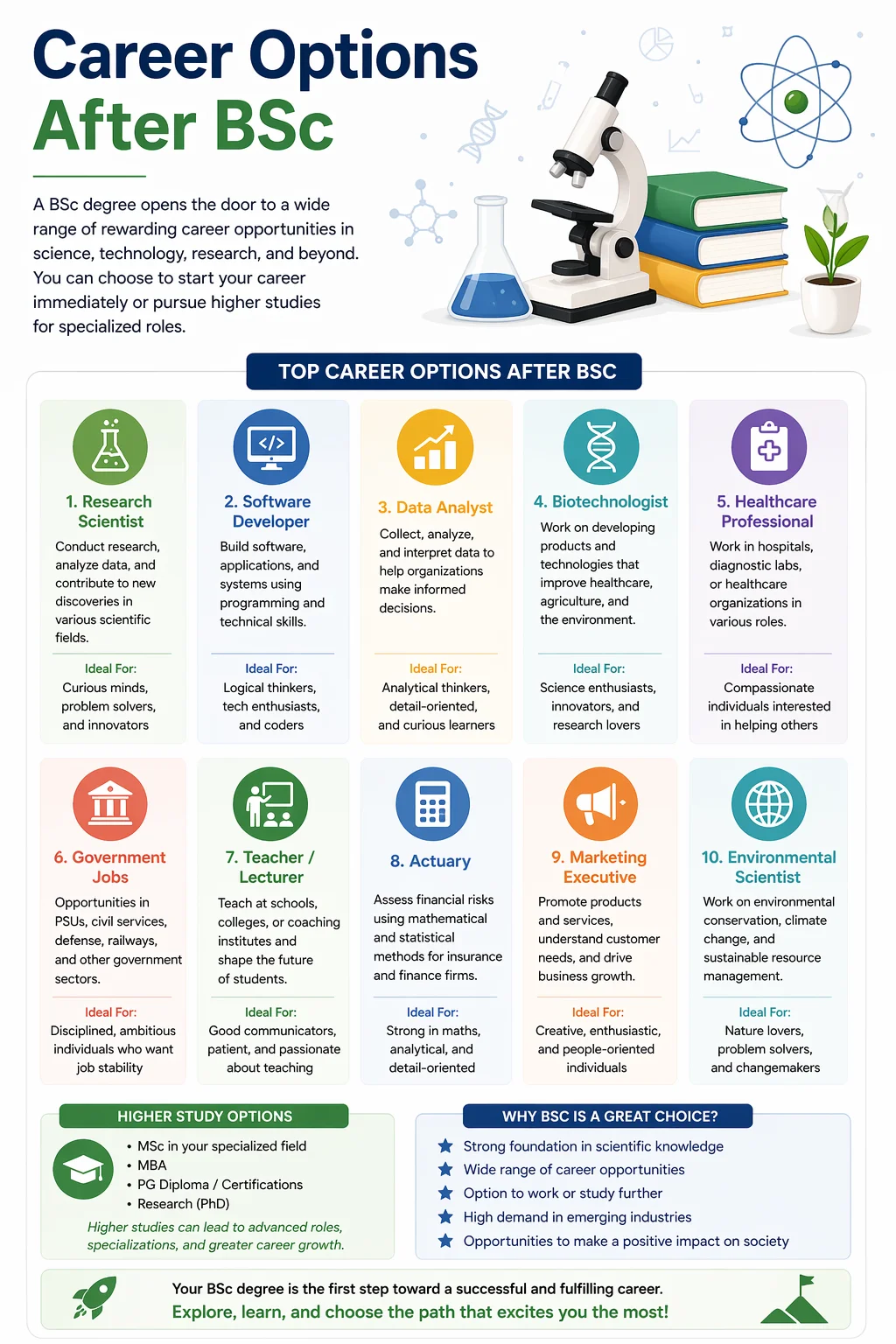
6. Career Options After BSc
Core Science Careers
If you love your subjects, you can stay in the world of science.
- Research Scientist: You can work in a lab trying to discover new things.
- Lab Technician: You can help doctors and scientists run tests and manage equipment.
Professional Courses
BSc students often go for technical post-graduate degrees.
- MCA (Master of Computer Applications): If you studied IT or computers, this is a great step toward becoming a software engineer.
- MSc (Master of Science): This allows you to become an expert in your specific field, which helps you get higher-paying jobs.
Specialized Fields
Modern technology has created very exciting roles for BSc graduates.
- Data Science: You can analyze large amounts of data to help companies make decisions.
- Biotechnology: You can work on combining biology with technology to make new medicines or foods.
- Environmental Science: You can work as a consultant to help protect the earth.
Government Opportunities
The government also needs scientists and technical experts. You can work in scientific organizations like ISRO or in government research labs. Another popular path is Teaching; after your BSc, you can do a B.Ed to become a school teacher.
7. Career Options After BCom
Professional Courses
Many BCom students take extra professional courses while they are studying.
- CA (Chartered Accountant): This is one of the most respected and highest-paying jobs in finance.
- CS (Company Secretary): You handle the legal and compliance parts of a big company.
- CMA (Cost and Management Accountant): You focus on managing the costs and finances of businesses.
Corporate Jobs
If you want to start working immediately after graduation, BCom offers many roles.
- Accountant: You manage the daily money records for a business.
- Financial Analyst: You look at money trends to help a company invest wisely.
- Banking Roles: You can work in various positions in private or government banks.
- Tax Consultant: Providing advice on tax planning and legal compliance.
- Auditor: Reviewing financial statements to ensure accuracy and legal compliance.
Higher Studies
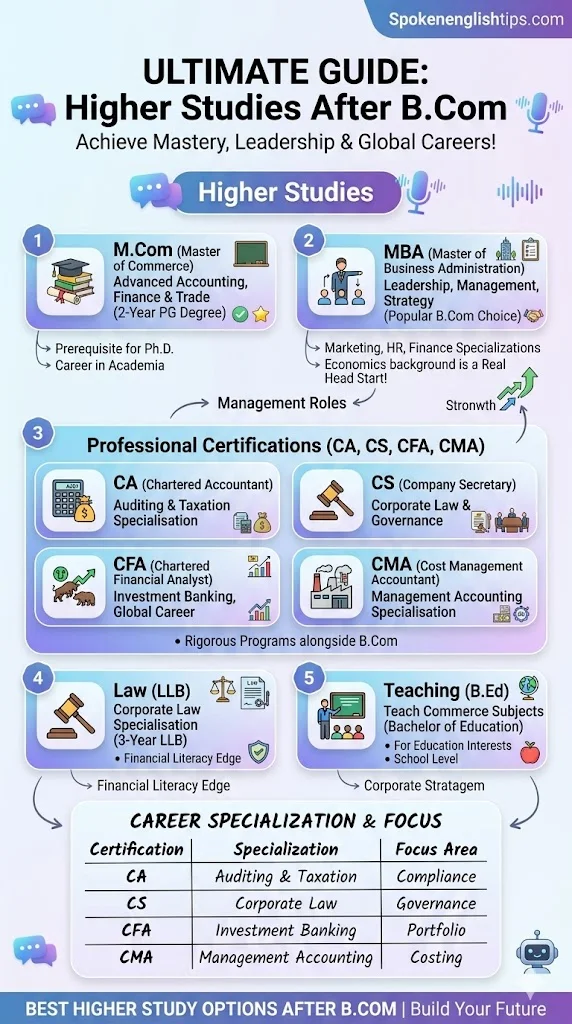
Studying more can help you reach the top of the business world:
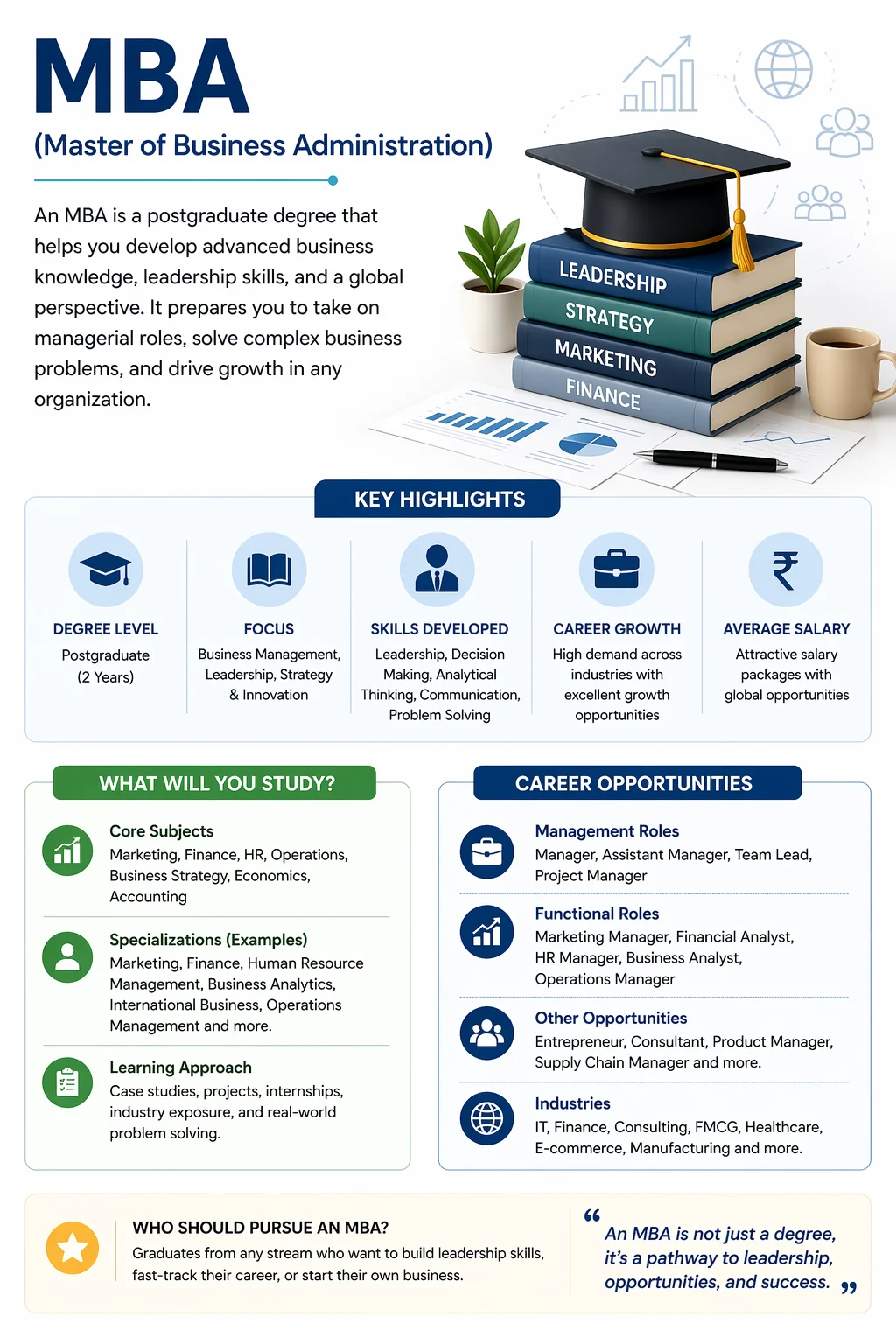
- M.Com (Master of Commerce): This is a two-year postgraduate degree focused on advanced accounting, finance, and trade. It often serves as a prerequisite for doctoral research or academic careers.
- MBA (Master of Business Administration): A popular choice for B.Com graduates, as their background in economics and accounts provides a “real head start” in management coursework. It prepares graduates for leadership roles in Marketing, HR, Finance, and General Management.
- Professional Certifications (CA, CS, CFA, CMA): These rigorous programs can be pursued alongside or after B.Com. A Chartered Accountant (CA) specialises in auditing and taxation, while a Company Secretary (CS) handles corporate law and governance. CFA and CMA certifications are ideal for those aiming for global careers in investment banking or management accounting.
- Law (LLB): B.Com graduates can opt for a 3-year LLB to specialise in corporate law, where their financial literacy provides a distinct strategic edge.
- Teaching (B.Ed): For those interested in education, completing a Bachelor of Education allows you to teach commerce-related subjects in schools.
I have initiated the creation of two artifacts for you:
- Salary Comparison Chart: This infographic compares the average starting salaries (2026) for various degrees like BBA, B.Com, BA, and professional qualifications like CA and MBA.
- Post-12th Career Roadmap Guide: This detailed report synthesises all 20 sources to provide a complete guide to streams, top-ranked colleges, and key entrance exams.
Both will be available in the Studio tab once processing is complete.