Reading stories shapes the heart and mind of every teenager, opening doors to imagination and empathy. When teens pick up a book—whether it’s one of the best young adult romances that capture first love, or a selection from popular young books that reflect real struggles—they meet characters who mirror their own doubts and dreams. Classics teach perspective and language, expanding vocabulary and sharpening critical thinking while offering timeless life lessons. Stories provide a safe laboratory to practice courage, kindness, and resilience; they show consequences without real-world risk. A well-told tale can be a map during confusing times, a mirror when someone feels unseen, and a spark that makes readers brave enough to try. Beyond entertainment, stories build emotional intelligence, boost empathy, and help teenagers grow mentally and emotionally. So read widely, discuss boldly, and let storytelling truly guide you toward discovering who you are and who you want to become.
Story 1: The Summer of Quiet Courage
It was the kind of summer that started with silence. No buzzing alarms, no crowded hallways, no endless chatter about homework or exams. Just the hum of cicadas, the chirp of sparrows, and the feeling that the world had slowed down for a while.
For Alex, that summer felt both freeing and terrifying. He wasn’t sure who he was supposed to be anymore. His friends had big plans—travel, camps, and internships—but he stayed home, caught between boredom and the weight of unspoken fears. Books became his only companions. He reached for the classics stacked on his mother’s shelf and even dipped into popular young books his friends often teased him for reading.
But it wasn’t until he wandered into the small town library that things truly began to change. That’s where he met Maya.
Maya wasn’t like anyone Alex had ever known. She sat cross-legged on the library floor, surrounded by novels, sketching characters in her notebook. She smiled at Alex like she had been waiting for him to walk in.
“Looking for something good?” she asked, holding up a worn paperback. “This one’s one of the best young adult romances you’ll ever read. Trust me.”
Alex laughed awkwardly. “I don’t really read that kind of stuff.”
“Maybe that’s the problem,” Maya replied with a grin.
And just like that, a friendship began—slow, steady, and surprisingly deep.
Every afternoon, they met in that library corner. They talked about dreams, fears, and the invisible rules teenagers live by but rarely question. Alex admitted he was scared of being ordinary, of never leaving a mark. Maya confessed she was terrified of leaving her small town behind, even though she desperately wanted to.
Through their conversations, Alex realized stories weren’t just for entertainment—they were roadmaps. The best ones whispered, You are not alone. The classics gave him courage; the romances reminded him of vulnerability; the popular young books made him laugh at how messy growing up could be.
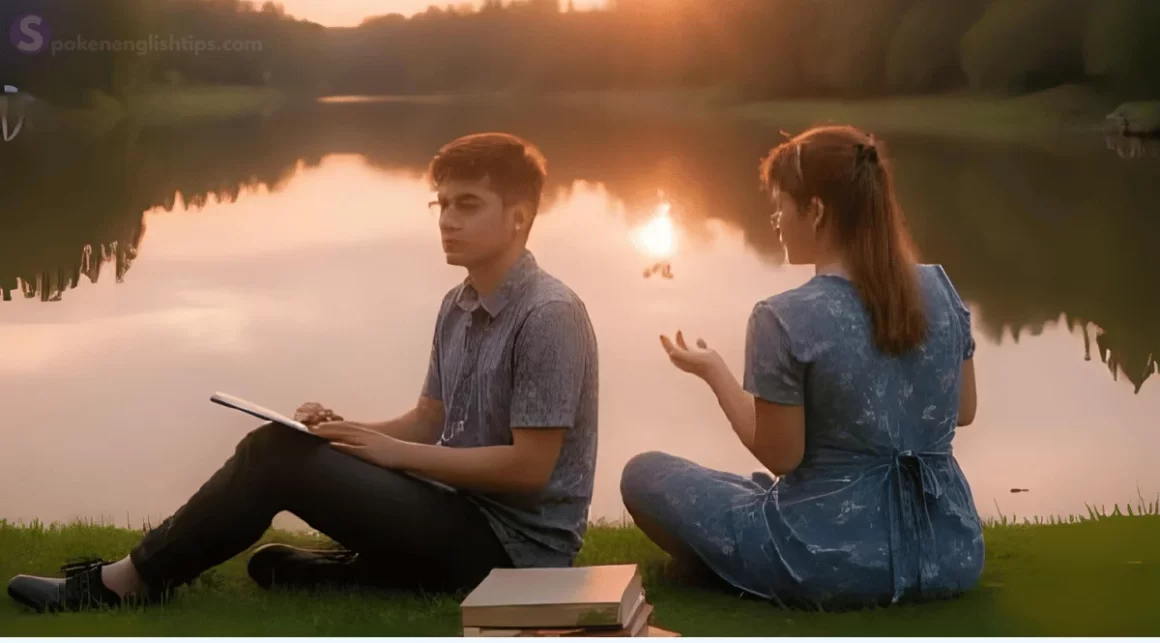
One sweltering evening, they left the library and sat by the lake. The sky burned orange as the sun dipped low, and Maya tossed a pebble into the water.
“You know,” she said softly, “maybe courage isn’t about doing the biggest, loudest thing. Maybe it’s about choosing to try when no one expects you to.”
Those words stayed with Alex. That summer became the season of small, quiet acts of bravery—speaking up in conversations, saying yes to things he would’ve avoided, admitting he wanted to write instead of hiding his notebook under his bed.
By the time August ended, Alex realized he wasn’t the same boy who had walked into the library feeling lost. He had discovered that courage didn’t need applause. It lived in moments of honesty, in showing up, in daring to share your truth with another person.
Maya moved away when school started again, but her lessons remained. Alex kept writing, his words brimming with the quiet courage she had sparked in him.
And when he returned to that little library months later, he left a note inside one of the books they had shared:
“To whoever finds this—remember, stories don’t just tell us who we are. They remind us who we can become.”
? Life Lesson: Courage often starts small. It’s not about being fearless; it’s about choosing honesty, vulnerability, and growth when it feels easier to hide.
Sometimes the bravest thing a teenager can do is to believe their story matters enough to be told.
Story 2: Paper Boats and Big Cities
It all began with a paper boat.
Lina folded it on a rainy afternoon, sitting by her bedroom window as droplets tapped against the glass. She had always believed that paper boats could carry secrets, wishes, and even fears across puddles and streams. That day, she wrote one word inside the fold before setting it afloat in the ditch outside: “Freedom.”
Lina’s world felt too small, too predictable. She lived in a neighborhood where everyone knew everyone else’s business, where dreams felt like luxuries reserved for people in big cities. Her parents spoke of stability, safety, and staying close to home. But Lina wanted more—bright lights, crowded sidewalks, and a chance to chase the kind of stories she had only read in classics and popular young books.
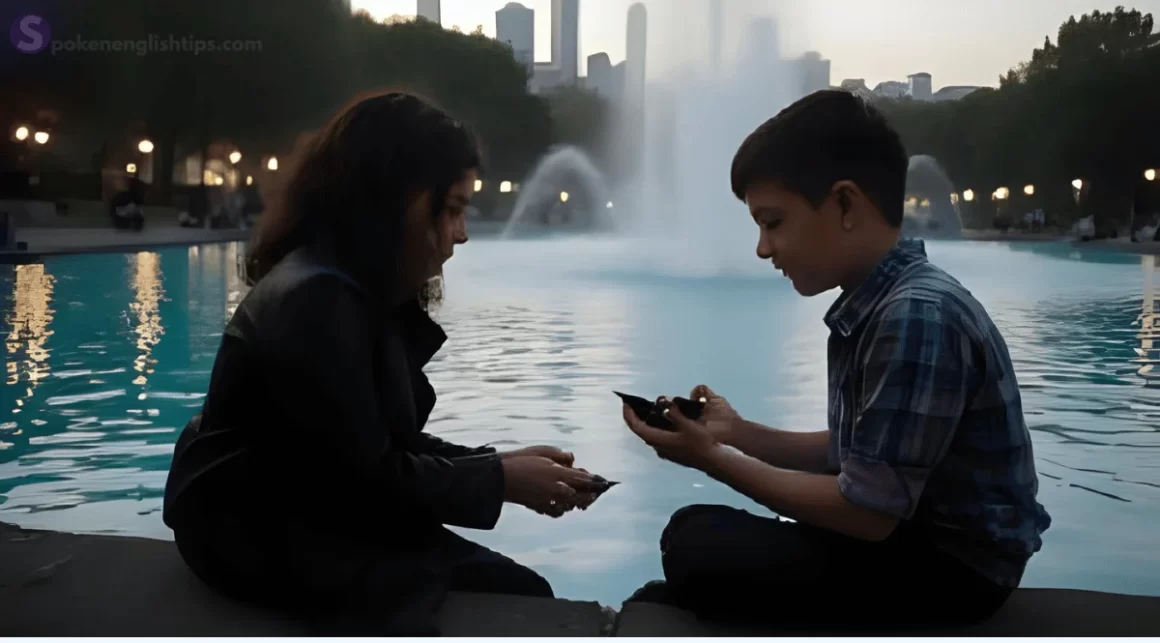
One afternoon, while she sat by the park’s fountain, she met Jonah. He was a transfer student who carried sketchbooks instead of footballs and always seemed lost in thought. Lina noticed him because he, too, was folding paper.
“Boat or airplane?” she asked with a teasing smile.
“Boat,” Jonah replied, holding up the small creation. “They remind me that even fragile things can travel far.”
That single sentence felt like a spark.
Jonah became the kind of friend who asked questions that dug beneath the surface. Why did Lina crave the city? Why did she fold paper boats? What would she do if she had no fear of failure?
For the first time, Lina shared her dream: to study literature in a city university, to write stories that touched hearts, maybe even to create one of the best young adult romances that other teenagers would hold close. She wanted her words to become a kind of lighthouse.
Jonah nodded and said, “Then you have to stop treating your paper boats like secrets. Treat them like promises.”
From that day on, Lina and Jonah made it a ritual. Every weekend, they folded boats, wrote a wish or a truth inside, and set them sailing in the park fountain. Some sank quickly; others floated until the current carried them away.
The boats became symbols of courage. One carried the word “Dream.” Another, “Escape.” One day, Jonah wrote “Stay.” Lina didn’t ask what it meant, but she felt the weight of it.
As summer drew to an end, Lina’s parents sat her down. They wanted her to apply to a nearby college, safe and close. Lina’s heart raced; the city she dreamed of felt like it was slipping away. That night, she went to the fountain alone, clutching a paper boat. Inside it, she wrote: “I choose my own story.”
Jonah showed up unexpectedly. He placed his boat beside hers, the word “Believe” written in bold letters. Together, they set their boats on the water and watched them drift.
“You’re scared,” Jonah whispered. “But that’s how you know it matters.”
In the end, Lina chose the city. She cried, she argued, she doubted herself—but she chose. The day she left, Jonah handed her a folded boat, unmarked this time.
“Write your own word,” he said. “Then let it sail.”
Dreams are fragile, like paper boats, but they are meant to travel. Don’t let fear keep you anchored when your heart longs for new horizons.
Sometimes the bravest journey begins with the smallest fold of courage and the decision to let it float.
Story 3: The Last Light of Maple Street
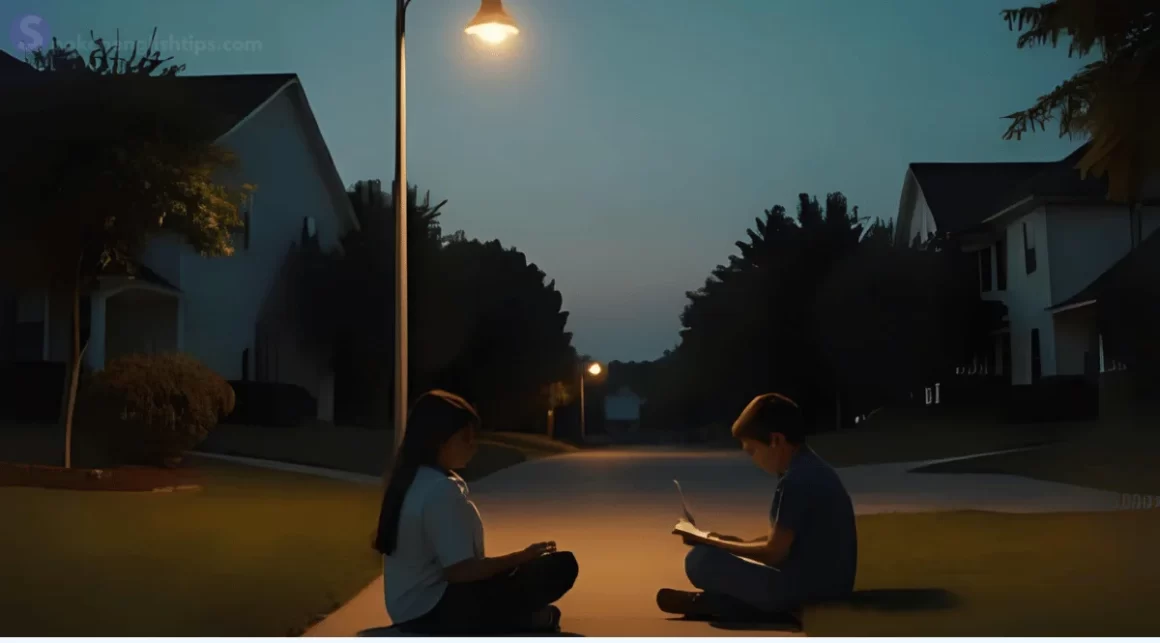
Maple Street wasn’t famous for anything. It wasn’t the kind of place you’d find in travel guides or in the backdrop of best young adult romances. It was quiet, ordinary, lined with old houses and lamp posts that flickered when the wind blew too hard. Yet for Emma, Maple Street was the center of her universe—because it held both her fears and her first taste of freedom.
Every evening, she sat by her bedroom window, watching the last streetlight glow outside. It was always the final one to flicker on, as if reluctant to face the night. Emma often wondered if she was like that lamp—always late to shine, always waiting for someone else to go first.
Her family expected her to be safe, predictable. Her friends expected her to laugh, study, and follow the same patterns. But inside, Emma carried a restlessness she couldn’t name. She read classics late at night, losing herself in characters who dared to be bold, who chose love or truth even when the world disapproved. She devoured popular young books, too, where heroes her age found courage in messy, complicated ways.
Yet in her real life, she stayed silent.
Everything changed the summer Liam moved in across the street. He wasn’t loud or dramatic; he was just… different. He painted murals on scraps of cardboard, hummed tunes he never finished, and waved at strangers without hesitation. One evening, Emma found him sitting under the last light of Maple Street, sketching in a notebook.
“You’re always up there, watching,” he said, glancing toward her window. “Ever thought about coming down?”
Her cheeks flushed. “And do what?”
“Live,” he replied simply.
The next evening, Emma walked down. It felt small, almost silly—but it was a start. She and Liam sat beneath the streetlight, talking about dreams and fears. He wanted to travel, to paint cities alive with color. She admitted she didn’t even know what she wanted, only that she was tired of being invisible.
“Then don’t be,” he said. “Even the quietest light still shines.”
The nights became their ritual. They shared secrets under the glow of that one lamp, the air thick with the hum of crickets and the faint scent of summer rain. For the first time, Emma felt like she belonged—not to Maple Street, not to expectations, but to herself.
One night, Liam asked her what she feared most.
“Failing,” she whispered. “Disappointing everyone.”
He handed her his sketchbook, a page filled with bold, messy strokes. “Then fail loud. Fail messy. Just don’t fail by never trying.”
As summer faded, Liam’s family prepared to move again. He was a traveler, a dreamer, never meant to stay. The night before he left, they sat beneath the last light once more. Emma asked, “What if I can’t shine without you here?”
Liam shook his head. “You already do. You just don’t see it yet.”
When he left, the street felt emptier than ever. But as Emma walked back to her window, the lamp flickered brighter than she remembered. And for the first time, she smiled at its stubborn glow.
Sometimes we wait for others to permit us to shine, but the truth is, the light has always been ours to claim.
Story 4: Notes Between Two Windows

It started with a single scrap of paper.
Leah had been staring out of her window one night, trying to finish a school essay she didn’t care about, when she saw it—something white fluttering from the window across the alley. At first, she thought it was trash, but then she noticed the handwriting. A note, taped carefully against the glass.
“Do you ever feel like the world is too loud?”
Leah blinked. She wasn’t sure if the question was meant for her, but she grabbed a sticky note anyway. In bold letters, she wrote:
“All the time.”
And so began a friendship made of paper and pen, written not in texts or DMs, but in handwritten notes passed between two windows.
The boy’s name was Ryan. He had just moved in, quiet and thoughtful, the kind of person who seemed to live more inside his head than anywhere else. Their conversations unfolded note by note. They talked about school pressure, about books they loved—Ryan swore by classics, while Leah preferred popular young books with messy characters who made her laugh. They debated over what made the best young adult romances work—whether it was the grand gestures or the small, quiet moments.
Leah found herself waiting every night for that flicker of paper in the window.
One night, Ryan’s note read:
“What scares you the most?”
Leah hesitated. Then she wrote:
“Being forgotten.”
She didn’t expect a response so quickly, but within minutes, his reply appeared:
“You won’t be. You leave marks without knowing it.”
Something about those words made her chest ache in a way she didn’t fully understand.
Weeks passed, and their window conversations became the anchor of Leah’s summer. They traded jokes, doodles, even song lyrics. She told him about her fear of speaking up in class. He admitted he hated moving so often because it made friendships temporary.
But then came the note that broke the rhythm.
“We’re moving again at the end of summer.”
Leah stared at the words until they blurred. She wanted to march across the alley, knock on his door, and demand that life stop pulling people away. But instead, she wrote back:
“So what do we do until then?”
Ryan’s reply came slower this time.
“We live in the in-between. And we make it count.”
The next weeks became a flurry of notes that grew braver, longer, deeper. They stopped talking about school and started talking about dreams—her dream of becoming a songwriter, his wish to see the ocean. They shared secrets too raw for spoken words, the kind that could only survive on paper.
On his last night, Leah looked out and saw his window open, the curtains swaying. A final note was taped to the glass:
“Don’t stop writing. Even if it’s just to yourself. Promise me?”
She pressed her own note against her window in reply:
“Promise. And you—don’t stop drawing your dreams. Maybe one day I’ll find you again.”
The next morning, his window was empty. But Leah’s window was covered with their notes, taped like stars across the glass. She realized Ryan hadn’t just left her scraps of paper—he’d left her courage, a reminder that words have weight, and connections can shape us even if they’re temporary.
? Life Lesson: Some friendships aren’t meant to last forever, but that doesn’t make them less powerful. Even brief connections can leave lasting imprints on who we become.
Story 5: A Map for the Missing Years
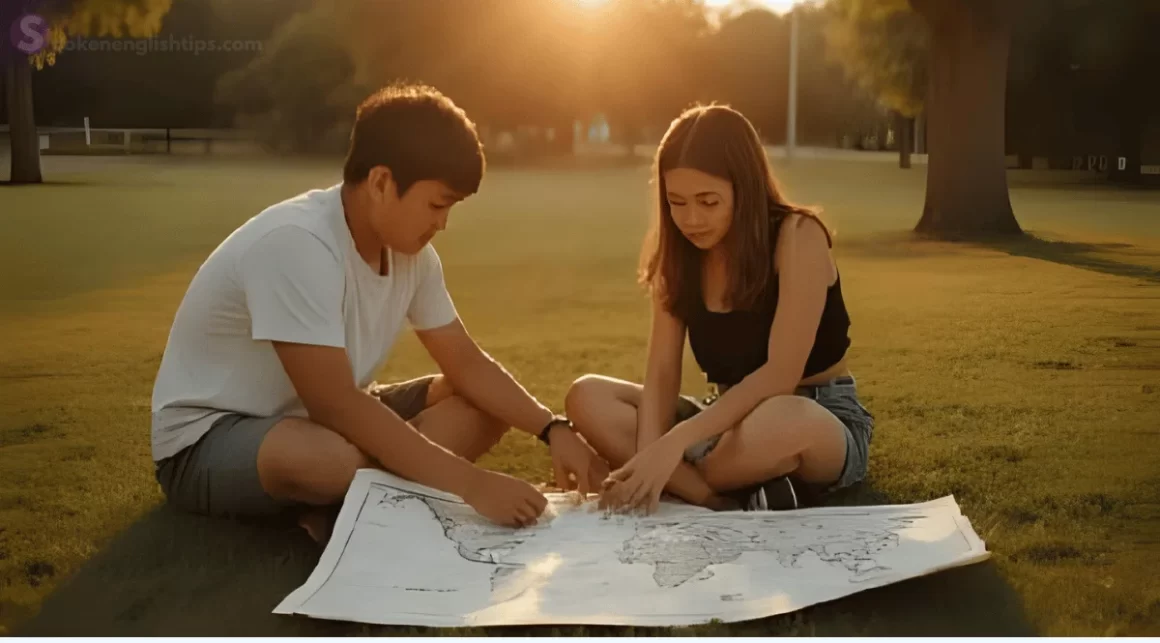
Ethan had always been good at forgetting. Forgetting birthdays, forgetting promises, forgetting the things that hurt. But the summer before his final year of school, he found something he couldn’t ignore: an old map tucked into the back of his late grandfather’s journal.
It wasn’t a real map, not exactly. Instead of streets and highways, it was filled with hand-drawn lines, strange symbols, and words like “Courage,” “Loss,” and “First Love.” At the bottom, in faded ink, his grandfather had written: “The missing years.”
Ethan didn’t know what it meant. But he felt something stir in him—the same way he felt when he read classics that seemed to hold secrets between the lines, or when he stumbled into popular young books that reminded him of his own messiness. The map felt like an invitation. And for the first time in years, he didn’t want to forget.
He showed the map to his best friend, Zoe, who was both braver and louder than he’d ever be. She studied the paper, her eyes narrowing.
“Maybe it’s not about places,” she said. “Maybe it’s about moments.”
Ethan frowned. “How do you follow a map of moments?”
“By making them,” Zoe answered.
So they did.
They treated each word on the map as a challenge. Courage meant climbing the old water tower, even though Ethan was terrified of heights. Loss meant visiting the abandoned house where Zoe’s childhood dog had once lived, and saying goodbye properly. First Love meant daring to admit feelings out loud, though in Ethan’s case, it was only a whisper written in his notebook.
Each challenge left a mark. Some were exhilarating, others exhausting, but all of them pulled Ethan out of the haze he had built around himself. For years, he had hidden behind routine and silence. Now, every day felt like a step into something real.
One evening, they sat at the park, the map spread out between them. The paper was creased and stained from their adventures, but somehow, it looked alive.
Zoe tapped one of the final words: “Truth.”
“You know what this one is about, right?” she asked.
Ethan swallowed. He knew. Truth wasn’t about climbing towers or chasing laughter. It was about admitting the things you were most afraid to say.
So he told Zoe about the emptiness he’d carried since his grandfather passed, about how he’d spent years pretending not to care so he wouldn’t break apart. He told her how the map wasn’t really about his grandfather at all—it was about him. About the pieces of himself he had been missing.
Zoe listened without interrupting. When he finished, she simply placed her hand over his and said, “Then I guess you’ve found it. The missing years weren’t behind you. They’re here, right now.”
By the end of summer, the map was filled with scribbles, doodles, and dates of their small adventures. Ethan pinned it above his desk, not as a guide to follow but as proof that even broken years could be stitched together with courage, love, and truth.
And when school started again, he felt lighter. Not because everything was fixed, but because he finally knew he didn’t have to keep forgetting. He could carry the missing years with him—every messy, beautiful moment.
? Life Lesson: Healing doesn’t mean erasing the past. Sometimes it means drawing your own map, filling the missing spaces with moments that remind you you’re still alive.