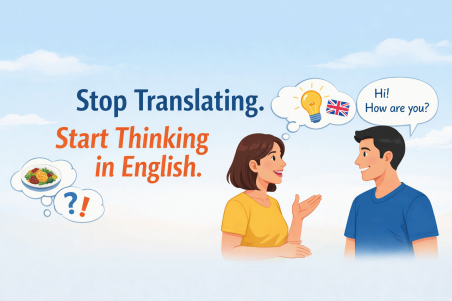
Many adult English learners understand grammar rules and vocabulary, yet still feel slow, nervous, or blocked when speaking. One of the biggest reasons for this problem is mental translation. Learners often think in their first language and then translate into English before speaking. This habit creates hesitation and reduces confidence.
Learning to think in English is not about perfection or forgetting your native language. It is about building new habits that allow your thoughts to connect directly to English words. This article explains why translation slows down speaking and offers practical, learner-friendly strategies to help adults start thinking in English naturally.
Why Translating in Your Head Makes Speaking Harder
When you translate, your brain works in multiple steps:
1. Form the idea in your first language
2. Translate words into English
3. Adjust grammar
4. Check for mistakes
By the time you speak, the conversation may have already moved on. This extra mental work causes stress, pauses, and self-doubt.
For example, when someone asks, “What did you do yesterday?”, many learners first create a full answer in their native language, then translate it word by word. Native speakers do not speak this way—they respond automatically. While adult learners cannot change overnight, they can reduce translation gradually.
What “Thinking in English” Really Means
Thinking in English does not mean knowing every word or speaking without mistakes. It simply means connecting meaning directly to English, without going through your first language.
When you see everyday objects like a chair, phone, or door, you already know the English words without translating. Thinking in English applies the same idea to actions, feelings, and simple thoughts.
The goal is not speed at first. The goal is comfort and clarity. Speed improves naturally with practice.
Start with Simple, Everyday Thoughts
Many learners try to think in English using long or complex sentences. This often leads to frustration. Instead, start with short, simple sentences such as:
● “I am tired.”
● “I need help.”
● “This is difficult.”
● “I like this.”
These sentences may feel basic, but they help your brain build direct English connections. A powerful daily habit is to describe what you are doing:
● “I am making tea.”
● “I am opening my laptop.”
● “I am reading a message.”
This trains your mind to stay in English during normal activities.
Learn English in Phrases, Not Single Words
Memorising isolated vocabulary often increases translation. Learners know many words but struggle to use them naturally.
Instead, learn common phrases and chunks:
● “Make a decision”
● “I’m excited about…”
● “That makes sense”
● “I’m not sure yet”
When you learn phrases, your brain stores ready-to-use English. This makes speaking smoother and reduces hesitation.
Stop Aiming for Perfect Grammar
Fear of mistakes is one of the biggest reasons learners translate. They want every sentence to be correct before speaking.
However, real communication is about being understood, not being perfect. Native speakers make mistakes too—but they continue speaking.
Focus on:
● Sharing your idea
● Keeping the conversation moving
● Improving step by step
Confidence grows when you stop checking every sentence in your head.
Choose the Right Listening and Reading Input
Listening to English that is too advanced can push learners back into translation mode. When the language feels overwhelming, the brain tries to translate to survive.
Choose input that is:
● Clear and slow
● Slightly challenging, not overwhelming
● Relevant to daily life
Learner-friendly podcasts, videos, and articles help you stay in English without stress. Try to understand the general meaning, not every word.
Prepare Your Mind Before Speaking
Before real-life situations like meetings, phone calls, or ordering food, think in English first. Prepare simple sentences you might use.
For example:
● “I would like to order…”
● “Can you repeat that, please?”
● “Let me explain.”
This mental preparation helps your brain stay in English during the conversation.
Be Patient with Yourself
Thinking in English is a habit, not a switch. Some days it feels easy. Other days your mind returns to translation. This is normal.
Progress comes from:
● Daily practice
● Relaxed learning
● Accepting mistakes
● Using English in real situations
Small, consistent effort leads to big improvement over time.
Final Thoughts
Stopping mental translation is one of the most important steps toward confident English speaking. You do not need advanced grammar or a huge vocabulary to begin. You only need simple habits, regular practice, and patience.
When you focus on meaning instead of perfection, English becomes more natural and less stressful. Over time, your thoughts will begin to form in English automatically—and speaking will feel easier and more enjoyable.
Author Bio
Shahabas Ali is an English language trainer who helps adult learners build spoken English confidence and communicate clearly in real-life situations at English Café.
Learn practical strategies to stop translating and start thinking in English. Simple habits that help adult learners speak confidently and naturally.