Many people think their lives are too “normal” to write about. But most readers want stories they can relate to. They are drawn to honesty, struggle, growth, and truth—not fame. This is why your life story matters. You have lived through moments, lessons, and turning points that can help or inspire someone else. Your story has value, and it deserves to be written.
Before you begin, it helps to understand what it means to write a book about your life. Autobiographies cover your entire life in order, from childhood until now. Memoirs, on the other hand, focus on one part of your life or one theme. Memoirs often read like novels because they use storytelling techniques to build tension and emotion.
In this guide, you will learn how to write a book about yourself from start to finish. You will explore planning, memory gathering, narrative craft, and emotional honesty. Writing about your life is a vulnerable process. But it is also one of the most rewarding projects you will ever complete.
Learn | How To Write a Book
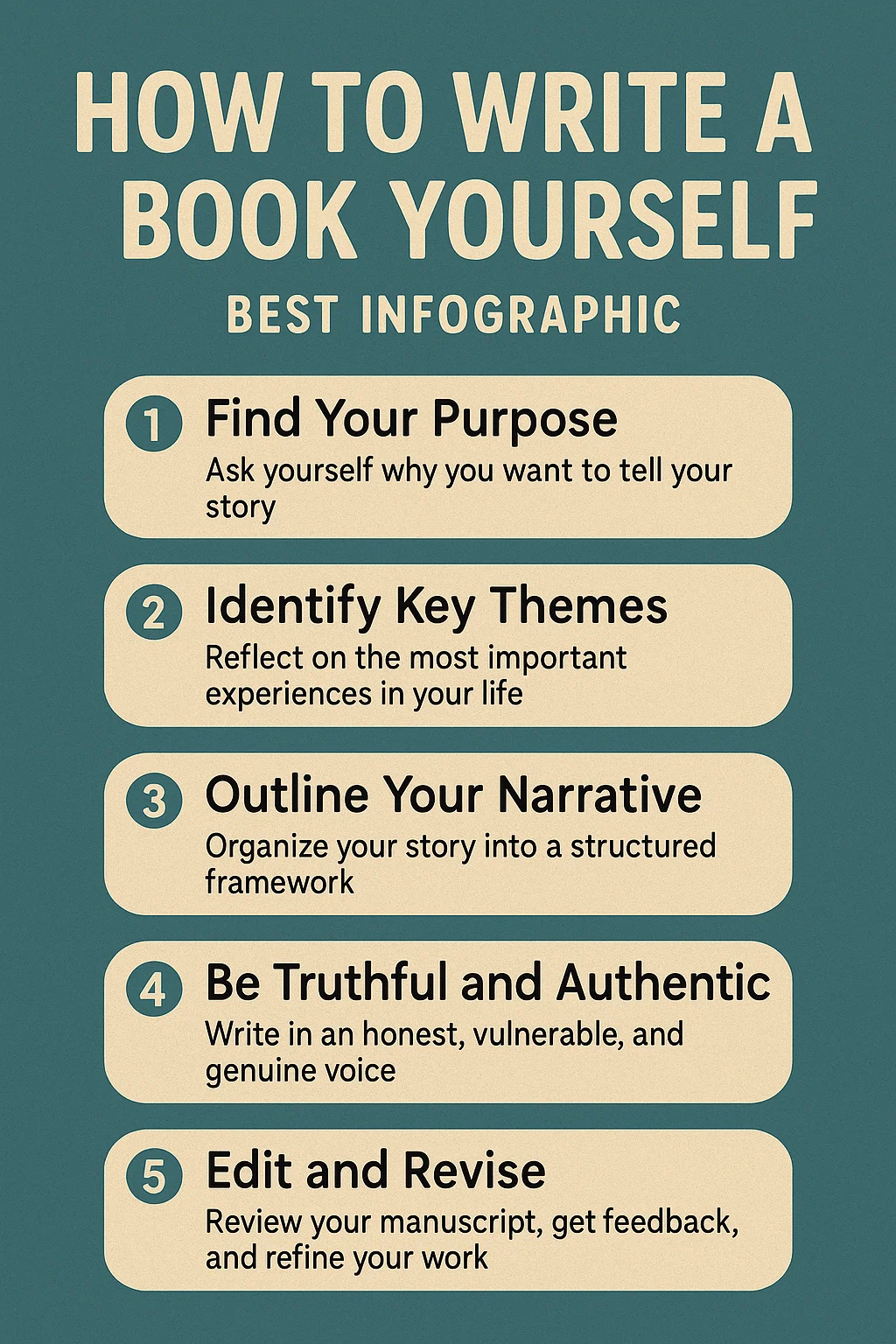
Getting Started: Planning the Scope of Your Personal Story
Writing a book about yourself begins with intention. You need to know what story you want to tell before you start writing it. This first step helps you save time and stay focused as you move forward.
Determine the Focus (Memoir vs. Autobiography)
First, choose whether you want to write a memoir or an autobiography.
Each form has its own purpose, structure, and strengths.
Autobiography:
- Covers your whole life from the beginning to the present.
- Works well if you want to present a full record of your life.
- Often includes major milestones, achievements, and relationships.
Memoir:
- Focuses on a slice of life or a main theme.
- May cover one event, one season of life, or one struggle.
- Usually explores a clear message or lesson.
Read Also | How To Write eBook PDF
Next, decide what your book will explore. Memoirs often revolve around themes like healing, identity, loss, friendship, travel, or personal growth. You do not need extraordinary experiences. You only need experiences that shaped you.
A good guiding question is:
What do I want people to learn from my story?
Initial Writing and Preparation
Next, begin writing freely without pressure. Many writers start by journaling. Write for 10–15 minutes daily. Focus on one memory at a time. Try using prompts like:
- “I remember the day when…”
- “The first time I realized…”
- “The moment everything changed was…”
Short writing exercises help you unlock buried details and emotions. They also help you find your voice.
As you write, pay attention to “stepping-stone” moments. These are events that pushed your life in a new direction. These moments shape the heart of your story.
Outline and Organize Your Life Story
Once you have raw material, it is time to create an outline. Outlining helps your book flow smoothly. You do not need to start writing from birth or in perfect order. But you do need a clear plan.
Try using one of these structure tools:
- Timeline: List key events in order to understand your life path.
- Theme grouping: Organize memories by lesson or topic.
- Chapter-style outline: Assign memories to chapters before drafting.
Next, check the balance of your structure. Do some areas feel crowded? Do others feel empty? This step prepares you to write with clarity and purpose.
Ensuring Authenticity and Detail in Your Book About Yourself
Next, it is time to enrich your story with real details. Memories fade, but you can still write a true and accurate book by gathering information from different sources.
Researching for Accuracy and Detail
Research is essential even when telling your own story. Memory can be messy, and facts may be unclear. So start by checking timelines, dates, and sequences.
You can do this by:
- Talking to family members.
- Asking friends about shared memories.
- Comparing your recollections with diaries, messages, or photos.
Next, consider if someone else remembers an event differently. Hearing their point of view can add depth to your story. It may also remind you of details you forgot.
If someone said something important, write down the quote while it is fresh. These moments help your book feel more real and full.
Using Visual and Written Artifacts to Trigger Detail
Old items from your past can unlock vivid memories.
Spend time looking through:
- Photo albums
- Video clips
- Childhood objects
- Old notebooks
- Birthday cards
- Letters
- School records
As you look, take notes on sensory details. Write down colors, smells, sounds, and emotions. These details help create powerful scenes later. This small exercise can transform a simple memory into a moment that comes alive on the page.
Applying Storytelling Elements to Write a Compelling Book About Yourself
Now the real writing begins. To keep readers engaged, you must tell your story like a storyteller. Even nonfiction needs structure, rhythm, and emotion.
Mastering “Show, Don’t Tell”
When writing a book about yourself, avoid summarizing everything. Readers want to step inside your life, not read a list of events.
Instead of:
“I was angry.”
Try:
“My jaw tightened. I felt heat rising in my chest.”
Small details help the reader feel the emotions with you.
Use the five senses often:
- What did you see?
- What did you hear?
- What did your body feel?
- What did it smell like?
- What emotions rose in your chest or throat?
Next, place readers inside scenes instead of reporting from outside. Simple changes like describing the weather, your clothes, or the room you stood in can transform the moment.
Structuring the Narrative Arc and Plot
Even true stories need a plot. A strong memoir or autobiography follows a clear arc:
- Something happens.
- You respond.
- You change.
Think about the starting point. How were you then?
Next, think about the ending. How are you now?
The story is everything that happened in between.
Add conflict or hurdles. These can be external problems or internal struggles. They keep readers turning the page.
Finally, identify major turning points. These are the scenes that show your emotional or personal transformation. They are the backbone of your narrative.
Incorporating Authentic Characters and Dialogue
Most life stories involve other people. Make them feel real and human. Avoid stereotypes or shallow descriptions.
To do this:
- Describe their habits.
- Mention unique phrases they use.
- Add specific gestures they make.
Next, practice writing dialogue. Memoirs often include conversations or paraphrased exchanges. Dialogue creates movement and reveals emotion.
Use first-person perspective throughout the book. Readers want to hear your voice and understand your inner world.
Cultivating Your Unique Voice
Your voice is the soul of your book. It is how you speak, think, and view the world. A strong voice is honest and natural.
You can strengthen your voice by:
- Writing every day.
- Reading other memoirs.
- Noticing your natural tone.
- Being honest instead of trying to sound perfect.
Over time, your writing voice becomes clearer and more confident.
Navigating the Vulnerability of Writing A Book About Yourself
Writing your life story is emotional work. You will face memories you forgot. You will face truths you may have avoided. This part of the process requires care and courage.
Writing with Radical Candor and Honesty
Readers connect with honesty. They do not expect perfection. They want to understand your real emotions.
So be willing to write the messy parts. Write the mistakes, the flaws, the regrets, and the lessons. You can always edit later. But if you hold back too soon, the book may feel shallow.
Next, allow yourself to write freely without judgment. Some pages may be too raw to publish. That is okay. But first drafts must go deep enough to uncover the heart of the story.
Addressing Painful Memories and Trauma
Some parts of your story may be difficult to tell. Writing about trauma or loss can stir old feelings. This is normal.
Writing can help you heal. It may give you clarity or closure. But if the process becomes overwhelming, seek support from a therapist or counselor. You do not need to handle everything alone.
Pace yourself. You can take breaks when needed. You can revisit the painful chapters when you feel ready.
Setting Boundaries and Preparing for Pushback
Writing a book about yourself also means deciding what to keep private. Not everyone will agree with your version of events. Some people may feel exposed.
So consider:
- What details are necessary for your story?
- What details can be changed without harming the truth?
- Which people should have their names or identities altered?
Next, expect some emotional reactions from friends or family. This is common. Your job is to tell your truth with respect and care.
Conclusion
Writing a book about yourself is a brave and meaningful journey. Whether you choose memoir or autobiography, the process requires honesty, structure, and craft. You must gather memories, shape them into scenes, and create a story that shows who you are and how you changed.
The most important step is commitment. Start writing. Write often. Keep going even when the chapters feel hard to face. Over time, your personal story will grow into a legacy that lasts.
Your life deserves to be told. And you are the only one who can tell it.
FAQ: How To Write A Book About Yourself
How do you begin to write a book about your life?
Start by journaling or free-writing your memories. Then outline your story and set a weekly writing schedule. Focus on steady progress over perfection.
What is the main difference between a memoir and an autobiography?
An autobiography covers your whole life in chronological order. A memoir focuses on one specific part of your life or one theme.
What if I am not a good writer or have no experience?
Start writing without worrying about skill. Drafts help build your voice. Read memoirs for guidance and create a simple outline to stay focused.
Can I hire someone to write my book about myself?
Yes. You can hire a ghostwriter to write your book using your notes, interviews, and memories. They write the book, but you keep the credit.
How do I write a book about my life without getting sued?
Change names or identifying details. Avoid false statements or sensitive private information about others. If unsure, ask a lawyer to review your manuscript.