Did you know that nearly 80% of people dream of writing a book, yet only a small fraction ever finish one? If you’ve ever stared at a blank page wondering how to write a book or felt overwhelmed by where to even start, you’re not alone. The truth is, writing a book isn’t just about talent—it’s about having the right process, discipline, and guidance.
Have you ever dreamed of seeing your name on the cover of a book? You’re not alone—millions of people aspire to write a book, but most never make it past the first chapter. The good news? Writing a book isn’t just for professional authors; with the right roadmap, anyone can do it.
In this guide, you’ll discover how to write a book step by step, from your first spark of inspiration to holding the finished copy in your hands. Whether you’re writing fiction, nonfiction, or a memoir, this guide will help you transform your ideas into a polished manuscript.
This guide will walk you through everything—from sparking ideas and structuring your outline to staying motivated and actually finishing your manuscript. By the end, you’ll not only know how to write a book but also feel confident that you can do it. Ready to turn your dream into reality? Let’s dive in.
1. What is How to Write a Book?
“How to write a book” refers to the structured process of planning, drafting, editing, and publishing a manuscript that shares your story, expertise, or imagination with readers.
Context & Evolution
For centuries, writing a book was reserved for scholars, poets, or those with access to publishers. Today, with self-publishing platforms like Amazon Kindle Direct Publishing, anyone can write and distribute their book globally.
This democratization of publishing has turned “how to write a book” into one of the most searched topics for aspiring authors.
How It Works
At its core, writing a book involves:
- Planning your idea and outlining chapters.
- Writing consistently to build momentum.
- Editing to refine clarity and style.
- Publishing (traditional or self-publishing).
- Marketing to reach readers.
Now that you know what it means, let’s explore why learning how to write a book effectively matters today.
2. Why How to Write a Book Matters
Top Benefits for the Audience
- Legacy & impact – Your words live beyond you. Example: A memoir that inspires future generations.
- Authority – A published book boosts your credibility in any field.
- Creative expression – Telling stories or sharing knowledge provides fulfillment.
- Opportunities – Books open doors to speaking gigs, podcasts, or career growth.
Who Should Care
- Aspiring authors are dreaming of publishing their first novel.
- Professionals wanting to establish authority in their industry.
- Entrepreneurs use books as a marketing tool.
- Students & hobbyists exploring storytelling as a passion project.
Current Trends / Quick Stat
Did you know? According to Bowker, over 4 million books are published annually in the U.S. alone. The competition is fierce—learning the right process can make your book stand out.
3. Key Advantages & Limitations
Advantages
- Creative freedom to share your ideas.
- Potential passive income from royalties.
- Increased visibility and credibility.
- Personal satisfaction of achieving a lifelong dream.
Main Limitations / Risks
- Time-consuming—writing a book can take months or years.
- Emotional hurdles like writer’s block or self-doubt.
- Marketing challenges—books don’t sell themselves.
- Financial costs (editing, cover design, publishing fees).
Risk Mitigation Strategies
- Set deadlines to stay accountable.
- Join writing communities for support.
- Budget early for publishing expenses.
- Learn basic book marketing to build an audience.
4. Step-by-Step Guide: How to Write a Book
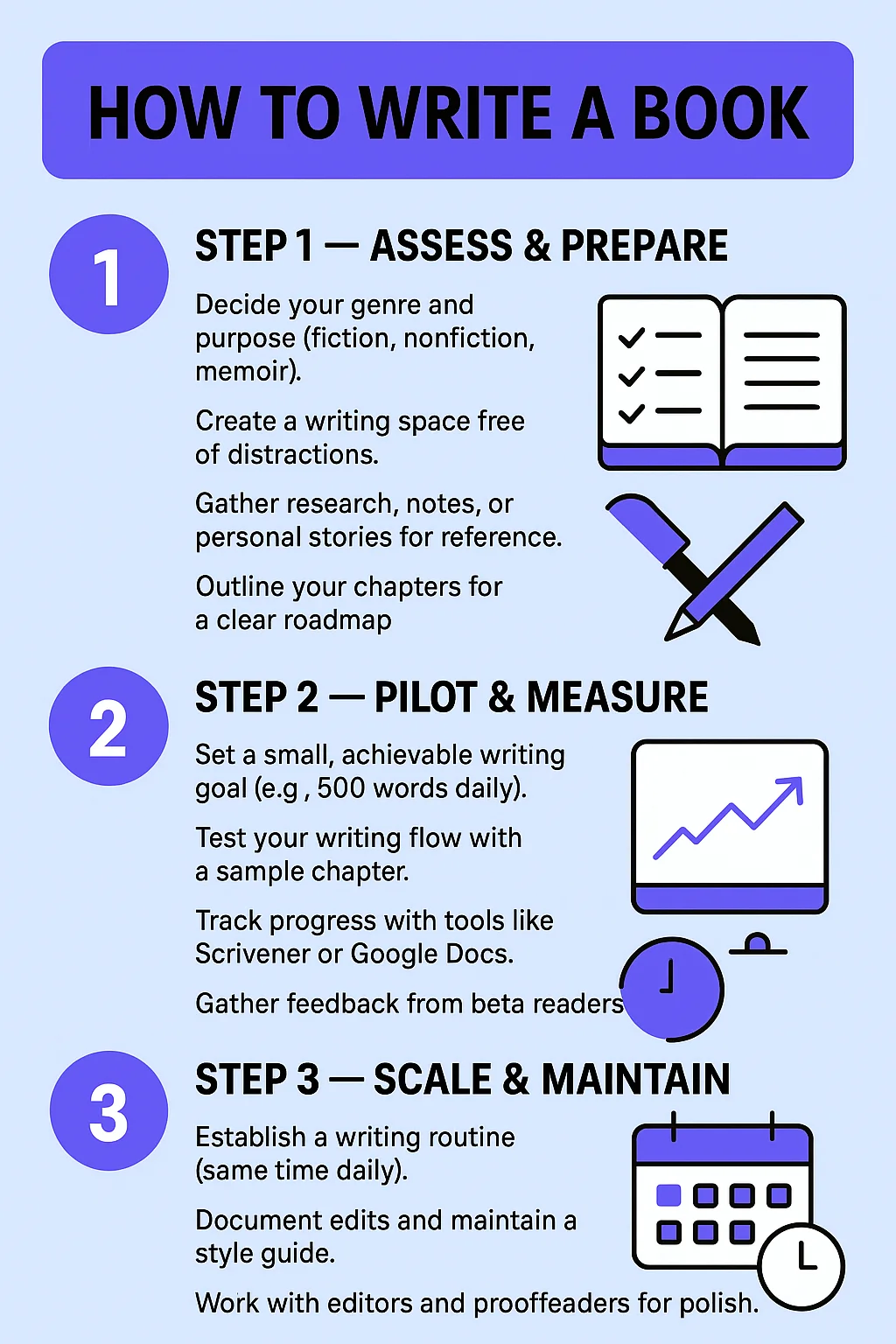
Step 1 — Assess & Prepare
- Decide your genre and purpose (fiction, nonfiction, memoir).
- Create a writing space free of distractions.
- Gather research, notes, or personal stories for reference.
- Outline your chapters for a clear roadmap.
Step 2 — Pilot & Measure
- Set a small, achievable writing goal (e.g., 500 words daily).
- Test your writing flow with a sample chapter.
- Track progress with tools like Scrivener or Google Docs.
- Gather feedback from beta readers.
Step 3 — Scale & Maintain
- Establish a writing routine (same time daily).
- Document edits and maintain a style guide.
- Work with editors and proofreaders for polish.
- Plan a publishing timeline (traditional query vs. self-publishing).
Recommended Tool Categories
- Writing software – Scrivener, Google Docs.
- Editing tools – Grammarly, ProWritingAid.
- Publishing platforms – Amazon KDP, IngramSpark.
- Marketing tools – Canva (cover design), BookBub (promotion).
Offer readers:
- Chapter outline template.
- Daily writing tracker.
- Editing checklist.
- Self-publishing launch plan.
Case Study: Take John, a marketing consultant who turned his blog posts into a business book. Using a 90-day writing plan and self-publishing on Amazon, he sold 5,000+ copies in the first year—boosting his consulting leads by 40%.
Common Mistakes & Troubleshooting
- Quick Fix: Draft a simple roadmap of chapters to guide your writing.
- Quick Fix: Separate drafting and editing phases—focus on finishing the first draft first.
- If your manuscript feels stuck after months.
- If feedback points to major structural issues.
- When preparing for publishing and needing professional editing/cover design.
Measuring Success
Primary KPIs to Track
- Word count progress (e.g., 50,000 words in 90 days).
- Beta reader feedback scores (clarity, engagement).
- Book sales (monthly royalties).
- Reviews & ratings (Amazon/Goodreads).
- Author platform growth (email list, social followers).
Reporting Cadence & Dashboard Tips
- Weekly progress check-ins on word count.
- Monthly review of beta reader or editor feedback.
- Quarterly sales and marketing dashboard.
How to Iterate Based on Results
- Adjust your writing pace if targets aren’t met.
- Refine book marketing based on reader reviews.
- Test new promotional strategies like podcasts or guest posts.
Conclusion
Writing a book is both a challenge and a rewarding journey. By following this step-by-step guide, you’ll know exactly how to write a book and turn your ideas into reality. Start small, stay consistent, and don’t shy away from professional help when needed.
FAQ (Frequently Asked Questions)
Q1: What exactly do you need to write a book?
It’s the structured process of planning, drafting, editing, and publishing a manuscript. Learning how to write a book effectively ensures your story is clear and engaging.
Q2: How long does it take to learn how to write a book effectively?
It varies—3–6 months for a short nonfiction book, 1–2 years for a novel. Consistency, planning, and daily writing habits speed up progress.
Q3: What are the biggest risks, and how can I avoid them?
Risks include writer’s block, poor editing, and a lack of marketing. Mitigate with deadlines, professional editors, and early audience building.
Q4: How should I measure ROI for how to write a book?
Track sales, reviews, and audience growth. ROI comes from royalties plus opportunities like speaking engagements or client leads.
Q5: What tools or resources do you recommend to get started?
Use writing software (Scrivener), editing tools (Grammarly), publishing platforms (Amazon KDP), and free templates or checklists to guide progress.
Q6: Who should I contact if I need expert help?
Hire freelance editors, cover designers, or book coaches. Look for proven experience, testimonials, and transparent pricing before committing.