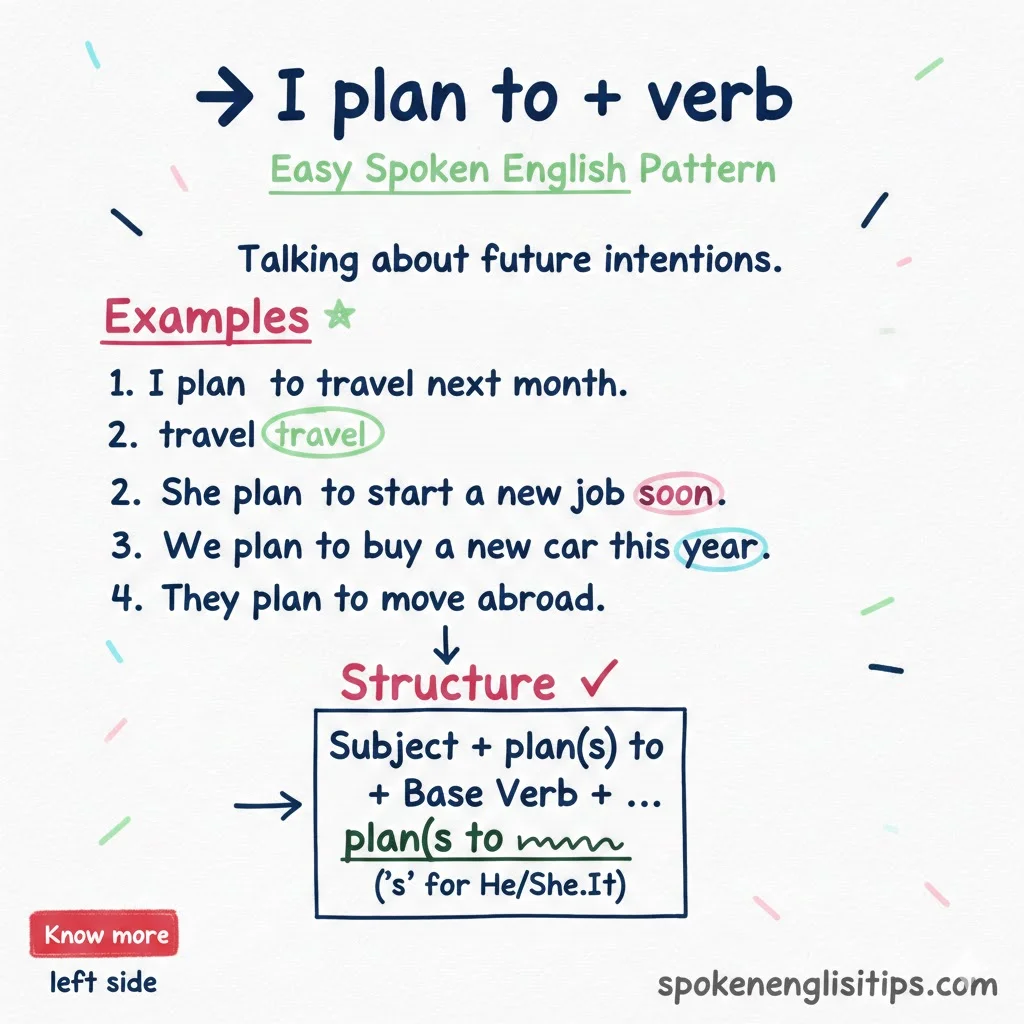
We use “I plan to + verb” when we talk about something we want to do in the future. It shows intention. It means you have already thought about it.
For example, if someone asks about your weekend, you can say, “I plan to visit my parents.” It sounds clear and confident.
You can use this structure in daily life — at work, with friends, during interviews, or while talking about goals.
It is more organized than just saying “I will.” It shows that you have an idea or schedule in your mind.
This structure is very common in spoken English.
◎ Important Points
- Use “plan to” + base verb (no -ing form).
- It talks about future intention.
- You can use it for short-term or long-term plans.
- It sounds more prepared than “I will.”
- You can use it with different subjects (I, We, They, He, She).
- In negative form: I do not plan to…
- In questions: Do you plan to…?
➤Key Concept
✅ Sentence Structure: Subject + plan to + base verb
Example:
I plan to start a new course next month.
Simple Explanation:
After “plan to,” always use the base form of the verb (go, study, travel, call).
🎯 Speaking Tip:
When speaking, stress the word “plan” slightly to sound confident.
Example: I plan to apply for the job.
➤ Common Mistakes To Avoid
| Common Mistake | Wrong Example | Correct Example |
|---|---|---|
| Using -ing form | I plan to going home. | I plan to go home. |
| Forgetting “to” | I plan start early. | I plan to start early. |
| Using past verb | I plan to went there. | I plan to go there. |
| Wrong negative form | I not plan to travel. | I do not plan to travel. |
| Adding extra “will” | I will plan to call him. | I plan to call him. |
➤ Examples
Here are some daily life speaking examples:
- I plan to wake up early tomorrow.
- I plan to finish this report before lunch.
- I plan to meet my friend this evening.
- I plan to improve my English this year.
- I plan to save more money next month.
- I plan to visit Goa during my vacation.
- We plan to shift to a new apartment soon.
- She plans to start her own business.
- They plan to organize a team meeting.
- I plan to cook something special tonight.
➤ Practice Examples
A. Fill in the Blanks
- I plan ___ buy a new phone.
- She plans ___ learn French.
- We plan ___ travel next year.
- I plan ___ call you later.
- They plan ___ start early.
B. Change the Incorrect Sentence to Correct
- I plan to going abroad.
- I plan start gym tomorrow.
- She plan to improve her skills.
- I not plan to attend the party.
- We plan to went there.
C. Speak These Sentences Aloud
- I plan to improve my communication skills.
- I plan to be more confident in meetings.
- I plan to practice English every day.
- I plan to wake up earlier from tomorrow.
- I plan to achieve my goals this year.