Learning to speak English at home is not only possible, but it is also practical and effective if you follow the right steps. Many fluent speakers today learned outside of classrooms by using simple daily habits. The key is consistency, not talent. You don’t need expensive courses or native speakers around you. What you need is a clear plan, patience, and the courage to speak every day.
English speaking is a skill, just like driving or cooking, and skills improve with regular practice. When learning at home, you control your pace and environment, which actually reduces fear and pressure. This step-by-step approach will help you build confidence, improve fluency, and speak English naturally in real-life situations.
Start with Daily Listening
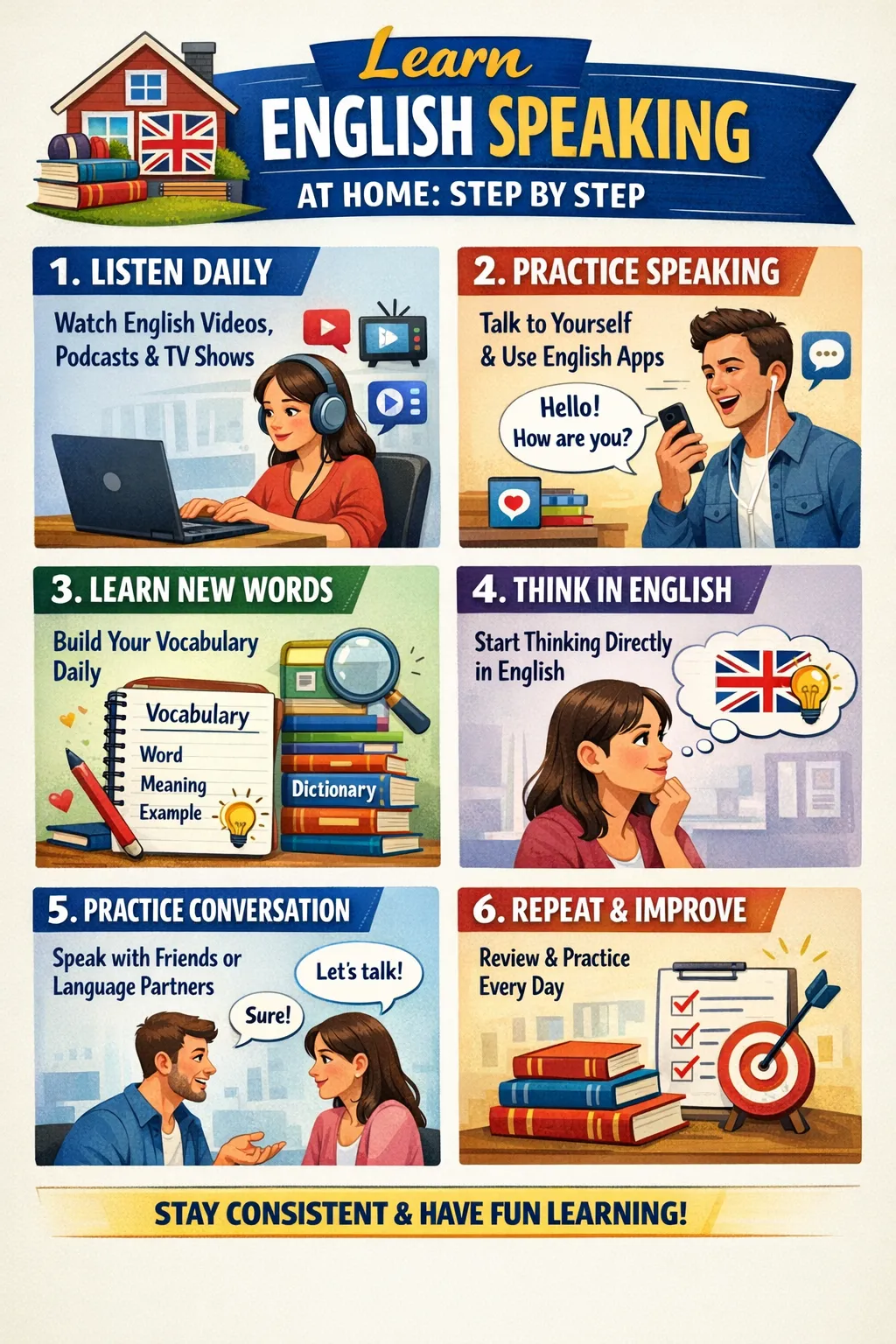
Before speaking well, your ears must get used to English sounds. Listening daily helps your brain understand pronunciation, rhythm, and common sentence patterns. Start with simple content like short videos, podcasts, or slow English news. Research in language learning shows that learners who listen regularly improve speaking faster because they copy what they hear.
Listen actively, not just for entertainment. Notice how words connect, where speakers pause, and how emotions change the voice. Even 20 minutes a day makes a difference. Over time, your mind will store these patterns, making speaking feel more natural and less forced.
Speak Alone Without Fear
Many learners wait for a partner to practice speaking, but the best place to start is alone. Speaking to yourself may feel strange, but it is powerful. Describe what you are doing, share your thoughts, or retell a story you heard. This removes fear of judgment and builds muscle memory for speaking. Studies in language psychology show that self-speaking improves fluency and confidence.
Don’t worry about mistakes at this stage. Fluency comes before accuracy. The goal is to make your mouth comfortable with English sounds. The more you speak alone, the easier it becomes to speak with others later.
Build Simple Vocabulary Naturally
You don’t need thousands of words to speak English well. Focus on common, useful words used in daily life. Learn words in context, not as isolated meanings. For example, learn “make a decision” instead of just “decision.” This helps you speak faster and more naturally.
Experts suggest learning phrases because native speakers think in chunks, not single words. Use new words in your own sentences the same day you learn them. Repetition is important, but meaningful repetition is better. When words connect to your life, they stay longer in your memory and come out easily when you speak.
Practice Pronunciation Slowly
Clear pronunciation matters more than a perfect accent. Many learners speak correctly but are not understood because of pronunciation. Focus on basic sounds, word stress, and sentence rhythm. Use online dictionaries or videos to hear correct pronunciation.
Record your voice and compare it with native speakers. Linguists agree that shadowing, speaking along with audio, is one of the fastest ways to improve pronunciation.
Start slow and increase speed gradually. Don’t rush. Good pronunciation builds confidence, and confidence improves fluency. When people understand you easily, you feel motivated to speak more.
Create Real Speaking Situations
To truly learn English speaking at home step by step, you must create real situations. Practice ordering food, answering interview questions, or having casual conversations. Use mirrors, role-play, or language apps with speaking features. Even short daily conversations make a big impact.
According to language experts, short and regular speaking practice is more effective than long, irregular sessions. Treat English as part of your daily life, not a subject. The more real your practice feels, the more natural your English becomes.
| Step | What to Do | How It Helps |
|---|---|---|
| Step 1 | Listen to English daily using videos, podcasts, or simple news | Trains your ear to understand sounds, rhythm, and natural sentences |
| Step 2 | Speak alone for 10–20 minutes every day | Removes fear and builds speaking confidence |
| Step 3 | Learn common words and daily-use phrases | Helps you speak faster and more naturally |
| Step 4 | Practice pronunciation slowly and clearly | Makes your speech easy to understand |
| Step 5 | Repeat sentences from native speakers | Improves fluency, tone, and sentence flow |
| Step 6 | Record your voice and listen | Helps you notice mistakes and improve |
| Step 7 | Create real-life speaking situations at home | Prepares you for real conversations |
| Step 8 | Speak daily without worrying about mistakes | Builds confidence and natural fluency |
Final Thoughts
Learning English at home is a journey, not a race. Progress may feel slow at first, but every small effort adds up. By listening daily, speaking alone, learning practical vocabulary, improving pronunciation, and creating real situations, you build a strong foundation step by step.
Remember, confidence grows from action, not perfection. Make English part of your daily routine, and over time, speaking will feel natural and enjoyable. Anyone can do it, including you, with the right mindset and consistent practice.