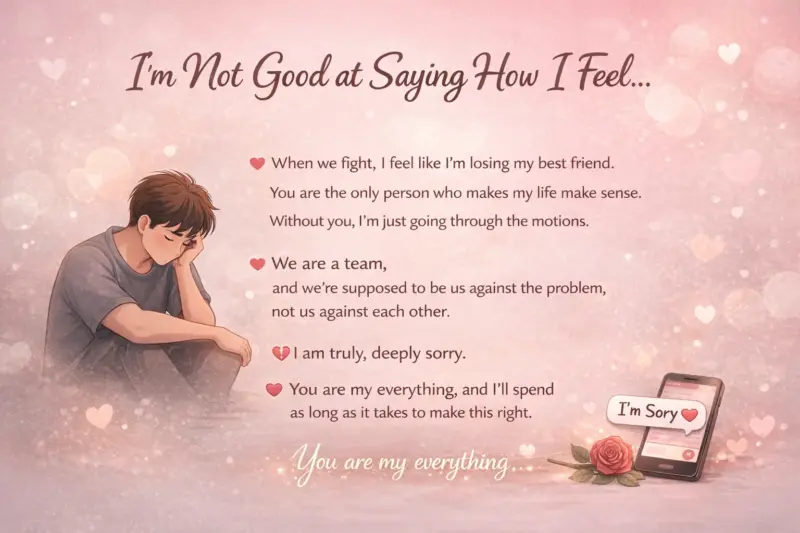
If you’re reading this, I can almost picture you. Phone in hand, thumb hovering over the screen, mind racing. You know you messed up. You know you need to apologize. But the pressure to find just the right words feels immense. You want something short—because a novel feels overwhelming right now—but you also need it to be powerful, to truly land, to bridge that gap you can feel widening.
I get it. In my ten years of writing about relationships and human connection, I’ve learned this truth: a short apology isn’t about being lazy. It’s about surgical precision. It’s about cutting through the noise and delivering the raw, honest core of your regret directly to her heart.
But here’s the critical part so many miss: The goal isn’t just to say “sorry.” The goal is to make her feel heard, understood, and valued again.
Today, I’m not just going to give you a list of messages to copy-paste (though we’ll get to templates, I promise). We’re going to build your apology from the ground up. We’ll talk about the anatomy of a healing apology, why short can be incredibly potent, and how to choose the exact words that fit your unique mistake and your unique girl. Let’s turn that “I’m sorry” from a band-aid into a genuine step toward reconnection.
Why “Short” Doesn’t Mean “Shallow”
Before we write a single word, let’s shift the mindset. We often think a long, elaborate apology shows more effort. Sometimes it does. But often, a rambling, over-explained apology becomes more about your guilt and justifying your actions than about her hurt.
The 4 Non-Negotiable Pillars of ANY Authentic Apology
1. The Specific “I’m Sorry”
Not “I’m sorry you got upset,” but “I’m sorry I was late and didn’t call.” Name the action. Take ownership. Vague apologies feel like dodges.
2. The Acknowledgment of Impact
This is the heart-connector. You must show you understand how your action made her feel. “I know that made you feel unimportant and like I don’t respect your time.” This tells her you’re seeing the situation from her side of the fence.
3. The Taking of Responsibility
No “buts,” no “ifs,” no blaming stress, work, or traffic. “That was my fault. I should have managed my time better/been more thoughtful/listened.” Full stop.
4. The Commitment to Change (The “Amends”)
This is the future-tense promise that gives the apology teeth. “It won’t happen again. I’ll set an alarm next time/call if I’m running late.” This moves you from regret to solution.
A short apology masterfully weaves these four pillars into a few powerful lines.
Not all “sorrys” are created equal. The message for forgetting an important date is different from one for a heated argument. Let’s match the medicine to the ailment.
25 Short Message Templates
These messages actually work for you. Choose according to the situation what suits you
“Just thinking about how I messed up our plans today. I’m so sorry. You deserve my full attention and effort, and I dropped the ball. I’m making it up to you. You’re my priority.”
“I am so sorry I didn’t call. It was pure thoughtlessness on my part, not a reflection of how much I value you. Can I take you out this weekend?”
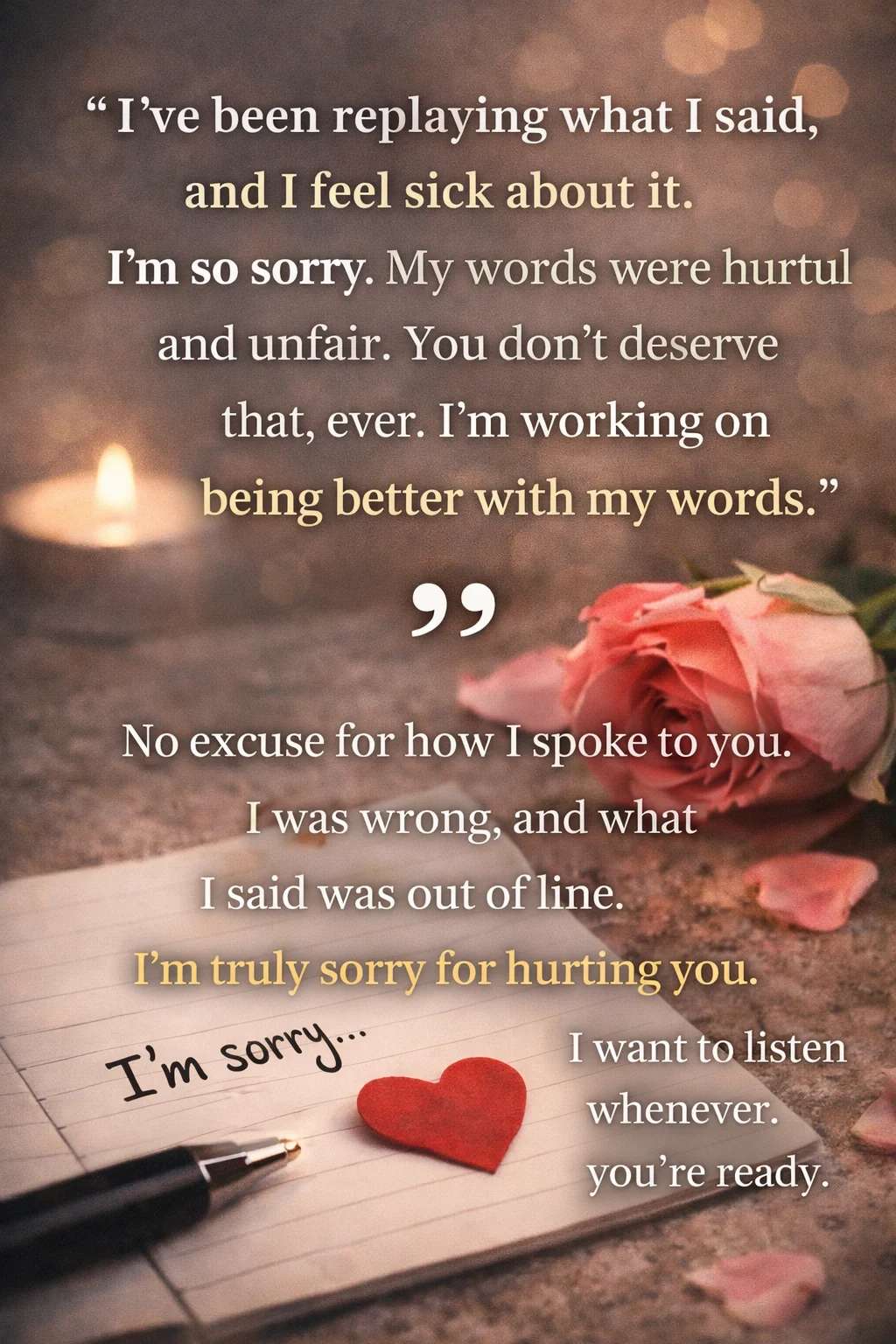
“I’ve been replaying what I said, and I feel sick about it. I’m so sorry. My words were hurtful and unfair. You don’t deserve that, ever. I’m working on being better with my words.”
“No excuse for how I spoke to you. I was wrong, and what I said was out of line. I’m truly sorry for hurting you. I want to listen whenever you’re ready.”
“I know ‘sorry’ can’t fix this right now. But I am—deeply and truly. I broke your trust, and I will spend every day earning it back. I understand if you need time. I’m here, and I’m not going anywhere.”
“I own what I did. It was a massive failure of my judgment and my commitment to you. I am so sorry for the pain I’ve caused. I am committed to doing whatever it takes to rebuild what I damaged.”
“This quiet between us is the worst. I’m sorry. Can I come over and hug you? I hate being on the wrong side of anything from you.”
“I don’t like arguing with my favorite person. I’m sorry for my part in it. Coffee and a makeup hug on me?”
"I was wrong. I'm sorry. You mean too much to me to let my thoughtlessness hurt you. How can I make this right?"
"Just realizing how my actions made you feel unimportant. That's the last thing I ever want. I'm so sorry. You're my priority."
"No excuses. I messed up by [mention specific action]. I'm sorry. I'm working on being more mindful for you."
"My words were out of line and hurtful. I apologize sincerely. I want to be your safe place, not the source of your pain."
"I've been thinking about our argument, and I see where I was wrong. I'm sorry for [specific thing said/done]. Can we talk?"
"I hate this tension. I'm sorry for my part in it. I value our peace more than being 'right.'"
"I let my emotions get the best of me. That wasn't fair to you. I'm sorry for [the overreaction]. I'm taking a breath next time."
"'Sorry' feels small for what I did. I deeply regret breaking your trust. I know it will take time, and I am committed to earning it back."
"I understand the hurt I've caused is deep. I'm not asking for instant forgiveness, just a chance to prove through my actions that I've learned. I'm so sorry."
"What I did was unacceptable. Period. I am completely at fault and deeply sorry for the pain I've brought you. I will do better."
Sweet & Simple Reconnections
“This quiet feels wrong. I’m sorry. Can we reset? I miss you.”
“I’m sorry about yesterday. Looking forward to making today better with you.”
“I messed up. I’m sorry. Let me cook for you tonight and we can talk?”
When You Need to Be Specific & Heartfelt
"I can't believe I forgot [event/thing]. That was careless of me and doesn't reflect how much I cherish you. I'm so sorry. Let me make a special plan to celebrate?"
"I know I've been in my head lately and haven't been fully present with you. I'm sorry. You deserve my attention. I'm shifting my focus to where it belongs—to us."
"Bailing on our plans was really unfair to you. I'm sorry for not managing my time/energy better. I was really looking forward to seeing you, too. Can we reschedule for [specific time]?"
"I'm sorry. I was wrong. (Wait a beat...) And I love you."
"I owe you an apology. And I'd like to give it to you properly when you're ready."
"If I were in your shoes, I'd be upset too. I'm truly sorry."
"You deserve consistent love and respect. I'm sorry I fell short of that. I'm committed to rising to meet you."
"I damaged something beautiful with my actions. I'm so sorry. Please know I am here, patiently and lovingly, ready to help rebuild when you are."
? Short Sorry Messages for Girlfriend
- “I keep replaying my words, and they hurt me too. I’m deeply sorry. What I said was unfair, and you never deserved that. I’m learning to be better with my words.”
- “There’s no excuse for how I spoke to you. I was wrong. I truly regret hurting you, and I’m here to listen whenever you’re ready.”
- “I feel sick thinking about what I said. I’m so sorry. My words were careless, and you deserve love and respect—always.”
- “I crossed a line with my words, and I own that. I’m genuinely sorry for the pain I caused. Please know I’m trying to grow.”
- “What I said came from frustration, not my heart. That doesn’t make it okay. I’m truly sorry and ready to listen to you.”
- “I was wrong in how I spoke to you. My words were hurtful, and I regret them deeply. You deserve kindness, not pain.”
- “I can’t take back my words, but I can promise to do better. I’m sorry for hurting you. You mean too much to me.”
- “No justification, no defense—just a sincere apology. I was wrong, and I’m truly sorry for the hurt I caused.”
What NOT to Do – The Apology Killers
Avoid these like the plague. They undo all your good work:
- “I’m sorry you feel that way.” (This blames her for feeling hurt.)
- “I’m sorry, but you also…” (The “but” cancels the entire apology.)
- The Overwhelming Novel: A wall of desperate text feels manipulative.
- Demanding Forgiveness: “I said sorry, can we just move on?” Forgiveness is her gift to give, on her timeline.
At the end of the day, your girlfriend doesn’t love you because you’re perfect. She loves you because of the unique connection you share. An apology, when done right, isn’t a sign of weakness or defeat. It’s a brave act of protection. You are protecting her heart, your bond, and the shared future you’re building.
So take a deep breath. Look at the templates not as scripts to steal, but as blueprints. Find the one that resonates with your situation, infuse it with your genuine remorse and love, and send it. Then, get ready to do the real work.
Because the most beautiful sentence after a great apology isn’t “It’s okay.” It’s, “I see you’re trying. And I appreciate it.”
Go bridge that gap. You’ve got this.