Digital marketing has become one of the most practical and in-demand skills in today’s job market. Almost every business, from a local shop to a global brand, relies on online channels to reach customers. Search engines, social media, email, and websites now play a central role in buying decisions.
Because of this shift, companies are actively looking for people who understand how digital platforms work. For beginners, digital marketing is attractive because it does not require a technical background or years of experience.
You can start from scratch, learn online, and apply your skills quickly. This flexibility is why many students, working professionals, and even business owners are searching for the best digital marketing course for beginners online.
What Beginners Really Need
A beginner-friendly digital marketing course should focus on clarity rather than complexity. Many learners feel overwhelmed by terms like SEO, PPC, analytics, and funnels. A good course explains these ideas in simple language, with real examples. Beginners need a strong foundation, not shortcuts.
This means understanding how customers behave online, how content attracts attention, and how platforms like search engines and social media connect businesses with users.
Practical exposure matters more than theory. Courses that include live projects, case studies, and real tools help learners gain confidence. The best courses also guide beginners step by step, assuming no prior knowledge and gradually building skills in a logical flow.
Core Topics That Matter
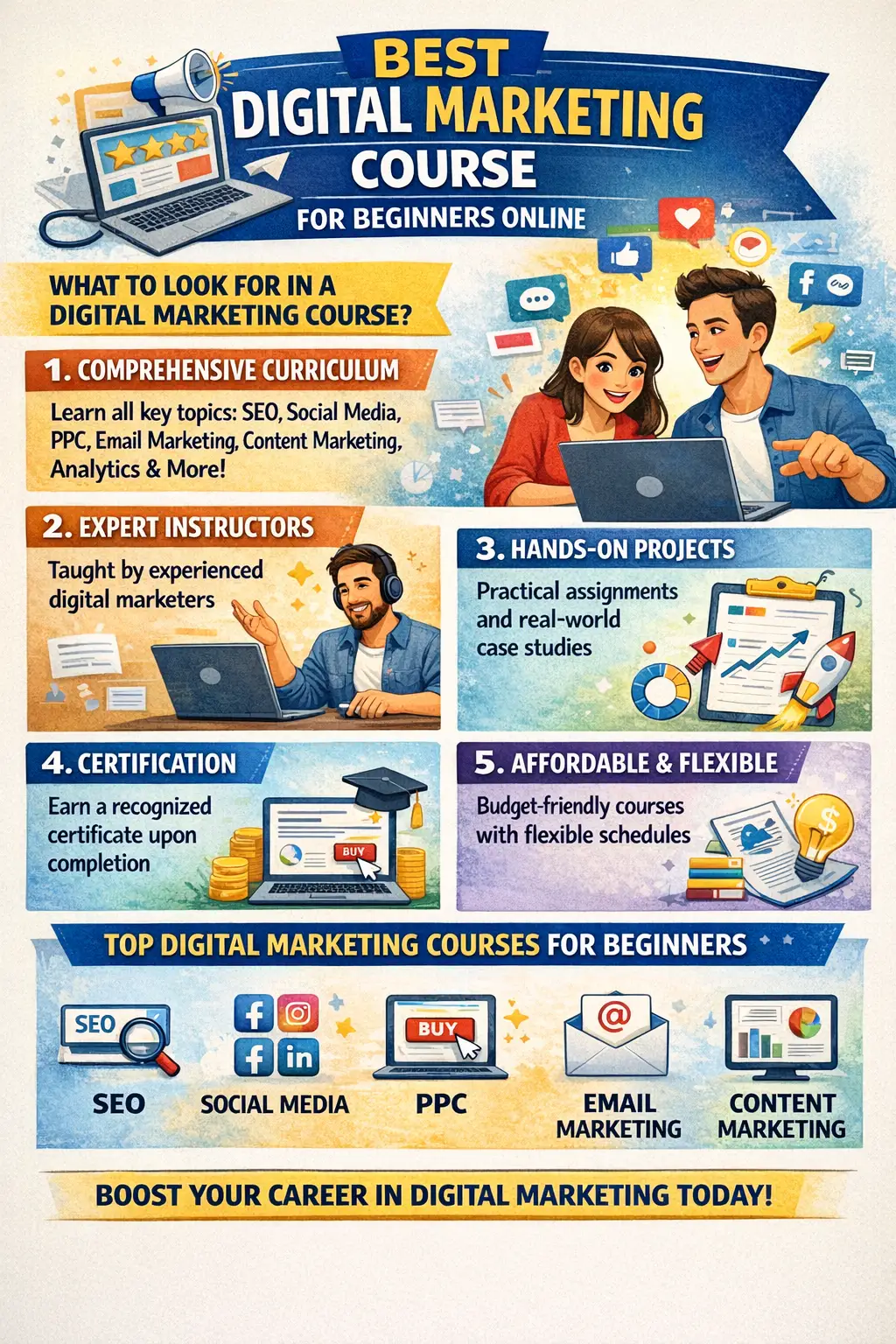
When choosing the best digital marketing course for beginners online, it is important to look at the topics covered. A well-rounded course usually starts with an overview of digital marketing and then moves into core areas like search engine optimization, social media marketing, content marketing, email marketing, and paid advertising.
SEO helps websites appear on search engines, while social media marketing focuses on building engagement and brand awareness. Content marketing teaches how to create valuable blogs, videos, and posts.
Email marketing explains how businesses nurture leads, and paid ads show how to get faster results with budgets. Beginners benefit most when these topics are taught with practical demonstrations rather than abstract theory.
Learning SEO From Scratch
Search engine optimization is often the most confusing part for beginners, yet it is one of the most valuable skills. A beginner-friendly course explains SEO as a long-term strategy to increase visibility on search engines like Google. It covers keyword research, on-page optimization, and basic technical concepts without heavy jargon. Good courses show how search engines rank pages and why user experience matters.
Beginners should learn how to optimize content, titles, and descriptions, and how links affect rankings. When SEO is taught with simple tools and real examples, learners start seeing it as a logical process rather than a mystery.
Social Media Made Simple
Social media marketing is usually the most exciting module for beginners. Platforms like Instagram, Facebook, LinkedIn, and YouTube allow brands to connect directly with audiences. A strong beginner course explains how each platform works and what type of content performs best. Instead of chasing followers, learners understand engagement, reach, and consistency.
Courses that teach basic content planning, posting strategies, and analytics help beginners see social media as a business tool. Real case studies, such as how small brands grew through organic posts or ads, make learning more relatable. Beginners also learn that social media success takes time, creativity, and experimentation.
Content That Builds Trust
Content marketing is the heart of digital marketing. It focuses on creating useful and relevant information that attracts and retains audiences. A good online course for beginners explains why content matters and how it supports SEO, social media, and email marketing. Learners discover how blogs, videos, infographics, and podcasts help build trust.
The best courses teach content planning, basic copywriting, and storytelling in simple terms. Beginners benefit from learning how to write for humans first, not algorithms. When content marketing is explained clearly, learners understand that selling online is more about helping than pushing products.
Email and Automation Basics
Email marketing remains one of the highest-return digital marketing channels. Beginners often underestimate its power, but a good course changes this perception. It explains how email helps businesses stay connected with customers over time. Beginner courses usually cover list building, email types, subject lines, and basic automation. Instead of complex software, learners are introduced to simple tools and examples.
They learn how welcome emails, newsletters, and follow-ups work together. Understanding email marketing gives beginners a sense of how digital marketing creates long-term relationships, not just one-time clicks or views.
Paid Ads Without Fear
Paid advertising can sound risky to beginners because it involves money. However, the best digital marketing courses explain paid ads carefully and responsibly. Beginners learn the basics of platforms like Google Ads and social media ads without pressure. Courses show how targeting works, why budgeting matters, and how to measure results.
Simple examples, such as running a small campaign with a limited budget, help learners understand the process. When paid ads are taught correctly, beginners realize that data and testing matter more than big spending. This knowledge removes fear and builds confidence.
Importance of Analytics
Analytics is where many beginners feel lost, but it does not have to be complex. A beginner-friendly course explains analytics as a way to understand what works and what does not. Instead of focusing on too many numbers, good courses teach key metrics like traffic, engagement, and conversions.
Learners discover how tools like Google Analytics track user behavior. When analytics is taught with clear goals and examples, beginners see it as a helpful guide rather than a technical burden. This understanding helps them make smarter marketing decisions.
Certification and Credibility
For beginners, certification adds confidence and credibility. Many online digital marketing courses offer certificates that can be added to resumes or LinkedIn profiles. While certificates alone do not guarantee jobs, they show commitment and basic knowledge.
Well-known platforms like Google, Coursera, and HubSpot provide beginner-friendly digital marketing courses with recognized certificates. These courses are designed with industry standards in mind and are often updated regularly. Beginners benefit when certification is supported by practical learning rather than just exams.
Comparing Course Features
The table below highlights common features beginners should look for when choosing the best digital marketing course online.
| Feature | Why It Matters for Beginners |
|---|---|
| Beginner-friendly language | Helps avoid confusion and overwhelm |
| Practical projects | Builds real-world confidence |
| Updated content | Reflects current digital trends |
| Expert instructors | Ensures quality and clarity |
| Certification | Adds credibility to profiles |
| Flexible schedule | Allows learning at your own pace |
This comparison helps beginners focus on learning quality rather than marketing promises.
Self-Paced vs Live Learning
Online digital marketing courses usually come in two formats: self-paced and live sessions. Self-paced courses allow learners to study anytime, which is ideal for working professionals and students. Live courses offer interaction, doubt-solving, and structured timelines.
Beginners should choose based on their learning style. Some people prefer recorded videos they can revisit, while others need live guidance. The best courses often combine both, offering recorded lessons with live support. This balance ensures flexibility without losing direction.
Real-World Case Insight
A simple case study helps show the impact of learning digital marketing. Consider a small local bakery that relied only on walk-in customers. After the owner completed a beginner online digital marketing course, they optimized their Google profile, posted regularly on social media, and ran small local ads.
Within three months, online orders increased noticeably. This example shows that digital marketing skills are practical and immediately useful. Beginner courses that share such real stories help learners connect theory with reality and see the value of what they are learning.
Career Paths After Learning
One reason digital marketing courses are popular is the variety of career paths they open. Beginners can start as digital marketing executives, social media managers, SEO assistants, or content creators. Freelancing is another option, allowing learners to work with multiple clients remotely.
Some learners use digital marketing skills to grow their own businesses or personal brands. A good beginner course explains these paths clearly, helping learners set realistic expectations. Digital marketing is not about instant success, but about consistent learning and practice.
Cost and Value Balance
The best digital marketing course for beginners online is not always the most expensive one. Beginners should focus on value rather than price. Affordable courses with clear explanations and practical examples often deliver better results than costly programs filled with jargon.
Many platforms offer free introductory modules, allowing learners to test before committing. Investing time and effort matters more than spending large amounts of money. A course that fits your pace and learning style will always offer better returns.
Common Mistakes to Avoid
Beginners often make the mistake of trying to learn everything at once. Digital marketing is broad, and rushing leads to confusion. A good course encourages focused learning and practice. Another mistake is choosing courses that promise quick success without effort.
Real learning takes time. Beginners should also avoid outdated content, as digital platforms change frequently. Courses that are regularly updated help learners stay relevant. Awareness of these mistakes helps beginners make smarter choices.
Choosing the Right Course
Selecting the best digital marketing course for beginners online requires clarity about goals. If your aim is career growth, look for structured courses with projects and support.
If you want to promote your own business, focus on practical application. Reading reviews, checking course outlines, and understanding instructor backgrounds can help. A good course feels supportive, not overwhelming. It guides learners from basics to application with patience and clarity.
Final Thoughts
Digital marketing is one of the most accessible skills to learn online today. For beginners, the right course can open doors to new careers, side income, or business growth. The best digital marketing course for beginners online is one that explains concepts clearly,
offers practical experience, and builds confidence step by step. With the right guidance and consistent practice, anyone can learn digital marketing, regardless of background. The journey may seem long at first, but the rewards are real, practical, and long-lasting.