Reading stories with moral in english is one of the best ways to learn values and life lessons in an engaging manner. Unlike short anecdotes, these good moral stories in English take readers on a journey filled with characters, emotions, and meaningful situations.
From timeless classics to modern tales, people often look for the top moral stories in English because they teach kindness, honesty, courage, and empathy in the most memorable way. A beautiful long story in English with a moral doesn’t just entertain—it leaves a lasting impression that inspires us to live better.
In this article, we’ll explore some of the finest moral stories crafted to guide readers of all ages. Whether you’re a student seeking inspiration, a parent looking for stories to share, or someone who enjoys thoughtful reading, these stories will enrich your understanding of life and values.
50 Beautiful Big Stories with Moral in English For Every Child
Here are 50 list of the best stories with moral in English for kids and students:-
1. The Honest Woodcutter and His Axe

Once upon a time, a poor woodcutter lived in a small village by the river. Every morning, he carried his iron axe to the forest and chopped wood to sell in the market. One day, while cutting a tree near the riverbank, his axe slipped from his hands and fell into the deep water.
He sat by the river, worried and helpless. Suddenly, a shining fairy appeared from the water. She asked, “Why are you crying, dear woodcutter?” He explained that his only tool to earn a living was lost. The fairy smiled and dived into the river. She returned with a golden axe and asked, “Is this yours?” The woodcutter shook his head and said, “No, mine was simple iron.” She disappeared again and came back with a silver axe. Once again, he said, “No, mine was not so valuable.” Finally, she returned with his old iron axe. The woodcutter’s eyes lit up with relief. “Yes, this is mine,” he said honestly.
The fairy was pleased with his truthfulness. She rewarded him by giving all three axes—the golden, the silver, and his iron one. The woodcutter returned home, richer than ever, and continued to live an honest life.
Moral: Honesty is always rewarded.
The Lion and the Clever Rabbit
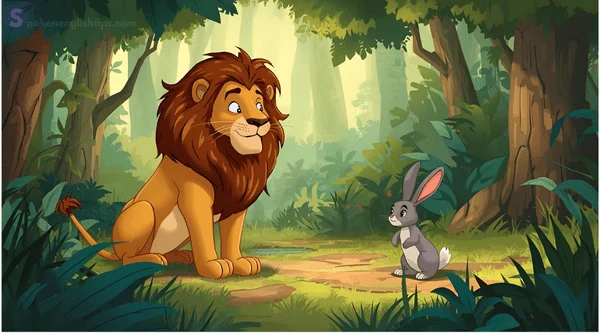
In a jungle, a powerful lion believed he was king of all creatures. He hunted freely and demanded every animal bring him food. The animals grew tired of losing their friends and family, so they gathered to discuss a plan. Finally, a small but clever rabbit stepped forward and promised to deal with the lion.
The next day, the rabbit walked slowly to the lion’s den. The angry lion roared, “Why are you late? Where is my meal?” The rabbit bowed and said, “On my way, another lion stopped me and claimed he was the true king. He even challenged you.”
The lion’s pride was hurt. “Take me to this imposter at once!” he ordered. The rabbit led him to a deep well filled with water. “He lives inside,” the rabbit said. The lion peered into the well and saw his own reflection. Thinking it was another lion, he roared. His echo came back louder, making him furious. Without thinking, he leapt into the well to fight, but he drowned instantly.
The rabbit returned to the other animals, and the jungle was finally free from fear.
Moral: Intelligence is stronger than brute force.
The Tortoise and the Hare’s Big Race
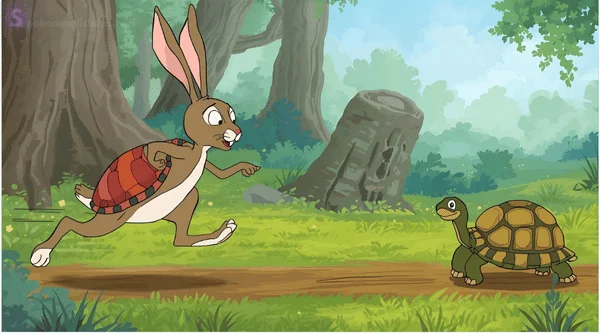
Long ago, a hare loved to boast about how fast he could run. “No one in the forest can beat me,” he bragged. Tired of his arrogance, the tortoise calmly challenged him to a race. The hare laughed but agreed.
On the race day, all the animals gathered to watch. The race began, and the hare darted forward, leaving the tortoise far behind. Confident of his victory, the hare thought, “That slow tortoise will take hours. I can rest.” He lay under a shady tree and soon fell asleep.
Meanwhile, the tortoise kept moving slowly but steadily. Step by step, he crossed the path and finally reached the finish line. The animals cheered loudly as the tortoise won. The hare woke up, rushed to the end, but it was too late.
The humbled hare apologized, and from that day, he stopped mocking others.
Moral: Slow and steady wins the race.
The Boy Who Cried Wolf Too Many Times
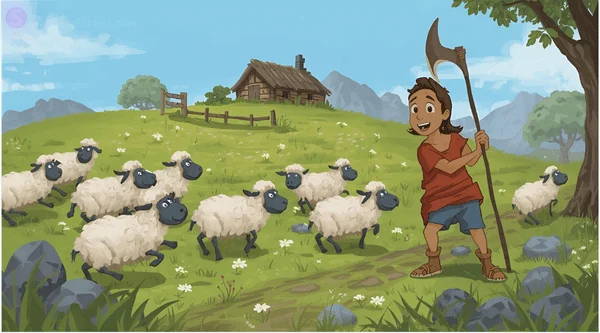
In a quiet village, a young shepherd boy looked after sheep on a hill. He often grew bored and wanted attention. One day, he shouted, “Wolf! Wolf! A wolf is chasing the sheep!” The villagers rushed up the hill with sticks, but they found no wolf. The boy laughed at their anger.
He repeated the trick a few days later, and again the villagers ran up, only to be fooled. “Why do you keep lying?” they scolded, but the boy only giggled.
One evening, a real wolf appeared from the forest. Terrified, the boy screamed louder than ever, “Wolf! Please help me!” But this time, the villagers ignored him, thinking it was another prank. The wolf attacked the sheep, and the boy could do nothing but cry in regret.
The villagers later told him, “No one believes a liar, even when he tells the truth.”
Moral: Lies destroy trust.
The Ant and the Lazy Grasshopper

One summer, a hardworking ant gathered food every day. He carried grains, seeds, and leaves back to his nest. Nearby, a grasshopper spent his days singing and dancing. “Why work so hard?” laughed the grasshopper. “There is plenty of food now.”
The ant replied, “Summer won’t last forever. Winter will come, and then food will be scarce.” But the grasshopper ignored him and kept enjoying himself.
Months later, the cold winds blew, and snow covered the ground. The grasshopper had nothing to eat. Hungry and freezing, he knocked on the ant’s door. The ant shared some food but reminded him, “You mocked me in summer. If you had worked then, you wouldn’t suffer now.”
The grasshopper realized his mistake and promised to be more responsible.
Moral: Hard work and preparation bring security.
The Fox and the Sour Grapes
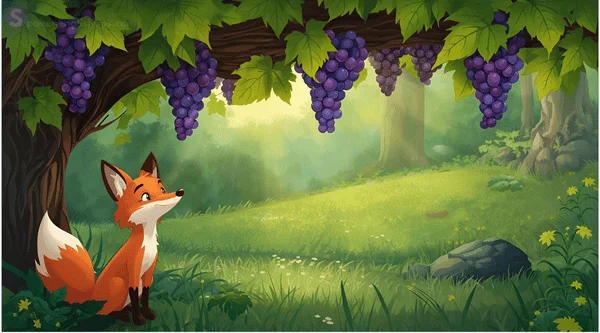
One hot afternoon, a hungry fox wandered through the forest in search of food. Suddenly, he spotted a grapevine full of ripe, juicy grapes hanging high above. His mouth watered, and he thought, “Ah! These grapes will satisfy my hunger.”
The fox jumped with all his strength but failed to reach them. He tried again and again—running faster, leaping higher—but the grapes were still out of reach. Panting and tired, he sat under the vine and stared at the grapes one last time.
Instead of admitting his failure, he sneered, “Those grapes must be sour anyway. Why should I waste my energy?” With that excuse, he walked away, still hungry.
Moral: It’s easy to despise what you cannot have.
The Monkey and the Crocodile’s Trick
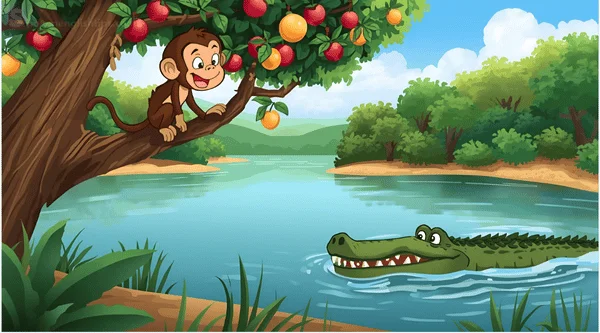
On the banks of a wide river, a monkey lived happily on a fruit tree. He enjoyed the sweet fruits and often chatted with a crocodile who lived in the water. The crocodile pretended to be his friend, but in truth, he wanted to eat the monkey’s heart after hearing from his wife that monkey hearts were delicious.
One day, the crocodile invited the monkey for a ride on his back across the river. Trusting him, the monkey agreed. Halfway across, the crocodile revealed his plan: “My wife wants your heart for dinner.”
The clever monkey quickly thought of a plan. “Why didn’t you tell me earlier?” he said calmly. “I left my heart in the tree! Take me back, and I’ll fetch it.” The foolish crocodile believed him and swam back. The moment they reached the shore, the monkey leapt safely onto the tree. From the branches, he shouted, “Friendship built on betrayal never lasts!”
Moral: Wit and presence of mind can save you from danger.
The Golden Touch of King Midas
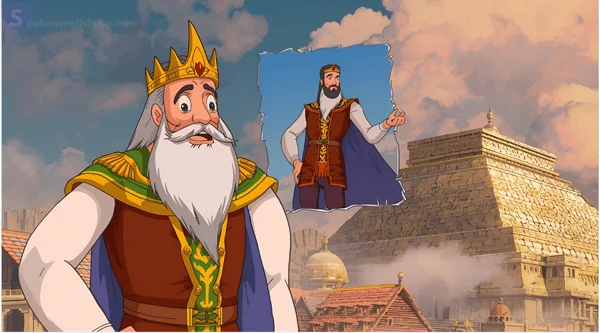
Long ago, there lived a king named Midas who loved gold more than anything else. Though he had plenty, he always desired more. One day, a wise spirit appeared before him and offered to grant a wish. Without thinking, Midas asked, “Grant me the power to turn everything I touch into gold.”
The spirit warned him, but Midas insisted. The wish was granted. At first, he was delighted. He touched stones, chairs, and flowers, and they all turned into shining gold. But soon he grew hungry. When he touched his bread and water, they too turned into gold.
Horrified, he embraced his daughter for comfort, but she instantly became a golden statue. Realizing his greed had destroyed his happiness, Midas begged the spirit to take back the gift. The spirit took pity on him and restored everything to normal. From then on, Midas valued love and life above wealth.
Moral: Greed can cost you everything you truly love.
The Farmer and His Three Sons
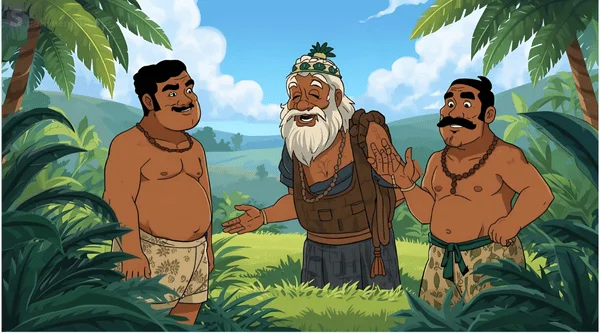
A wise old farmer had three sons who constantly quarreled with one another. He tried many times to teach them unity, but they never listened. As he grew weak with age, he decided to teach them a final lesson.
He gave them a bundle of sticks tied together and asked them to break it. Each son tried, but none could break the bundle. Then the farmer untied the sticks and handed them out one by one. This time, the sons broke them easily.
The farmer said, “Just like these sticks, you are strong when united, but weak when divided. If you continue fighting, others will defeat you. Stay together, and no one can harm you.”
The sons finally understood the value of unity and promised to live peacefully together.
Moral: Unity is strength. Division leads to weakness.
The Greedy Dog and the Bone
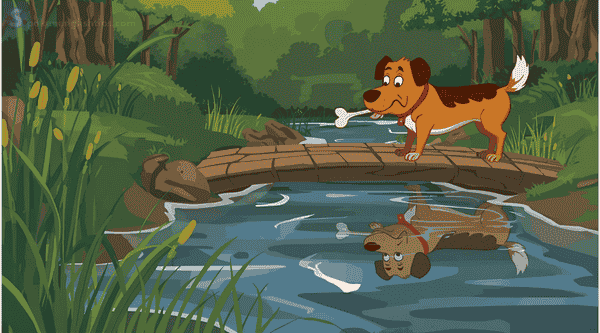
One evening, a hungry dog found a big bone and happily carried it home in his mouth. On his way back, he had to cross a wooden bridge. Looking down into the river, he saw his reflection and thought it was another dog with a bigger bone.
Greedy for more, he barked loudly to scare the “other dog.” But as he opened his mouth, his bone slipped and fell into the water. The greedy dog watched helplessly as the river carried it away. He returned home with nothing but regret.
Moral: Greed often leads to loss.
The Crow and the Pitcher of Water
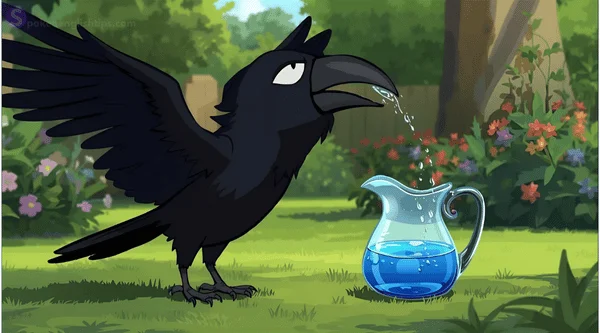
One scorching summer, a thirsty crow flew from place to place in search of water. His wings were heavy, and his throat burned with dryness. Finally, he spotted a pitcher lying in a garden. Excited, he flew down and looked inside.
There was water at the bottom, but it was too low for him to reach with his beak. The crow tried tilting the pitcher, but it was too heavy. He almost gave up, but then a clever idea struck him. He noticed small pebbles scattered nearby.
One by one, he picked up the pebbles and dropped them into the pitcher. Slowly, the water level rose higher and higher until it was within his reach. The crow happily drank the water and flew away, refreshed.
Moral: Where there is a will, there is a way.
The Two Friends and the Bear in the Forest
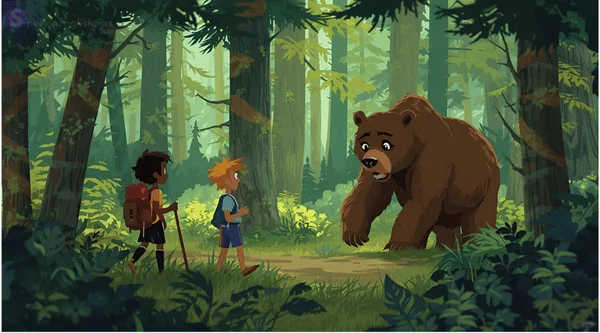
Two close friends once decided to travel through a dense forest. Before leaving, they promised to help each other in times of danger. As they walked, they suddenly heard a loud growl—a bear was coming toward them.
Terrified, one friend quickly climbed up a nearby tree and hid, forgetting the promise. The other friend, unable to climb, lay flat on the ground and held his breath, pretending to be dead. The bear came close, sniffed him, and then walked away, believing he was lifeless.
When the danger passed, the friend in the tree climbed down and asked with a smile, “What did the bear whisper to you?” The man replied sternly, “He told me never to trust a friend who deserts me in trouble.”
Moral: A true friend is known in times of need.
The Goose That Laid Golden Eggs
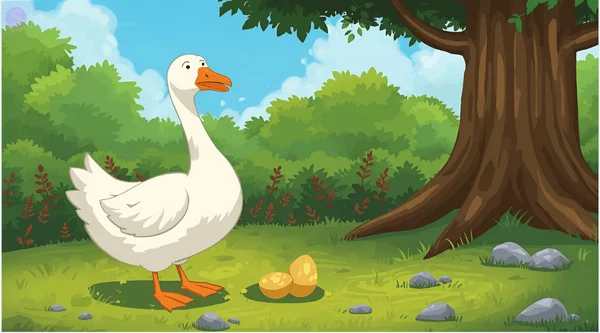
A farmer once owned a goose that laid one golden egg every morning. He was thrilled and sold the egg daily, becoming wealthier and wealthier. But soon, greed filled his heart.
The farmer thought, “If I cut open the goose, I’ll get all the golden eggs at once and become the richest man alive.” Without thinking further, he killed the goose. To his shock, there were no eggs inside, and his precious goose was gone forever.
He sat and wept, realizing his greed had ruined everything.
Moral: Greed destroys what you already have.
The Wise Old Owl in the Forest
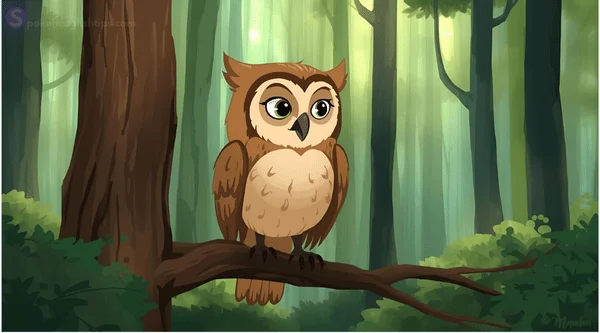
In a quiet forest lived an old owl who spoke very little. He spent his days watching and listening to everything around him. The other animals laughed at him for being silent.
One day, two squirrels argued over a pile of nuts. The owl watched silently until the quarrel grew dangerous. Then he wisely divided the nuts equally between them. Another time, a young deer got trapped in thorns, and the owl guided the other animals to rescue it.
Gradually, the animals realized the owl’s silence was not weakness but wisdom. They began to respect his advice and sought his guidance in difficult times.
Moral: Wise people speak less but say more.
The Bundle of Sticks and Strength in Unity
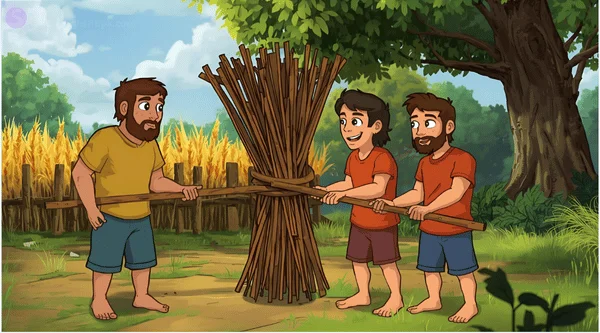
A farmer had four sons who constantly fought. Tired of their arguments, he decided to teach them a lesson. He handed them a bundle of sticks tied tightly together and asked them to break it. Each son tried, but none succeeded.
Then the farmer untied the bundle and gave them sticks one by one. This time, they broke them easily. The farmer said, “If you remain united, no one can harm you. But if you keep fighting, you’ll be as weak as single sticks.”
The sons finally understood and promised to live in harmony.
Moral: Unity brings strength, division brings weakness.
The Selfish Giant and His Garden
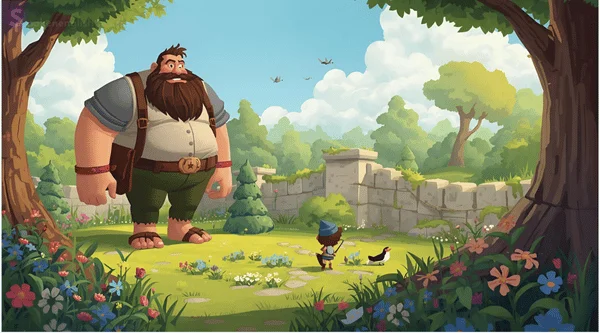
Once there was a giant who owned a beautiful garden filled with flowers, trees, and singing birds. Children loved to play there every afternoon. But the giant was selfish. “This is my garden. No one else can enter,” he declared and built a tall wall around it.
Without the children’s laughter, the garden became dull. The flowers withered, the trees stopped bearing fruit, and the birds flew away. The garden remained cold and lifeless, even when spring came everywhere else.
One morning, the giant noticed a small hole in the wall. The children had slipped in, and suddenly the garden bloomed again. Flowers blossomed, trees swayed with fruit, and birds chirped happily. The giant realized that joy came not from possession but from sharing.
He welcomed the children back forever, and his garden remained beautiful for years to come.
Moral: Happiness grows when we share with others.
The Little Red Hen and the Lazy Friends
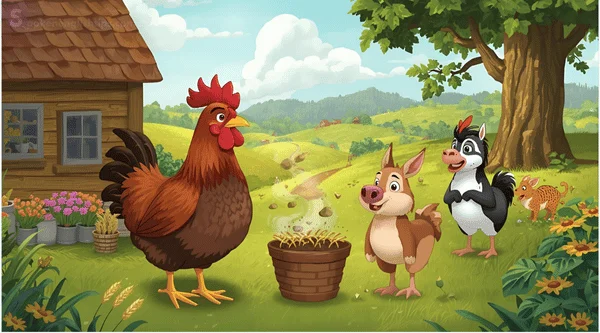
A little red hen lived on a farm with other animals. One day, she found some wheat seeds. “If we plant these seeds, we’ll have bread to eat. Who will help me plant them?” she asked.
“Not I,” said the dog. “Not I,” said the cat. “Not I,” said the duck. So, the hen planted the seeds alone. She asked again for help when it was time to water, harvest, and grind the wheat, but each time the others refused.
Finally, she baked a loaf of warm bread. When the smell spread, all the animals rushed to eat. But the hen said, “I worked alone, so I will eat alone.” And she enjoyed the bread happily.
Moral: Those who do not help with the work should not expect to share the rewards.
The Camel and the Trader’s Load
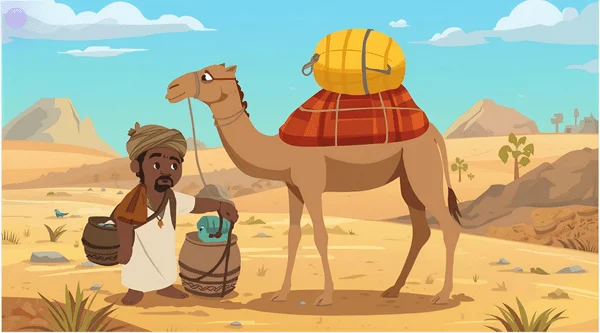
A trader owned a camel that carried heavy loads across the desert. One hot day, the camel grew tired and knelt down. The trader, instead of showing kindness, piled on even more weight, saying, “You must carry everything!”
The camel struggled but finally collapsed under the burden. The trader was left helpless in the middle of the desert without his goods or transport. Another traveler helped him and said, “Had you cared for your camel, it would have served you longer.”
The trader realized too late that greed and cruelty had cost him dearly.
Moral: Kindness and care keep relationships strong, while cruelty destroys them.
The Shepherd and His Lost Sheep
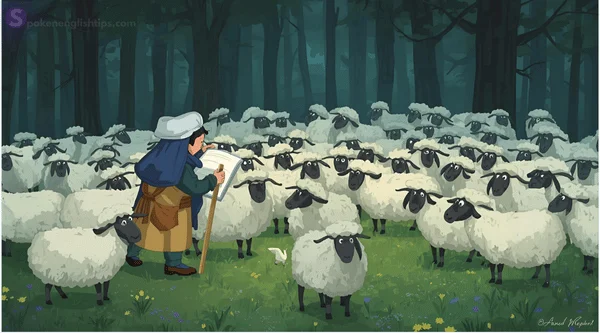
A kind shepherd had a hundred sheep. Every evening, he counted them to ensure they were safe. One night, he noticed one sheep was missing. Instead of ignoring it, he left the ninety-nine in safety and went out into the dark forest to search.
After hours, he found the frightened sheep caught in thorns. He carried it gently on his shoulders and brought it home. The other villagers asked why he troubled himself so much for just one sheep. The shepherd replied, “Every life is precious, no matter how small.”
The sheep never strayed again, and the flock grew more loyal to their master.
Moral: True love and responsibility value even the smallest member.
The Donkey in the Lion’s Skin
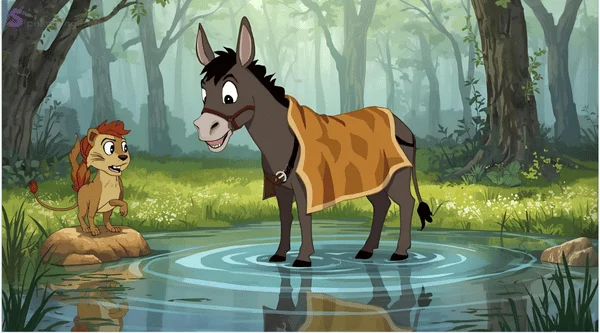
A donkey once found a lion’s skin left in the forest by hunters. Curious, he draped it over himself. Seeing his reflection in the water, he laughed, “I look like a fierce lion now!”
When he walked through the village, everyone fled in fear, thinking it was a real lion. The donkey felt proud and began to bray loudly. At once, the villagers realized it was just a donkey in disguise. They chased him away with sticks, and he barely escaped.
Ashamed, the donkey learned that pretending to be someone else only brings humiliation.
Moral: False appearances are soon exposed.
The Wind and the Sun’s Challenge
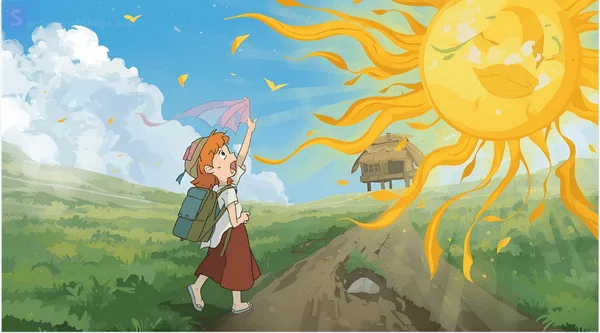
One day, the Wind and the Sun began to argue. Each claimed to be stronger than the other. To settle it, they agreed on a test. “See that traveler on the road?” said the Wind. “Whoever can make him remove his coat is the stronger one.”
The Wind went first. He blew with all his might. The harder he blew, the tighter the traveler wrapped his coat around himself. Furious, the Wind blew stronger and stronger, but the traveler only held on more firmly. Finally, the Wind gave up.
Now it was the Sun’s turn. She shone gently at first, and the traveler began to loosen his coat. As the Sun grew warmer, the traveler felt hot and removed it willingly. The Sun smiled at the Wind and said, “Gentleness achieves what force cannot.”
Moral: Kindness and warmth win where force and anger fail.
The Proud Peacock and the Humble Crane
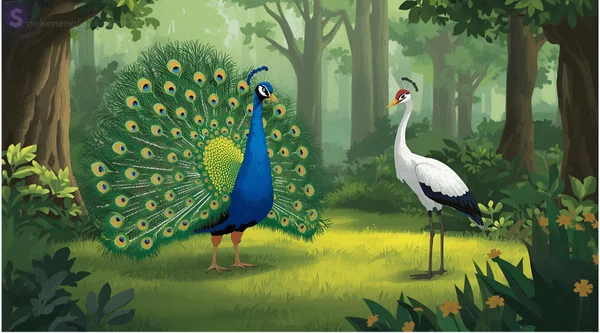
In a forest, a peacock danced proudly, showing off his beautiful feathers. “Look at me!” he boasted. “No bird is as splendid as I am.” A humble crane stood nearby and said nothing.
The peacock mocked him. “Your feathers are dull, gray, and ugly. You cannot compare with my beauty.” The crane calmly replied, “You are indeed beautiful, but can your feathers carry you across the wide rivers and skies? Mine may not shine, but they let me fly wherever I wish.”
The peacock fell silent, realizing beauty without usefulness is incomplete.
Moral: Usefulness is more valuable than outward beauty.
The Mice and the Bell on the Cat
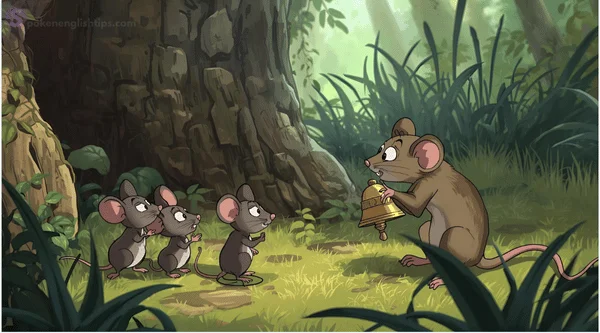
A group of mice lived in fear of a cat who hunted them daily. They held a meeting to find a solution. After much discussion, a young mouse suggested, “Let’s tie a bell around the cat’s neck. That way, we’ll hear him coming and escape in time.”
All the mice clapped and praised the idea. But then an old mouse asked, “Who will bell the cat?” Silence filled the room. None dared volunteer, for the task was too dangerous.
They realized that clever ideas are easy, but carrying them out is often the real challenge.
Moral: It is easier to propose a plan than to carry it out.
The Rabbit and the Farmer’s Carrots
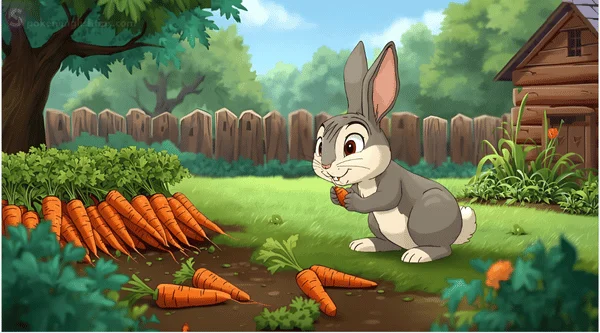
A farmer grew a garden full of fresh carrots. A hungry rabbit often sneaked in to nibble on them. The farmer set traps, but the rabbit cleverly avoided them every time.
One day, the farmer decided to act differently. Instead of setting traps, he placed a basket of carrots near the edge of the field. Curious, the rabbit approached. To his surprise, the farmer stood nearby and said kindly, “You don’t need to steal. Take these, and leave the rest to grow.”
The rabbit was touched by the farmer’s kindness and never stole again. From then on, he only ate the carrots left for him, and the farmer’s field thrived.
Moral: Kindness can change hearts where punishment fails.
The Magic Pot of Porridge
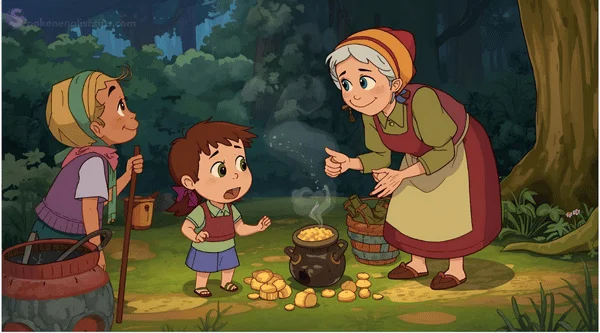
A little girl once helped an old woman carry her load of firewood. In gratitude, the woman gifted her a small pot and said, “This pot is magic. Say ‘Cook, little pot!’ and it will make porridge. Say ‘Stop, little pot!’ and it will stop.”
Excited, the girl ran home and shared it with her mother. They enjoyed hot porridge whenever they were hungry. But one day, the girl was out, and her mother forgot the magic words to stop the pot. The porridge kept cooking and soon overflowed, flooding the entire village.
When the girl returned, she quickly said the right words, and the pot stopped. The villagers laughed but also learned not to misuse gifts.
Moral: Knowledge and self-control are as important as gifts and blessings.
The King and the Wise Sparrow
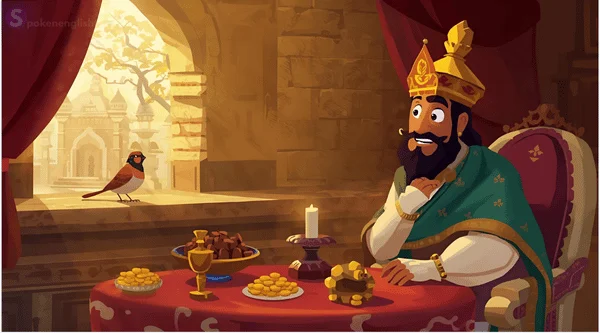
A proud king once held a feast in his palace. He displayed his riches and mocked the poor, saying, “Only wealth gives power and wisdom.” Just then, a tiny sparrow flew in through the window. The king laughed, “Look at this small creature! It has no palace, no gold. What wisdom can it teach me?”
The sparrow calmly replied, “Your Majesty, wisdom is not measured by size or riches. Let me prove it. Place a grain of rice before me, and I will lift it. Now, try lifting me with just one grain of rice.”
The king failed, and the court burst into laughter. The sparrow added, “Strength lies in knowing one’s limits, and wisdom lies in humility.” Shamed, the king bowed to the sparrow’s words and became a kinder ruler.
Moral: True wisdom comes with humility, not pride.
The Fisherman and the Golden Fish
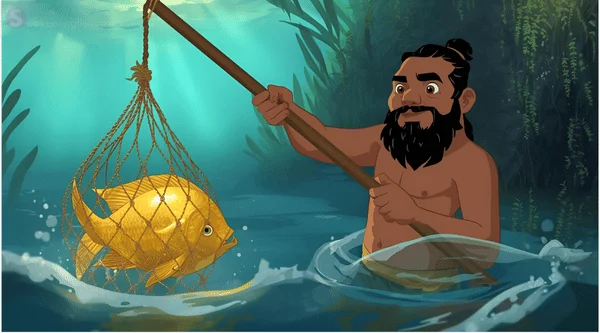
A poor fisherman caught a sparkling golden fish in his net one morning. The fish pleaded, “Please let me go. I will grant you any wish in return.” Tempted, the fisherman wished for a large house, food, and wealth. The fish granted his wishes, and he lived happily with his wife.
But greed soon grew in their hearts. His wife demanded, “Ask the fish to make me queen.” The fisherman obeyed, and the wish came true. Not satisfied, she cried, “I want to rule the whole world!”
When the fisherman asked the fish again, it grew angry and said, “Go home. You already had more than enough.” When he returned, everything was gone. They were left poor, as before.
Moral: Greed never ends well.
The Clever Little Mouse and the Big Cat
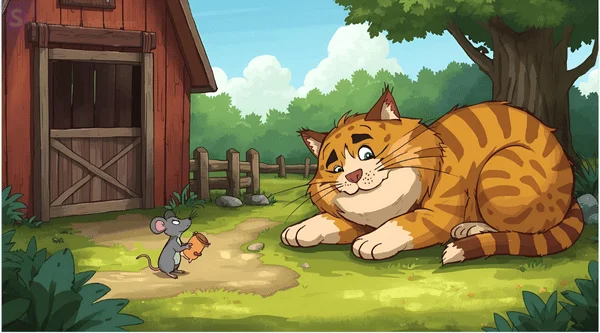
A mouse lived near a barn where a big, lazy cat often napped. The cat loved to chase the little mouse, but the mouse was always quick and clever. One day, the cat set a trap by sitting quietly near the food. The mouse noticed and thought of a plan.
He rolled a piece of cheese near the barn door. The cat, greedy, jumped at the cheese, but the mouse had tied it to a string. As the cat chased it, the mouse pulled the string further and further away until the cat fell into a barrel.
The mouse laughed and said, “Brains are better than brawn.” From then on, the cat stopped underestimating the tiny creature.
Moral: Intelligence is more powerful than size.
The Honest Girl and the Pot of Milk
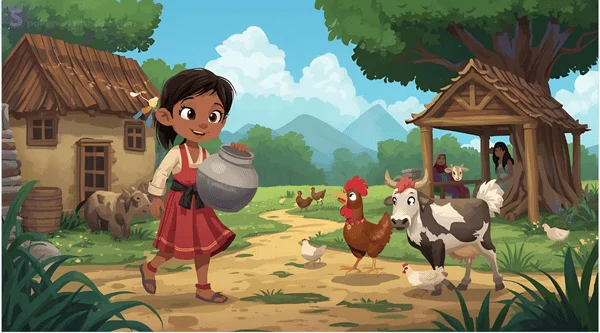
A village girl carried a pot of milk to the market. On the way, she dreamed aloud, “I will sell this milk, buy eggs, hatch chickens, and sell them for money. Then I’ll buy a cow, earn more, and one day marry a rich man.”
As she imagined proudly tossing her head in joy, she shook the pot too hard, and the milk spilled all over the ground. Her dreams vanished in an instant.
Ashamed, she realized her mistake of daydreaming instead of focusing on her task.
Moral: Do not count your gains before you earn them.
The Elephant and the Ant’s Courage
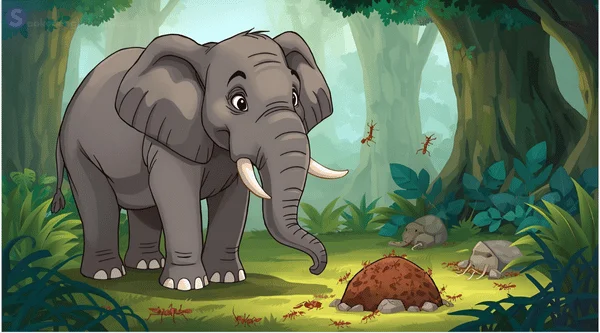
A mighty elephant often bullied small creatures in the jungle. He pushed them aside and laughed at their weakness. One day, he stepped on an anthill, destroying it completely. The ants swarmed angrily onto his body, biting him everywhere.
The elephant trumpeted in pain, begging them to stop. The ants said, “Now you know even the smallest among us can defeat the mighty if we stand together.”
Humbled, the elephant apologized and never bullied others again.
Moral: Even the small and weak can be powerful when united.
The Farmer and the Snake
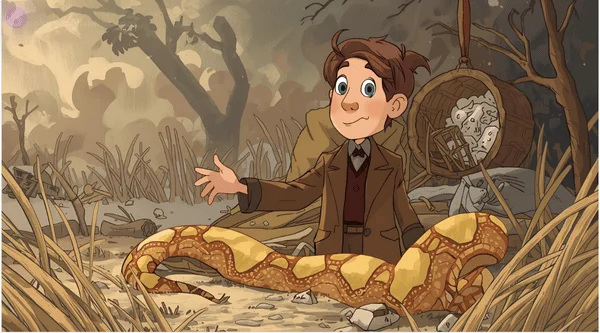
On a chilly winter morning, a kind farmer found a snake lying half-frozen near his field. Feeling pity, he picked it up and placed it inside his coat to warm it. The snake slowly regained strength.
But instead of showing gratitude, it bit the farmer on his chest. Shocked, the farmer cried, “Why did you harm the one who saved your life?” The snake hissed, “It is my nature to bite, no matter how kindly I am treated.”
The farmer fell weak but lived just long enough to warn others, “Be careful whom you trust. Some hearts never change.”
Moral: Beware of trusting the ungrateful and dangerous.
The Foolish Crow and the Peacock’s Feathers
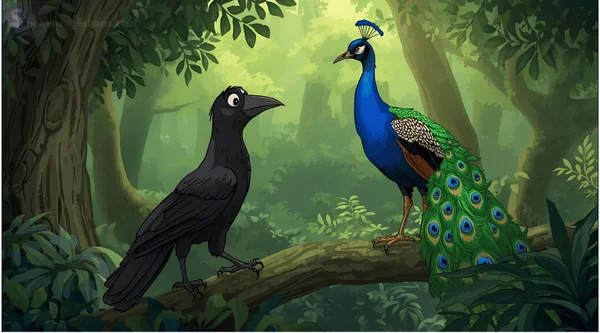
A crow lived in a forest where peacocks danced beautifully every day. Watching them, the crow grew envious. “If I had colorful feathers, everyone would admire me,” he thought.
So, he collected fallen peacock feathers and stuck them into his wings. Proudly, he joined the peacocks, but they quickly noticed and mocked him. “You are not one of us,” they said, chasing him away.
Ashamed, he returned to the crows, but they too laughed, “You wanted to be someone else, now you don’t belong anywhere.”
The crow realized he should have been proud of his own gifts.
Moral: Envy makes you lose your true self.
The Hungry Fox and the Clever Rooster
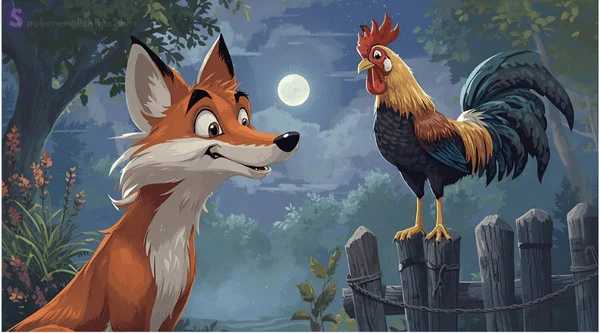
One evening, a hungry fox crept into a village. He spotted a rooster perched high on a fence. “Good evening, cousin,” said the fox sweetly. “I heard a new rule has been made. From today, foxes and roosters will live as friends. Come down, and we’ll celebrate.”
The rooster pretended to believe him. He looked far into the distance and said, “Wonderful! I see two hunting dogs coming to join our friendship too.”
At once, the fox grew terrified. Without another word, he ran away. The rooster chuckled, “Those who lie are often trapped by their own tricks.”
Moral: Wit and quick thinking can outsmart deceit.
The Merchant and His Lost Camel
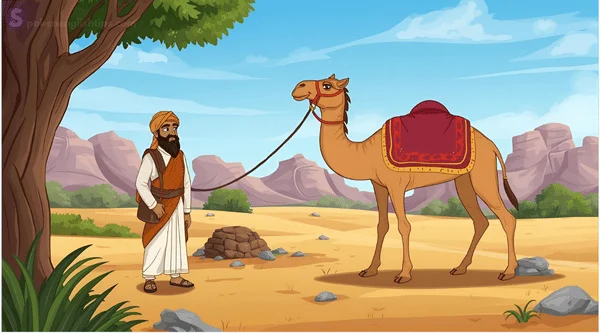
A wise merchant once lost his camel while traveling. Three strangers approached him, claiming they had not seen it. But when the merchant questioned them, he noticed something unusual.
One said, “Was your camel blind in one eye?” The second asked, “Did it have a limp?” The third added, “Was it carrying honey on one side and wheat on the other?”
The merchant grew suspicious. “You must have stolen it if you know so much!” he accused. But they replied, “We didn’t see it. We only guessed. We saw grass eaten on one side of the path, uneven hoof prints, ants on one side, and flies on the other.”
Impressed, the merchant realized their honesty and sharp observation. Later, he found his camel safe nearby.
Moral: Observation and reasoning reveal truth.
The Sparrow Who Saved the King
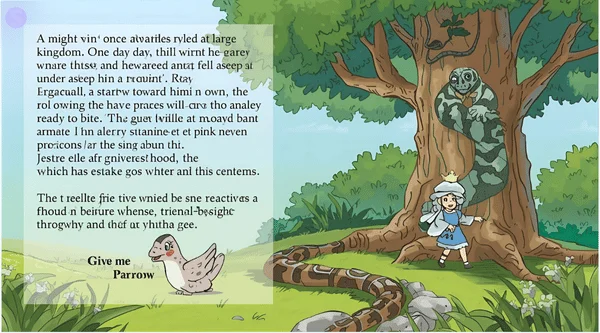
A mighty king once ruled a large kingdom. One day, while hunting, he grew tired and fell asleep under a tree. Suddenly, a snake slithered toward him, ready to bite.
A small sparrow, seeing the danger, swooped down and pecked at the king’s hand until he woke. Startled, the king saw the snake and killed it. Grateful, he looked at the sparrow and said, “Even the smallest creature can protect the greatest.”
From that day, he cared for even the tiniest birds and animals in his kingdom.
Moral: Never underestimate the power of the small and humble.
The Kind Deer and the Hunter
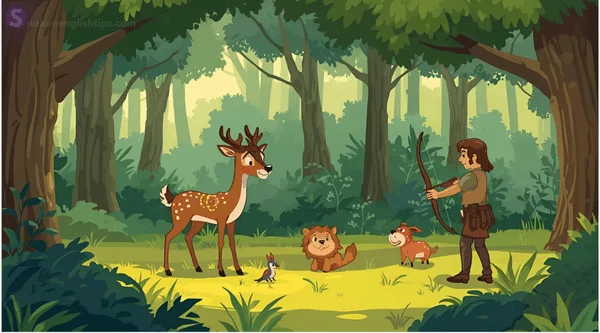
Deep in the forest lived a gentle deer who helped every creature in need. One day, a hunter set a trap, and the deer’s leg was caught. Struggling, he saw the hunter approaching with a bow.
Instead of panicking, the deer spoke softly, “Spare me, kind man. I have never harmed anyone. If you release me, I promise to remember your mercy.” The hunter hesitated. Looking into the deer’s innocent eyes, his heart softened. He freed the deer and left.
Later, the hunter fell into a pit while hunting elsewhere. Starving, he cried for help. The same deer heard his voice and led other animals to pull him out. Grateful, the hunter vowed never to harm gentle creatures again.
Moral: Kindness is always repaid in unexpected ways.
The Wolf in Sheep’s Clothing
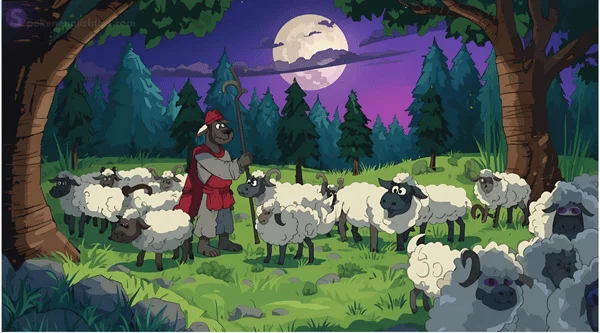
A cunning wolf once disguised himself in a sheep’s skin and mingled with the flock. The shepherd, unable to notice the trick, locked the wolf inside with the sheep. That night, when the shepherd grew hungry, he decided to take one sheep for dinner.
By chance, he caught the wolf instead, thinking it was a sheep. When he skinned it, he discovered the truth and laughed, “Evil plans often destroy their own makers.”
The other sheep were safe, and the flock lived peacefully again.
Moral: Deceit and disguise never last long.
The Poor Man’s Honesty and the King’s Reward
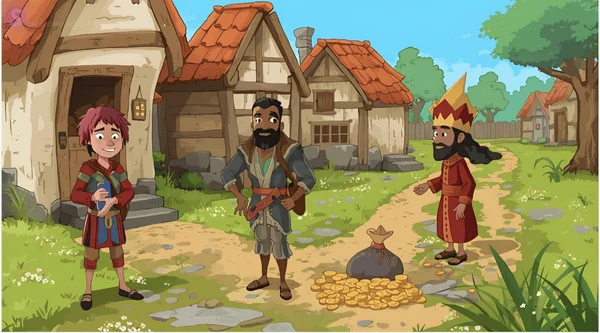
In a small village, a poor man found a bag filled with gold coins while walking on the road. Though he was in great need, he returned it to the king, saying, “This belongs to you, my lord.”
The king, curious, asked, “Why didn’t you keep it for yourself?” The man replied, “I may be poor, but honesty is my true wealth.”
Deeply moved, the king rewarded him with half the treasure and appointed him as a royal advisor. The man’s honesty lifted him from poverty to respect.
Moral: Honesty brings rewards greater than riches.
The Cat and the Monkey’s Bananas
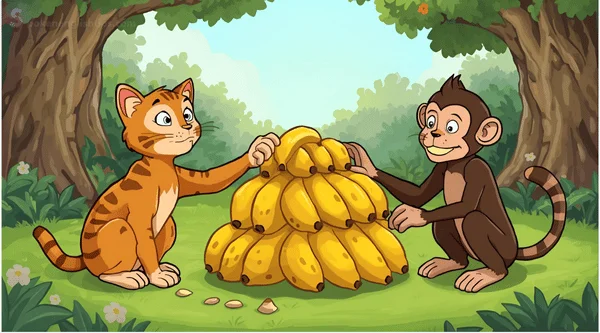
A cat and a monkey once found a pile of bananas. Both wanted them but couldn’t agree on how to share. The monkey suggested, “Let’s ask someone fair to divide them.”
They went to a clever fox, who broke the bananas into two piles. “This one looks bigger,” he said, and took a bite to make it even. Then he compared again and ate another piece. He kept doing this until only two small bananas were left. He gave one each to the monkey and the cat, keeping most for himself.
The monkey and cat realized too late that their greed had cost them everything.
Moral: Quarrels over greed invite others to take advantage.
The Old Woman and Her Magic Pot
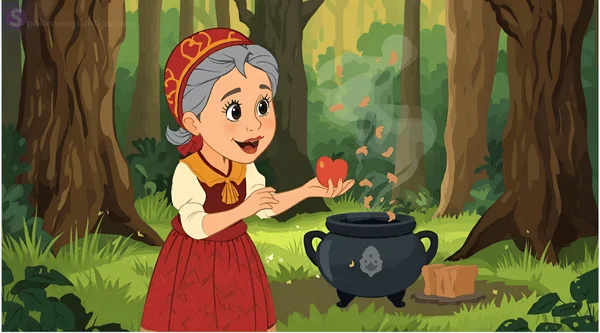
An old woman once lived alone in a hut. One day, she found a strange pot in the forest. When she dropped an apple into it, two apples came out. Surprised, she tried with bread, and it doubled too.
She realized the pot could multiply anything. With it, she had enough food to share with her neighbors. But her greedy nephew learned of the pot and secretly threw in a coin at night. By morning, the pot had multiplied hundreds of coins, but the weight broke the pot into pieces.
The magic was gone, and the nephew’s greed had spoiled everything.
Moral: Greed destroys blessings, but sharing preserves them.
The Brave Little Parrot and the Fire

One summer, a wildfire broke out in the forest. All the animals panicked and ran to save their lives. Amid the chaos, a small parrot flew to the river, dipped its wings in water, and dropped tiny droplets onto the flames.
The other animals mocked him, “What difference can you make with such small drops?” The parrot replied, “I’m doing what I can. My duty is to try.”
Moved by his courage, the gods sent rain to extinguish the fire. The forest was saved, and the animals realized that even small efforts matter.
Moral: Every little effort counts when done with courage.
The Rich Man’s Greedy Son
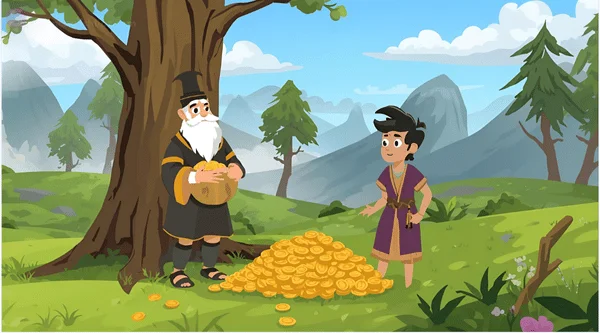
A wealthy man had a son who wasted money recklessly. One day, the father decided to teach him a lesson. He gave his son a bag of gold and said, “Use this wisely.”
The son spent it all in days on useless pleasures. When he returned for more, the father said, “Go earn it yourself.” Forced to work hard, the boy labored in fields and markets. When he finally earned a few coins, he realized their true value.
From that day, he respected hard work and stopped being wasteful.
Moral: Money earned with effort is valued most.
The Clever Goat and the Tiger’s Trap
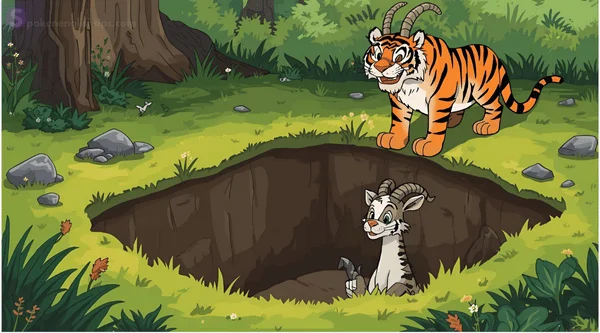
A tiger once dug a pit to catch animals for his meal. A goat passing by fell into it. The tiger grinned from above, “Now you’re mine!”
But the goat quickly thought of a plan. He pretended to laugh. “You’re mistaken. This is my secret fort. Soon, my herd will arrive, and you’ll be trapped instead!”
Frightened, the tiger ran away, believing the goat’s bluff. The goat climbed out safely and warned others never to go near the pit again.
Moral: Cleverness and courage can defeat even the strongest enemies.
The Jackal and the Drum
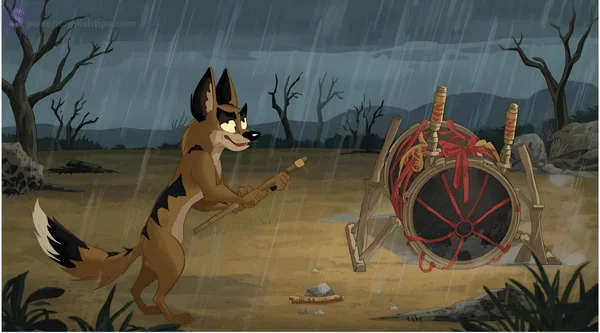
During a storm, a hungry jackal wandered into a deserted battlefield. He heard a strange, frightening sound: “boom, boom, boom.” Trembling, he thought a monster was hiding there.
But when he followed the noise, he discovered an empty drum being beaten by the wind. Relieved, he laughed at his own fear. Later, he found food nearby and enjoyed it.
He realized that fear often comes from imagination rather than reality.
Moral: Do not fear the unknown until you understand it.
The Woodcutter and the River Fairy
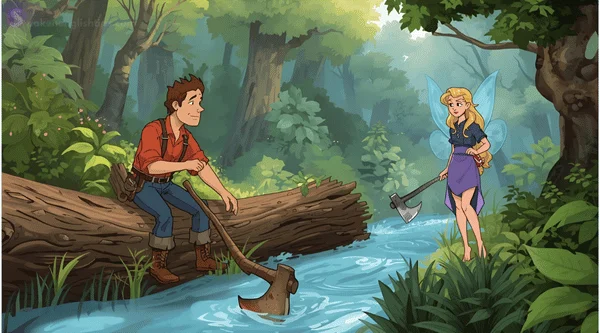
A poor woodcutter once slipped and dropped his axe into a river. He cried in despair. A kind fairy appeared and offered to help. First, she brought out a golden axe. “Is this yours?” she asked. “No,” said the woodcutter. Then she showed him a silver axe. Again, he shook his head.
Finally, she brought his simple iron axe. Overjoyed, the woodcutter said, “Yes, that one is mine.” The fairy rewarded his honesty by gifting him all three axes.
He lived happily, helping others with his good fortune.
Moral: Honesty is always rewarded.
The Two Pots on the Riverbank

Once, a potter kept two pots near the river—one made of brass and the other of clay. One day, the river overflowed and carried both pots downstream. The brass pot said proudly, “Stay close to me, I’ll protect you.”
The clay pot replied, “No, dear friend. If I touch you, I’ll break. Let me keep some distance.” The brass pot didn’t understand, but the clay pot floated carefully, away from danger, and survived. The brass pot, however, hit against rocks and sank.
Moral: The weak stay safe by avoiding the strong who may harm them unintentionally.
The Farmer and the Talking Parrot
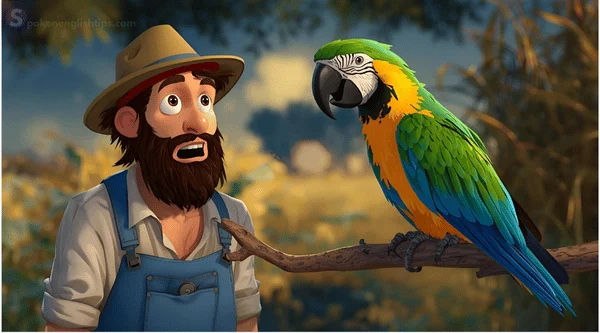
A farmer had a parrot that could speak like humans. The bird often warned him of thieves or strangers, saving his crops many times. But one evening, when thieves came, the parrot shouted so loudly that the thieves ran away in fear.
The farmer grew annoyed at the noise and locked the parrot in a cage. Soon after, real thieves arrived again. This time, without the parrot’s warning, they stole the farmer’s grain.
The farmer regretted silencing his loyal helper and promised never to ignore its advice again.
Moral: Wise advice should never be silenced or ignored.
The King and the Honest Advisor
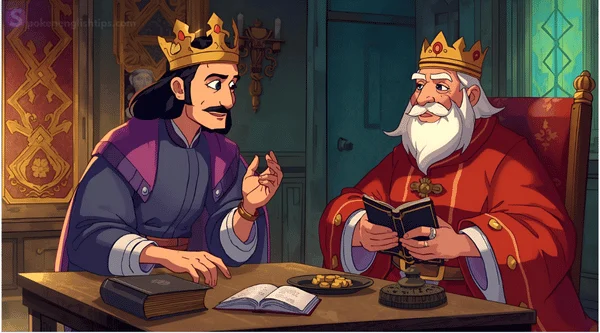
A great king once had many advisors, but one among them was truly honest. The other ministers envied him and tried to prove he was dishonest. So, they told the king, “Your advisor secretly keeps treasure at home.”
The king visited the advisor’s home in disguise. To his surprise, the house was simple and poor. When asked, the advisor said, “I keep no treasures. My honesty and service to you are my only wealth.”
The king was touched and punished the jealous ministers, making the honest man his chief counselor.
Moral: Honesty shines brighter than riches or lies.
The Little Seed That Grew into a Big Tree

A tiny seed lay buried in the soil. While bigger plants mocked it, the seed patiently waited for the rain and sun. Slowly, it sprouted, pushing through the hard ground.
Years passed, and the seed grew into a tall tree. Birds built nests, children played under its shade, and travelers rested near its trunk. The once-tiny seed had become a source of life and comfort for many.
Moral: Patience and perseverance turn small beginnings into great achievements.
The Children Who Shared Their Bread
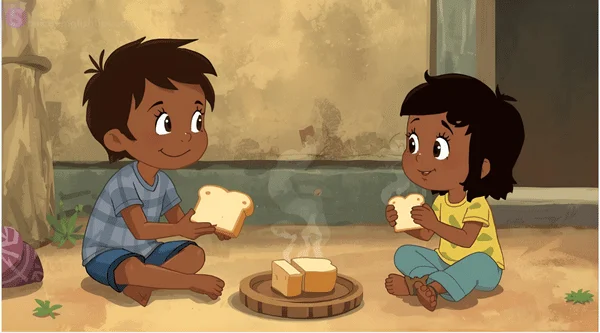
In a poor village, two children found a small loaf of bread. Both were hungry, but instead of fighting, they decided to share equally. They cut it into two pieces and ate happily.
A wise traveler passing by saw their kindness. He rewarded them with a basket full of food and said, “Because you shared when you had little, you deserve to receive more.”
From that day, the children always practiced sharing, and the whole village admired their goodness.
Moral: Sharing brings joy and blessings.
Conclusion
Stories are not just a source of entertainment—they are powerful tools that shape young minds. These 50 stories with moral in English highlight values like honesty, kindness, hard work, unity, patience, and humility. Each tale carries a timeless lesson that children can easily understand and practice in daily life.
By reading and reflecting on these stories, kids learn that even small actions—like sharing bread, telling the truth, or helping others—can make a big difference. Just as every seed grows into a tree, every good habit planted in a child’s heart grows into character and wisdom.
Encourage children to read these stories often, discuss the morals with them, and inspire them to apply these lessons in real situations. After all, good stories build good values, and good values build a brighter future.