Learning grammar is compulsory for every English speaker, but it is not essential; anyone can speak English with limited knowledge. You only need to focus on Sentences and structures.
In this blog post, I will share with you more than 100 most common sentences in English grammar that will help you improve your English.
Also, you can read 100 Free Daily Use English Sentences For Conversations
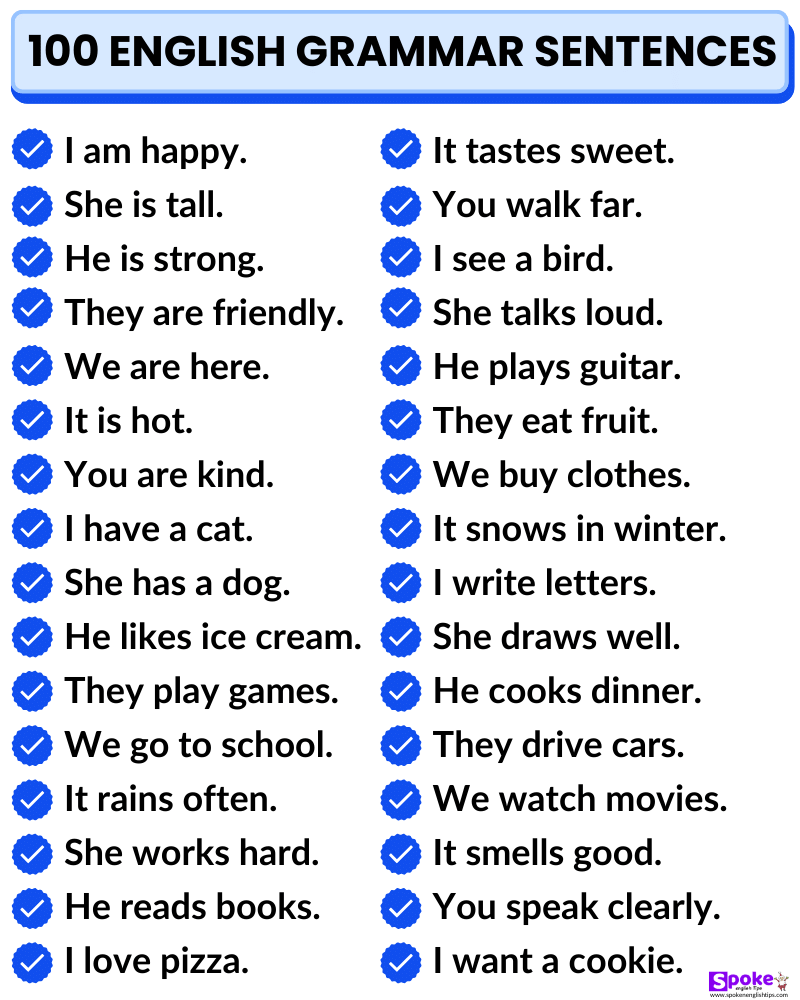
100 Most Common Sentences in English Grammar
- I am happy.
- She is tall.
- He is strong.
- They are friendly.
- We are here.
- It is hot.
- You are kind.
- I have a cat.
- She has a dog.
- He likes ice cream.
- They play games.
- We go to school.
- It rains often.
- She works hard.
- He reads books.
- I love pizza.
- We swim in summer.
- They dance well.
- You look nice.
- It feels good.
- She runs fast.
- He helps me.
- We laugh a lot.
- I can sing.
- It tastes sweet.
- You walk far.
- I see a bird.
- She talks loud.
- He plays guitar.
- They eat fruit.
- We buy clothes.
- It snows in winter.
- I write letters.
- She draws well.
- He cooks dinner.
- They drive cars.
- We watch movies.
- It smells good.
- You speak clearly.
- I want a cookie.
- She needs help.
- He opens the door.
- They close windows.
- We clean the house.
- It works fine.
- You study hard.
- I wear glasses.
- She takes a bus.
- He catches fish.
- They build houses.
- We ride bicycles.
- It tastes salty.
- You play piano.
- I have a sister.
- She likes flowers.
- He fixes things.
- They plant trees.
- We cook breakfast.
- It rains a lot.
- It snows heavily.
- She laughs loud.
- He speaks softly.
- They run quickly.
- I eat lunch.
- You drink tea.
- We drive cars.
- I see a rainbow.
- She climbs trees.
- He flies a kite.
- They help others.
- We work together.
- It smells bad.
- It tastes bitter.
- She plays soccer.
- He jumps high.
- They swim well.
- I read a book.
- You draw a picture.
- We walk slowly.
- I wear a hat.
- She sings a song.
- He dances funny.
- They talk a lot.
- It snows lightly.
- We study math.
- You play video games.
- I have a friend.
- She goes to bed.
- He wakes up early.
- They visit family.
- We have a party.
- It smells like flowers.
- You climb mountains.
- I hear music.
- She wears a dress.
- He speaks Spanish.
- They cook dinner.
- We go shopping.
- I watch TV.
- You can do it.
You might also like:
- 100 Most Common Sentences in English
- 100 Spanish Sentences
- Types of Sentence, Definition & Examples
- What are the Collective Noun For Books?
- What Are the 100 Examples of Interjections?
- Compound Sentence Examples
- Reading Phrases and Sentences for Kindergarten
- 100 Sentence with as for Kindergartet
- 10 Best Exercises Simple Jumbled Sentences with Answers
- 10 Examples of Reordering Sentences With Answers
- 10 Exercises To Rearrange the Words To Make Meaningful Sentences
- 100 Best Did Sentence Example
- 100 Best Examples of a Compound Sentence with a Semicolon
Most common sentences in English
English surrounds us everywhere, from casual chats to professional settings. Learning the most common sentences in English makes communication smoother and more natural.
Here are 100 sentences to introduce this topic and set the foundation for your learning journey.
- The most common sentences in English are used daily in real conversations.
- They are simple, short, and practical for every situation.
- You hear them at home, school, work, and while traveling.
- Beginners learn them first because they build confidence in speaking.
- Advanced learners also use them without realizing.
- They act like building blocks of English communication.
- Knowing them saves time in conversations.
- They help you connect quickly with people.
- You don’t need complex words to be understood.
The most common English sentences cover greetings, questions, and answers.
- Phrases like “How are you?” are universal.
- “Thank you” is one of the most repeated sentences worldwide.
- Small sentences carry big impact in daily talk.
- Even children learn them early.
- Adults use them naturally in all settings.
- They work in both formal and informal contexts.
- Travelers rely on them abroad.
- English learners memorize them for fluency.
- Teachers emphasize them in first lessons.
- They act like shortcuts to clear communication.
- Most conversations start with common sentences.
- “Good morning” is a classic greeting example.
- “See you later” is used worldwide.
- Such sentences feel natural and easy.
- They save you from awkward silence.
- They improve your listening skills too.
- You can respond quickly with them.
- They help you sound more natural.
- They are not limited to textbooks.
- You hear them in movies and songs.
The most common English sentences build real confidence.
- They make you sound polite and friendly.
- They are flexible and can fit many situations.
- You can practice them in daily routines.
- People use them at the store.
- They help at restaurants and cafes.
- They are helpful at airports and stations.
- Doctors and patients use them too.
- They are essential for customer service.
- They help in classrooms and offices.
- You don’t need a huge vocabulary to use them.
- Just a few sentences go a long way.
- You can mix them with new words.
- They adapt to different tones and moods.
- They help when you forget grammar rules.
- They create instant understanding.
- They are friendly and warm in conversation.
- They keep communication simple and clear.
- People trust familiar sentences.
- They help avoid confusion.
The most common English sentences are timeless.
- They are passed from generation to generation.
- They never go out of use.
- They are part of every culture.
- They make English a global language.
- They are useful online and offline.
- Social media is full of them.
- Chatting apps rely on short sentences.
- Emails also use them in openings.
- Business calls often start with them.
- Learning them improves spoken English fast.
- They also help with writing English.
- They create smoother conversations.
- They help reduce hesitation.
- They make you sound confident.
- They help with interviews.
- They improve presentations.
- They add charm to small talk.
- They make learning enjoyable.
- They bring you closer to people.
- You can practice them with friends.
- You can use them in roleplays.
- You can listen to them in podcasts.
- You can spot them in movies.
- They appear in TV shows daily.
- They are in songs and lyrics.
- They are in advertisements.
- They are part of storytelling.
- They are in speeches.
- They are in news broadcasts.
The most common English sentences make English practical.
- They go beyond grammar rules.
- They create natural flow in speech.
- They are essential for small talk.
- They are useful in emergencies.
- They help travelers survive abroad.
- They help students adapt in schools.
- They help professionals succeed at work.
- They reduce cultural gaps.
- They connect people instantly.
- You can learn them easily with practice.
- You can repeat them daily to remember.
- You can write them down in a notebook.
- You can use flashcards.
- You can say them in the mirror.
- You can practice with friends.
- You can record yourself speaking them.
- You can learn them while traveling.
- You can test them in real conversations.
100 popular sentences
The most common sentences in English are your stepping stones to fluency. 100 English sentences with English common sentences:
Greetings & Basics
- Hello, how are you?
- Good morning!
- Good night.
- See you later.
- Take care.
- Have a nice day.
- Long time no see.
- What’s your name?
- Where are you from?
- Nice to meet you.
Common Questions
- How old are you?
- What do you do?
- Can you help me?
- Where is the bathroom?
- How much is this?
- What time is it?
- Are you okay?
- Do you speak English?
- Can I ask you something?
- What’s going on?
Everyday Use
- I’m hungry.
- I’m thirsty.
- I’m tired.
- I’m busy right now.
- I’m on my way.
- I don’t understand.
- I don’t know.
- It doesn’t matter.
- Let’s go.
- Wait a minute.
Polite Expressions
- Thank you so much.
- You’re welcome.
- Excuse me.
- I’m sorry.
- Please sit down.
- That’s very kind of you.
- No problem.
- Don’t mention it.
- I really appreciate it.
- Could you repeat that?
Making Plans
- What are you doing tomorrow?
- Let’s meet up.
- Call me later.
- I’ll text you.
- See you tonight.
- Let’s have lunch together.
- When are you free?
- Let’s hang out.
- I’ll let you know.
- Sounds good to me.
Daily Life
- I woke up late.
- I’m going to work.
- I’m studying English.
- I’m watching TV.
- I’m cooking dinner.
- I’m cleaning my room.
- I’m listening to music.
- I’m going shopping.
- I’m driving to school.
- I’m working from home.
Feelings & Emotions
- I’m happy today.
- I’m feeling sad.
- I’m so excited!
- I’m worried about this.
- I feel sick.
- I’m scared.
- I’m bored.
- I feel better now.
- I’m proud of you.
- I really miss you.
At Work / School
- I have a meeting.
- I’m doing homework.
- I’m late for class.
- Let’s take a break.
- Can I ask a question?
- Please explain again.
- I finished the project.
- I need more time.
- I’ll email you soon.
- Let’s work together.
Travel & Directions
- Where are you going?
- I’m going to the station.
- How do I get there?
- Is this the right bus?
- Can you show me the way?
- How far is it?
- I need a taxi.
- Do you have a map?
- I’m lost.
- Let’s go by train.
Random Everyday Use
- What do you mean?
- That’s interesting.
- Really?
- Are you serious?
- It’s too expensive.
- That’s funny.
- I like it.
- I don’t like this.
- It’s a beautiful day.
- Everything will be okay.