An employment gap doesn’t have to stop you from getting a job. Whether you took time off to raise children, recover from an illness, study, or search for work, the best way to explain an employment gap is to be honest, keep your answer brief, and focus on what you can offer an employer now.
You don’t need a complicated explanation or a perfect career history.
In this guide, you’ll find ready-to-use employment gap examples, resume samples, interview answers, and a special stay-at-home mom resume example to help you return to work confidently.
What Is an Employment Gap?
An employment gap, also called a career gap, is a period when you were not working in regular paid employment.
For example, suppose you worked as an accountant until December 2023 and started another job in January 2025. The time between those positions is an employment gap.
Common reasons include:
- Raising children or caring for family members.
- Job loss, layoffs, or difficulty finding work.
- Health concerns or personal circumstances.
- Continuing education or professional training.
- Relocation, travel, or career changes.
- Taking a planned career break.
An employment gap is not automatically a problem. Employers may simply want to understand your work history and whether you’re prepared for the position.
The UK National Careers Service recommends being honest, explaining relevant skills, and focusing on what you learned during your time away.
How to Explain a Gap in Employment
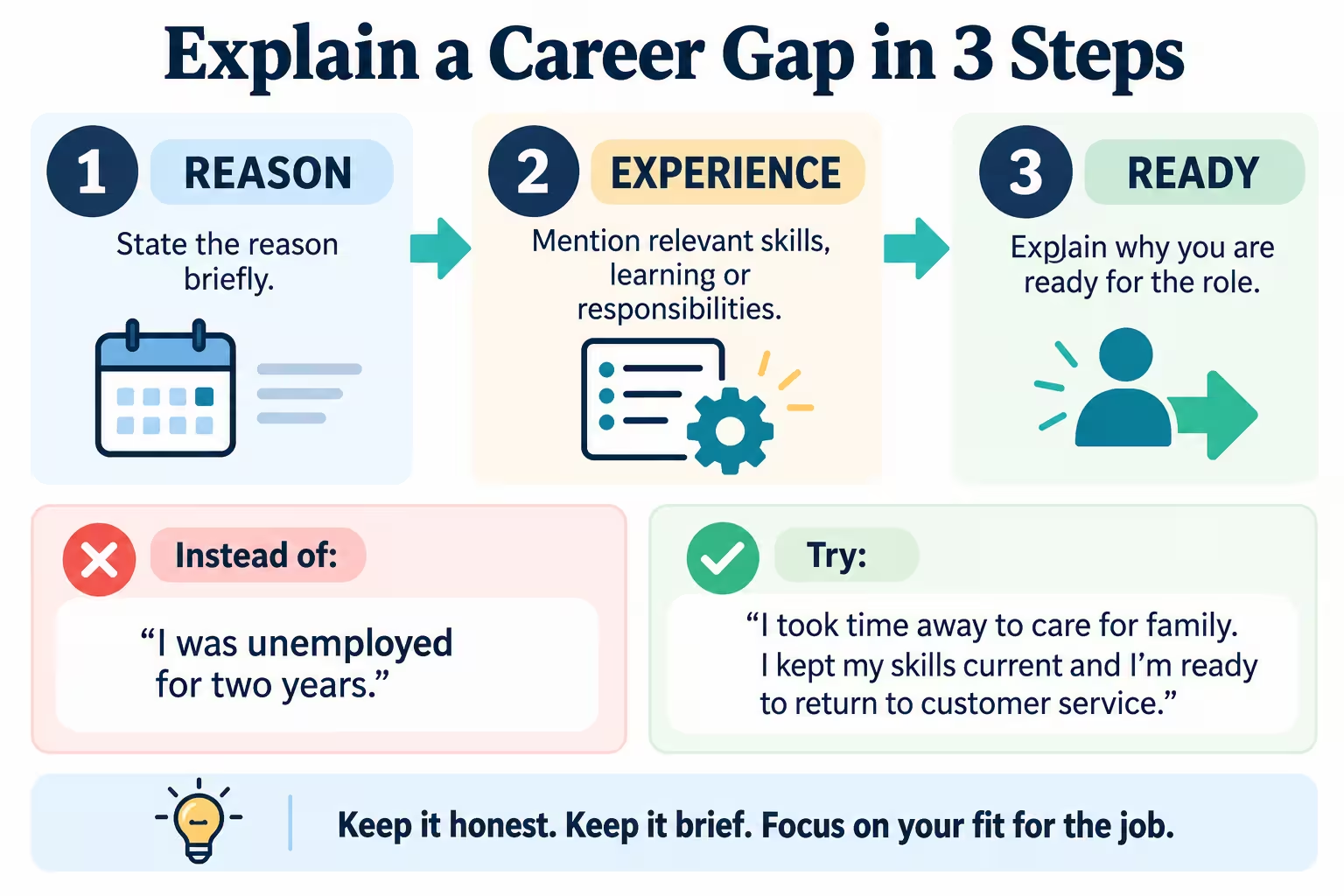
Use this simple three-step formula whenever an employer asks about your career break.
Step 1 — Explain the reason: Briefly state why you stopped working.
Step 2 — Mention relevant experience: Discuss any skills, training, volunteering, or responsibilities that genuinely relate to the job.
Step 3 — Show you’re ready: Explain why you’re prepared and interested in returning to work.
For example:
“I took a two-year career break to care for my children. During that time, I completed an Excel course and maintained my professional knowledge. I’m now ready to return to an administrative role.”
Only mention courses or activities you actually completed.
Employment Gap Explanation Examples for Different Situations
Not every employment gap needs the same explanation. Here are examples you can adapt to your circumstances.
| Reason for Gap | Example Explanation |
|---|---|
| Layoff or redundancy | “My previous position was eliminated during company restructuring. I’ve been searching for a role that matches my experience in operations.” |
| Stay-at-home parent | “I took time away from work to raise my children. I’m now ready to return and use my previous customer service experience.” |
| Family caregiving | “I took a career break to support a family member. Those responsibilities have changed, and I’m available to return to work.” |
| Health reasons | “I took time off for a personal health matter, which has since been resolved. I’m ready to resume my professional responsibilities.” |
| Education or training | “I stepped away from full-time employment to complete additional training in digital marketing. I’m looking forward to applying those skills.” |
| Extended job search | “After leaving my previous position, I spent time looking for a suitable opportunity. I’m particularly interested in this role because it matches my skills.” |
| Relocation | “I relocated with my family and took time to settle into a new city. I’m now available for full-time employment.” |
| Career change | “I took a planned break to explore a new career direction and develop relevant skills. I’m now seeking an entry-level opportunity in this field.” |
These are illustrative answers, not statements from real job seekers.
If the gap involved sensitive personal circumstances, you can keep the explanation general. You don’t need to share every detail about your health or family life.
How to Explain Employment Gaps on a Resume
Your resume should highlight your qualifications rather than make the career gap the main focus.
For a longer break, consider including a short, clearly labelled entry in your employment history. If you completed relevant training, freelance work, or volunteering, include it accurately.
Employment Gap Resume Sample
Here’s a simple example of how a professional might present a career break.
Notice how the resume clearly identifies the employment gap without making excuses or hiding dates.
For a shorter gap, you may not need a separate entry. Keep employment dates accurate and use consistent formatting throughout your resume.
Stay-at-Home Mom Resume Example
Returning to work after raising children can be challenging, especially when your resume shows several years without formal employment.
However, your previous work experience still matters.
A stay-at-home mom resume should highlight professional qualifications first, then explain the family-care break where relevant.
Stay-at-Home Mom on Resume Example
Priya Sharma — Customer Service Professional
Professional Summary
Customer service professional with three years of experience handling customer inquiries and maintaining records. Returning to work after a family-care career break, with strong communication and organizational skills.
Work Experience
Customer Service Representative | Example Retail Company
2019–2021
- Responded to customer questions by phone and email.
- Maintained service records and supported daily operations.
Career Break — Stay-at-Home Parent
2022–2026
- Took a planned career break to raise children and manage family responsibilities.
- Organized schedules, appointments, and household activities.
Key Skills: Communication, scheduling, customer support, recordkeeping, Microsoft Excel.
This fictional sample shows how you can explain time away without presenting parenting as paid corporate employment.
According to Indeed’s guidance for stay-at-home parents, parents may include a career-break entry and emphasize relevant transferable skills when returning to work.
How to Explain an Employment Gap in an Interview
Employers may ask:
“Can you explain the gap in your employment history?”
A clear answer usually works better than a long personal story.
Example: Two-Year Employment Gap
“I took two years away from employment to manage family responsibilities. During that period, I remained interested in my profession. My circumstances now allow me to return to work, and I’m excited to contribute my previous experience to this position.”
Example: Gap Due to Unemployment
“After my last position ended, I spent time searching for the right opportunity. I reviewed my career goals and focused on positions where my experience would be useful. This role interests me because it aligns with my background.”
Aim for a natural answer of around 20–40 seconds. If the interviewer wants more information, they can ask a follow-up question.
Employment Gap Explanation in a Cover Letter
You can also briefly mention a longer career gap in your cover letter.
For example:
“After working in customer service for four years, I took a planned career break to care for my family. I am now ready to return to professional employment and would welcome the opportunity to contribute my communication, organization, and customer support skills to your team.”
Keep the focus on your suitability for the position, not the gap itself.
Mistakes to Avoid When Explaining Employment Gaps
A few common mistakes can make an otherwise reasonable explanation less effective.
- Inventing employment: Never create fake companies, job titles, or work experience.
- Changing dates to conceal gaps: Keep dates accurate and consistent.
- Sharing too much personal information: A short explanation is usually enough.
- Apologizing repeatedly: Explain the circumstances without treating the break as a personal failure.
- Listing skills you cannot demonstrate: Only include genuine qualifications or experience.
A straightforward explanation and a well-prepared resume are more useful than trying to create a perfect-looking employment history.
Frequently Asked Questions
Is a two-year employment gap acceptable?
Yes, a two-year gap does not automatically prevent you from getting hired. Employers may consider the reason for your break, your qualifications, and how well you match the role.
Should I mention a six-month employment gap on my resume?
Not necessarily. A short gap may need no separate explanation. However, you should provide accurate dates and answer honestly if an employer asks.
What is the best resume format for employment gaps?
A reverse-chronological resume works for many applicants. A combination resume, which places relevant skills near the top while keeping a clear employment timeline, can also work well for career returners.
How do I explain a five-year career gap?
State the reason briefly, highlight relevant experience or learning where applicable, and explain your readiness to return. You don’t need to justify every month of the break.
Can I get a job after being a stay-at-home mom?
Yes. Focus on previous employment, relevant transferable skills, any genuine training or volunteer experience, and the requirements of the job you’re applying for.
Free Employment Gap Resume Resources
Use these resources to prepare your application:
- Editable Employment Gap Resume Template and Stay-at-Home Mom Example — a free two-page Word resource with a fill-in resume and a completed fictional example.
- National Careers Service — Explaining Employment Gaps — practical guidance about gaps, career breaks, and transferable skills.
- Indeed — Employment Gaps on a Resume — resume formatting and explanation advice.
Final Thoughts
An employment gap is one part of your career history, not your entire professional identity.
Whether your break lasted six months or several years, explain it truthfully, highlight relevant strengths, and show employers what you can contribute today.
You don’t need a gap-free resume. You need an accurate resume that clearly communicates your value.