Do you have big dreams of going to a great college? Maybe you want to study in India or even fly across the ocean to study abroad. But then you look at the price tag and feel a bit worried. Education is expensive, but money should not stop you from learning. This is where a student loan comes in to save the day.
In this guide, we will break down everything you need to know about getting a student loan in very simple words. Whether you are in 10th class or finishing high school, this will help you plan your future.
1. Introduction: What Exactly is a Student Loan?
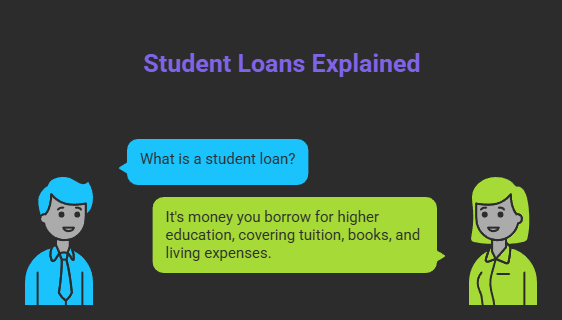
At its simplest, a student loan is money you borrow to pay for higher education. This money can be used for your tuition fees, your books, and even your living expenses like food and a place to stay.
Why do students need it? In India and abroad, the cost of going to university has gone up a lot. Many families do not have all the cash ready upfront. A loan lets you study now and pay the money back later once you have a job.
Who can apply? Most people can apply! If you have been accepted into a college or university, you are usually eligible to start the process.
2. Types of Student Loans
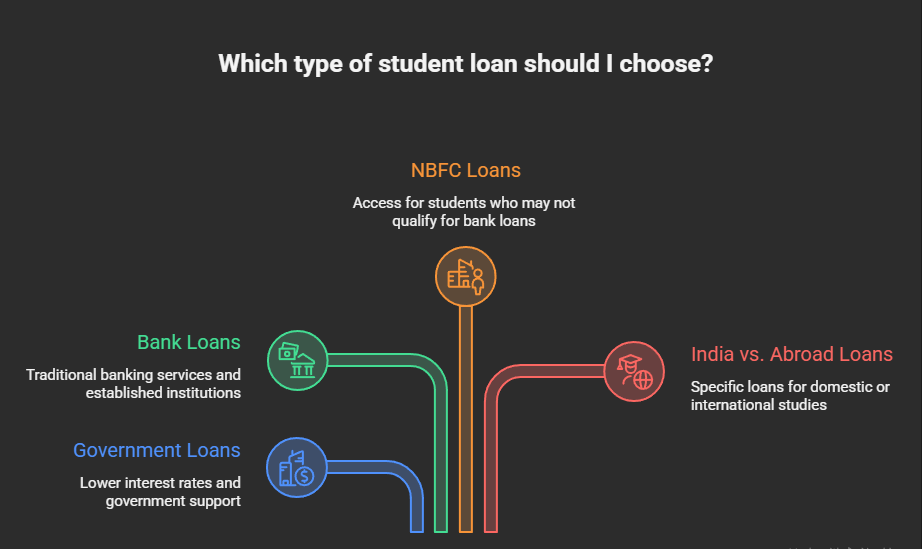
Not all loans are the same. Depending on who gives you the money, they fall into different categories:
- Government Student Loans: In the US, these are called Federal Loans. In India, the government has created special portals like Vidya Lakshmi to help you find these easily. These usually have lower interest rates.
- Bank Education Loans: Most regular banks offer loans specifically for students.
- Private NBFC Loans: NBFC stands for Non-Banking Financial Companies. These are private companies that lend money, often to students who might not get a loan from a traditional bank.
- Loans for India vs. Abroad: Some loans are only for colleges inside India, while others are designed to cover the high costs of traveling and living in a foreign country.
3. Key Features of Student Loans
Before you sign any papers, you need to understand these four things:
Interest Rate (Fixed vs. Floating)
- Fixed Rate: The interest stays the same the whole time.
- Variable/Floating Rate: The interest can go up or down based on the market.
Loan Amount This is the total money you get. Some lenders will pay 100% of your costs, while others have a limit, like $50,000 per year.
Repayment Period This is how many years you have to pay the money back. It usually ranges from 5 to 25 years.
Moratorium Period (The “Break” Period) This is the most important part for students! A moratorium (or grace period) is a “break” where you don’t have to pay anything while you are still studying. Most loans give you this break until 6 months after you graduate so you have time to find a job.
4. Eligibility Criteria: Can You Get the Loan?
To get a loan, banks look at a few things:
- Academic Qualification: They want to see that you are a good student and have finished your previous school years successfully.
- Age Limit: Usually, you need to be a young adult, but parents can also take loans for their children.
- Course & College Approval: The bank will check if your college is “recognized” (meaning it is a real, good school).
- Income Criteria: For some loans, the bank wants to know how much your family earns to make sure the loan can be paid back.
5. Documents Required
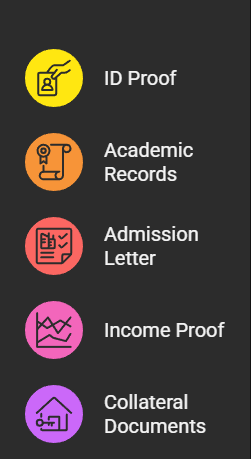
You will need to keep a folder ready with these papers:
- ID Proof: Your passport, Aadhaar card, or school ID.
- Academic Records: Your mark sheets and passing certificates.
- Admission Letter: The letter from your college saying “You’re in!”.
- Income Proof: Your parents’ salary slips or tax papers.
- Collateral Documents: If you are giving the bank a “guarantee” like a house or land, you need those papers.
6. Step-by-Step Application Process
You can apply in two ways:
✔ Online (Vidya Lakshmi Portal)
In India, the Vidya Lakshmi Portal is a one-stop-shop. You can see schemes from 37 different banks and apply to many of them with just one form. It was made by the government to make your life easy.
✔ Offline (Bank Visit)
You can walk into a bank near your house. Talk to the “Loan Officer,” show them your documents, and they will help you fill out the application.
7. Student Loan Without Collateral
“Collateral” is a big word for something valuable (like a house) that the bank keeps as a guarantee. If you don’t have a house to show, don’t worry!
What it means: You get the money based only on your future potential. Who offers it: Many private lenders and some government schemes offer “unsecured” loans. Loan Limits: These loans might be smaller than loans with collateral, but they can still cover a lot of your fees.
8. Interest Rates Comparison
It pays to shop around! Here is a general look:
| Type of Lender | Interest Rate Level | Why choose them? |
|---|---|---|
| Government Banks | Usually Lowest | Very safe and helpful |
| Private Banks | Medium | Faster approval process |
| NBFCs | Higher | They might say “yes” when others say “no” |
Tip to get the lowest interest: If you have a “Co-signer” (like a parent with a good job and a good credit score), the bank will often give you a much lower interest rate.
9. Tax Benefits on Student Loan
When you pay back your loan, the government sometimes helps you save money on your taxes.
See, US Student loan info.
Outside of the provided sources, in India, this is known as Section 80E. It allows you to deduct the interest you pay on your education loan from your taxable income for up to 8 years. You should verify this with a tax expert as the source material focuses more on the fact that forgiven loans might be taxable in the US.
10. Repayment Guide
Eventually, you have to pay the money back.
- When it starts: Usually 6 months after you finish your course.
- EMI Basics: EMI stands for Equated Monthly Installment. It is a fixed amount you pay every month.
- Repay Faster: If you get a bonus or a better job, you can pay extra money to finish the loan early and save on interest.
11. Common Problems & Solutions
- Low CIBIL Score: This is your “credit history.” If it’s low, try adding a co-signer with a better score.
- Loan Rejection: If one bank says no, don’t give up! Check the Vidya Lakshmi portal for other banks.
- High Interest: Negotiate with the bank or look for government-subsidized loans where the government pays part of the interest for you.
- Delay in Approval: Apply at least 2 months before your college fees are due so you aren’t in a rush.
12. FAQs (Frequently Asked Questions)
Is a CIBIL score required?
For government loans in the US, no. For private banks and NBFCs, yes, they will definitely check your or your parent’s score.
Can I get a loan after 12th?
Yes! Most undergraduate loans start right after you finish 12th grade.
Can I study abroad without collateral?
Yes, but you will likely need a co-signer with a good income.
What is a moratorium period?
It is the “waiting time” during your studies when you don’t have to start paying back the loan.
13. Conclusion: Your Future is Waiting!
Getting a student loan might seem like a lot of work, but it is just a bridge to your dream career. Don’t be afraid of the paperwork. Millions of students use these loans every year to become doctors, engineers, and artists.
My advice? Start early. Check the Vidya Lakshmi Portal today and see what options you have. You’ve worked hard to get into college—now let the banks help you get there!
Read Also:
- Student loans without collateral in India
- Low-interest student loan banks
- Education loan for abroad studies
- Government student loan schemes
- Vidya Lakshmi portal guide
- How to repay student loans faster
- Tax benefits on an education loan