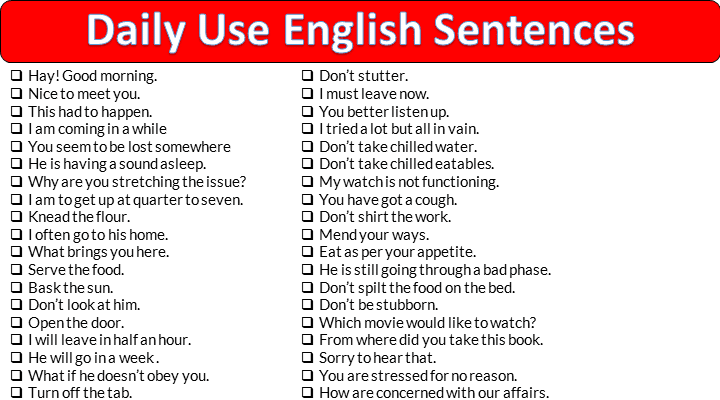
Have you ever struggled to find the right words in a simple conversation—whether ordering food, shopping, or asking for directions? You’re not alone. Millions of learners worldwide practice daily English sentences to feel more confident in everyday life. These short, ready-to-use expressions act like building blocks, helping you communicate clearly without overthinking grammar.
Whether you’re a beginner, student, or professional, mastering daily life English sentences gives you the confidence to connect with others. The best part? You don’t need to memorize long speeches—focus on short, practical sentences that you can use immediately.
In this guide, you’ll discover 30 everyday topics with real-life English examples. From restaurants to workplaces, each section gives you practical phrases, cultural context, and quick tips to practice. Ready? Let’s start with why these sentences are so powerful.
Why Daily English Practice Matters
Think of English practice like exercise. You don’t build strength by lifting heavy weights once a month—you improve with small, consistent workouts. Similarly, practicing daily English sentences for everyone strengthens your communication muscles little by little.
Here’s why it matters:
- Confidence Boost: Using short, familiar phrases reduces hesitation in conversations.
- Faster Fluency: Daily repetition builds natural rhythm, just like listening to music on repeat.
- Real-Life Usefulness: These are not textbook sentences; they’re the exact phrases you’ll use in shops, restaurants, offices, and travel.
- Better Memory: Bite-sized practice sticks better in your brain than long grammar drills.
How to Use These Sentences Effectively
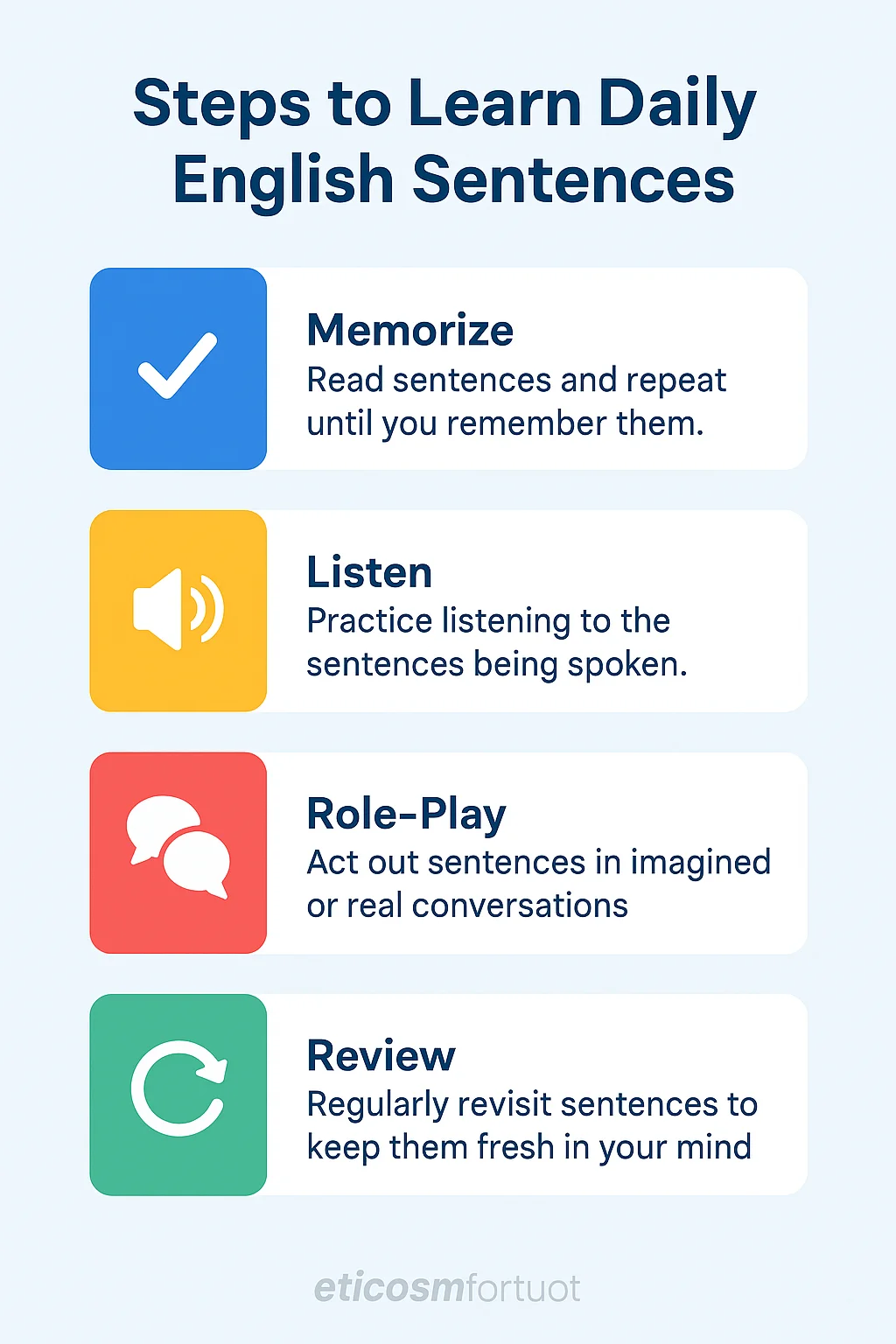
Reading sentences isn’t enough—you need to bring them alive in your daily routine. Here are proven ways to practice:
- Role-Play: Pretend you’re in a restaurant or shop. Say the sentences aloud as if you’re really there.
- Notebook Method: Write down 5 new sentences daily and review them before bed.
- Listen and Repeat: Use YouTube or podcasts to hear how native speakers use these phrases.
- Speak with a Friend: Practice small conversations, even if your friend is also learning English.
- Mirror Practice: Talk to yourself in front of a mirror—it may feel funny, but it improves fluency and confidence.
? Pro Tip: Combine sentences with gestures (like pointing at a menu or smiling when greeting). This helps your brain connect words with actions, making them easier to remember.
Connect with us on YouTube to improve your English Fluency: Smart English Stories
Ordering Food at Restaurants
Dining out is one of the most common situations where you’ll need daily use English sentences. Whether at a café or fine dining place, these sentences will help you greet politely, ask questions, and place your order smoothly.
a) Greeting and Asking for a Table
When you walk in, start with polite greetings:
- “Good evening, do you have a table for two?”
- “Hi, is there a table available near the window?”
- “Hello, can we sit outside?”
These sentences show respect and set a friendly tone.
b) Placing an Order
Once seated, here’s how to confidently order:
- “Can I see the menu, please?”
- “I’d like a chicken sandwich with fries.”
- “Could I have a glass of water?”
- “We’ll share a pizza and two iced teas.”
? Notice how the sentences are short, polite, and to the point.
c) Asking About the Menu
Not sure what to choose? Try these beginner-friendly questions:
- “What do you recommend?”
- “Is this dish vegetarian?”
- “Do you have any specials today?”
- “How spicy is this curry?”
Quick Table: Order vs. Response
| Order Sentence | Typical Response |
|---|---|
| “Could I have the pasta, please?” | “Of course, would you like it with cheese?” |
| “Can I get the soup of the day?” | “Yes, today’s soup is tomato.” |
| “I’d like a cappuccino.” | “Sure, would you like sugar with that?” |
Shopping for Clothes or Groceries
Shopping is a daily activity, and knowing the right daily English sentences for everyone makes it smoother. Whether you’re buying clothes at a mall or groceries at the local store, these phrases will save you time and avoid confusion.
a) Asking for Sizes or Prices
When shopping for clothes, these short questions are your best tools:
- “Excuse me, do you have this in a larger size?”
- “What sizes are available for this shirt?”
- “How much does this jacket cost?”
- “Is this on sale today?”
? Tip: Always start with polite words like excuse me or could you. This makes conversations friendlier.
b) Talking to the Cashier
At checkout, here are useful sentences:
- “Can I pay by card?”
- “Do you accept mobile payments?”
- “Could you please pack these separately?”
- “Can I have the receipt, please?”
c) Everyday Shopping Queries
For grocery stores, here are common examples:
- “Where can I find the bread section?”
- “Do you sell fresh fruits?”
- “Can you weigh these apples for me?”
- “What time do you usually close?”
? Imagine walking into a supermarket abroad. With just a few of these daily life English sentences, you’ll shop with confidence.
Asking for Directions
Getting lost in a new city is stressful, but with the right daily English sentences, asking for directions becomes simple and polite.
a) Starting a Polite Question
Always begin with courtesy before asking:
- “Excuse me, could you help me find the bus station?”
- “Hi, do you know where the nearest ATM is?”
- “Can you tell me how to get to the train station?”
b) Understanding Responses
People may answer in short instructions. Here’s how they might guide you:
- “Go straight and take the second left.”
- “It’s across the street from the bank.”
- “Walk past the park, and you’ll see it on your right.”
- “Take bus number 5, and get off at the next stop.”
c) Common Landmarks
If you’re confused, use landmarks:
- “Is it near the post office?”
- “Is there a supermarket close by?”
- “Should I cross the bridge to reach it?”
? Practice tip: Carry a small map or use your phone so you can repeat what the person said and confirm.
Making Travel Arrangements
Travel involves schedules, tickets, and plans. These daily use English sentences are useful at bus stations, airports, and hotels.
a) Booking Tickets
- “I’d like to book a ticket to Delhi for tomorrow.”
- “Is there a seat available on the morning train?”
- “How much is a one-way ticket to London?”
b) Asking About Schedules
- “What time does the next bus leave?”
- “Is the 8 a.m. train running on time?”
- “How long is the flight to Dubai?”
c) Confirming Plans
- “Could you please confirm my reservation?”
- “Do I need to show an ID at check-in?”
- “Is there a cancellation fee?”
✈️ Imagine you’re planning a holiday. Just by using these daily English sentences for everyone, you can book, confirm, and travel without language stress.
Talking on the Phone
Phone calls can be tricky because you can’t rely on gestures. Clear and simple sentences are your best friend here.
a) Opening a Call
- “Hello, may I speak with Mr. Sharma?”
- “Hi, this is Priya. Am I speaking to the manager?”
- “Good afternoon, I’m calling about the delivery.”
b) Transferring a Call
- “Can you please connect me to the HR department?”
- “Could you hold for a moment while I transfer your call?”
- “Sorry, the person is busy. Would you like to leave a message?”
c) Ending a Call
- “Thank you for your help. Goodbye.”
- “I’ll get back to you tomorrow.”
- “Have a great day, talk to you soon.”
? Pro tip: Always keep your tone polite and calm, especially if it’s a professional call.
“One sentence a day may seem small, but over time, it builds the voice of confidence in English.”
Practice daily. Speak confidently.
At the Workplace or Office
Professional life requires a different tone of English—polite, clear, and respectful. Using the right daily English sentences for everyone in the office helps you appear confident and professional.
a) Greetings and Small Talk
- “Good morning! How are you today?”
- “Hope you had a great weekend.”
- “Nice to see you again.”
These openers create a positive atmosphere before meetings or work discussions.
b) During Meetings
- “Shall we start the meeting?”
- “I’d like to share my opinion on this point.”
- “Could you explain that in more detail?”
- “Let’s schedule the next meeting for Tuesday.”
c) Writing and Email Communication
- “Please find the attached report.”
- “Looking forward to your response.”
- “Kindly confirm receipt of this email.”
- “Thank you for your cooperation.”
? Pro Tip: Clear workplace communication builds trust and reduces misunderstandings.
Attending School or College
Students use English daily—in classrooms, with teachers, and among peers. Mastering daily life English sentences makes studying easier and helps build friendships.
a) Talking to Teachers
- “Good morning, may I come in?”
- “Could you please repeat the question?”
- “I didn’t understand this part. Could you explain again?”
- “When is the homework due?”
b) Talking with Classmates
- “Can I borrow your notes?”
- “Do you want to sit together in the library?”
- “Let’s prepare for the exam together.”
- “Are you joining the sports event tomorrow?”
c) Classroom Etiquette
- “May I go to the washroom?”
- “Excuse me, can I open the window?”
- “Could you please pass me the book?”
? With these simple phrases, students can confidently navigate academic life.
Discussing Daily Routines
Talking about routines helps you share personal habits and learn about others. These English sentences are perfect for everyday conversations.
a) Morning Activities
- “I wake up at 6 a.m. every day.”
- “I brush my teeth and then go for a walk.”
- “I usually have breakfast before work.”
b) Evening Activities
- “After work, I cook dinner.”
- “I like watching TV in the evenings.”
- “I usually go to bed around 11 p.m.”
c) General Habits
- “I exercise three times a week.”
- “I drink coffee every morning.”
- “I read books before sleeping.”
Asking About Hobbies and Interests
Conversations about hobbies build connections quickly. Here are daily use English sentences you can use.
a) Asking About Interests
- “What do you like doing in your free time?”
- “Do you enjoy reading books?”
- “Are you interested in sports?”
- “Which hobbies make you happy?”
b) Talking About Your Own Hobbies
- “I love listening to music.”
- “I enjoy painting and sketching.”
- “I like playing football on weekends.”
- “Cooking is my favorite way to relax.”
c) Showing Interest
- “That sounds interesting!”
- “Wow, I’d love to try that too.”
- “How long have you been doing this hobby?”
? Whether it’s music, art, or travel, hobbies create instant bonds in conversations.
Visiting a Doctor or Hospital
Health-related conversations can be stressful. Knowing the right daily English sentences for everyone makes it easier to explain symptoms and understand advice.
a) At the Reception
- “I’d like to see a doctor, please.”
- “Do I need an appointment?”
- “What time is the doctor available?”
b) Talking to the Doctor
- “I have a headache and fever.”
- “I’ve been coughing for three days.”
- “I feel tired all the time.”
- “Do I need to take any tests?”
c) Understanding Advice
- “How many times should I take this medicine?”
- “Are there any side effects?”
- “When should I come for the next check-up?”
? Tip: Be clear and specific when describing symptoms—it helps doctors understand better.
Talking About Family and Friends
Family and friends are at the heart of conversations. Using daily English sentences for everyone helps you express affection and share personal stories with ease.
a) Introducing Family
- “I have two brothers and one sister.”
- “My father works as an engineer.”
- “My mother loves cooking traditional food.”
- “Do you have any siblings?”
b) Talking About Friends
- “My best friend lives in New York.”
- “We’ve known each other since childhood.”
- “I often hang out with my college friends.”
- “Do you like spending time with your friends on weekends?”
c) Expressing Relationships
- “She is like a sister to me.”
- “We are very close as a family.”
- “He’s my childhood friend.”
- “I enjoy spending time with my cousins.”
? Sharing about family builds trust and connection in conversations.
Planning Weekend Activities
Weekends are perfect conversation starters because everyone loves to talk about their free time. Here are daily life English sentences you can use.
a) Making Plans
- “Do you want to go shopping this Saturday?”
- “Shall we watch a movie together?”
- “How about going for a picnic on Sunday?”
- “Let’s meet at the park in the evening.”
b) Accepting Invitations
- “That sounds great, count me in!”
- “Yes, I’d love to join.”
- “Perfect, see you then.”
c) Declining Politely
- “I’m sorry, I already have plans.”
- “Maybe next weekend?”
- “Thanks, but I need to rest this time.”
At the Bank or ATM
Money matters require clarity. With these daily English sentences, you can confidently handle common banking tasks.
a) At the Bank Counter
- “I’d like to open a savings account.”
- “Can I deposit this cheque, please?”
- “What’s the minimum balance required?”
- “Could you explain the loan process?”
b) At the ATM
- “I need to withdraw cash.”
- “How do I check my account balance?”
- “The machine didn’t dispense my money.”
- “Is there a withdrawal limit per day?”
c) General Banking Queries
- “What are your working hours?”
- “Do you offer online banking?”
- “How can I transfer money abroad?”
? Always speak clearly and double-check amounts when dealing with financial matters.
“One sentence a day may seem small, but over time, it builds the voice of confidence in English.”