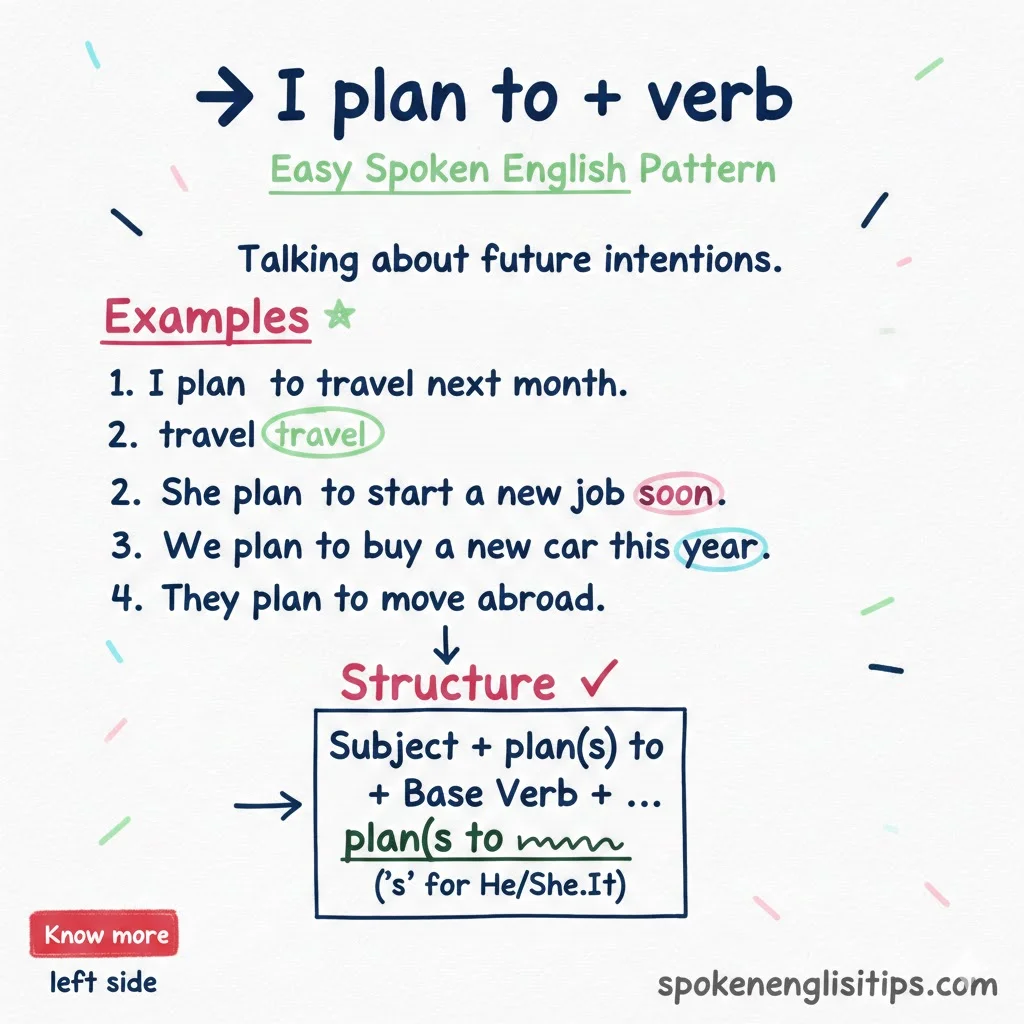
“I don’t think so” is a very common English phrase used when you politely disagree, express doubt, or say that something is probably not true. Native speakers use it in daily conversations at home, work, school, and while traveling. Instead of saying a direct “No,” this phrase sounds softer and more natural. It helps you express your opinion without sounding rude. For example, if someone asks, “Will it rain today?” and you believe it won’t, you can say, “I don’t think so.” Learning this phrase will make your English sound more natural and conversational in real-life situations.
◎ Important Points
“I don’t think so” is used to express disagreement politely.
It sounds softer than simply saying “No.”
It is common in everyday spoken English.
Use it when you are unsure or doubtful about something.
The phrase is suitable for both formal and informal conversations.
It helps conversations sound more natural and friendly.
Native speakers use it very frequently.
➤Key Concept
✅ Sentence Structure: Subject + don’t/doesn’t think + so
Example: I don’t think so. He may be busy today.
Concept: Use “I don’t think so” when you believe something is not true or is unlikely to happen.
Speaking Tip: Use a calm and natural tone when saying “I don’t think so” to sound more fluent and polite.
➤ Common Mistakes To Avoid
Common Mistake
Wrong Example
Correct Example
Using double negatives
I don’t think not.
I don’t think so.
Using wrong pronoun
Me don’t think so.
I don’t think so.
Using incorrect verb form
I not think so.
I don’t think so.
Using it for certainty
I don’t think so, I am 100% sure.
I don’t think so, but I’m not sure.
Wrong word order
Think I don’t so.
I don’t think so.
➤ Examples
A: Will John come today?
B: I don’t think so.
A: Is the store open now?
B: I don’t think so.
A: Will it rain this evening?
B: I don’t think so.
A: Can we finish the project today?
B: I don’t think so. We need more time.
A: Is this train late?
B: I don’t think so.
A: Does she know about the meeting?
B: I don’t think so.
A: Are the kids sleeping?
B: I don’t think so. They’re playing outside.
A: Will the manager approve it?
B: I don’t think so.
A: Is this the right road?
B: I don’t think so. Let’s check the map.
A: Have they arrived already?
B: I don’t think so.
➤ Practice Examples
A. Fill in the Blanks (5)
A: Will he call tonight? B: I ______ think so.
A: Is the office closed today? B: I don’t ______ so.
A: Can we reach there in ten minutes? B: I don’t think ______.
A: Is she at home now? B: I ______ think so.
A: Will they agree to our plan? B: I don’t ______ so.
B. Change the Incorrect Sentence to Correct One (5)
Alok Kumar is an educational content creator, YouTuber, and English speaker dedicated to helping learners grow with clarity and confidence. Through his engaging videos and easy-to-understand teaching style, he simplifies complex topics and makes learning accessible to a wide audience.