
Are you looking for the best foods to support your heart, brain, liver, kidneys, lungs, and other vital organs naturally? While no single food can prevent or cure disease, choosing nutrient-rich foods every day can help your body function at its best. Fruits, vegetables, nuts, seeds, herbs, teas, smoothies, and homemade soups all provide essential vitamins, minerals, antioxidants, healthy fats, and fiber that contribute to overall wellness.
Eating a wide variety of nutrient-rich foods is one of the simplest ways to support your body’s vital organs. Fruits, vegetables, nuts, seeds, herbs, teas, smoothies, and soups each provide unique nutrients that work together to promote overall health and wellness. Instead of relying on a single “superfood,” aim for a colorful, balanced diet filled with whole foods every day. Combined with regular exercise, proper hydration, quality sleep, and routine medical checkups, these healthy food choices can help you maintain better long-term health. Use the infographics in this guide as a practical reference for building nutritious meals that nourish your body naturally.
Best Fruits for Every Organ
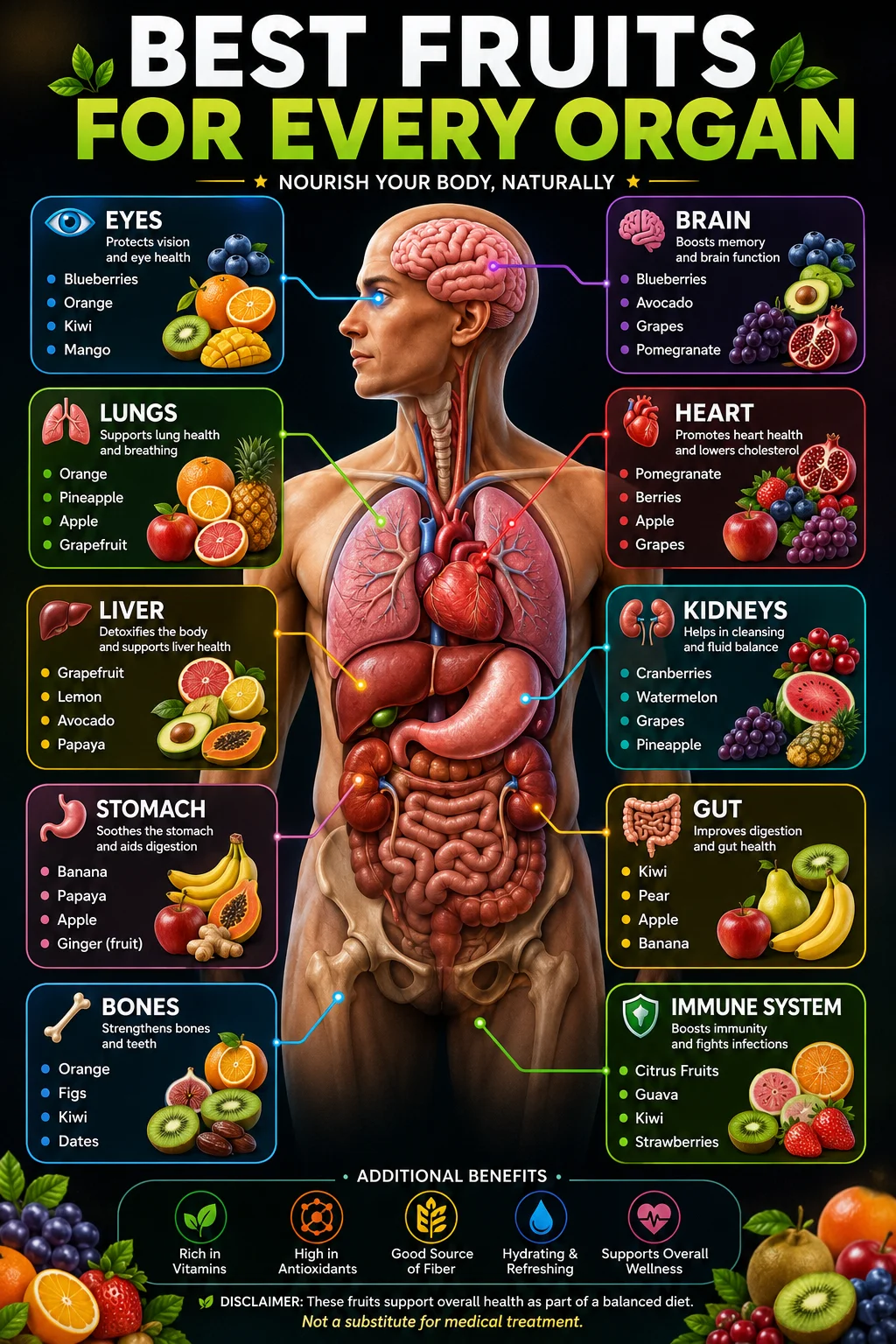
Fruits are packed with vitamins, antioxidants, fiber, and natural compounds that help keep your body healthy. Different fruits provide different nutrients that support important organs such as the heart, brain, liver, kidneys, lungs, and digestive system. For example, berries are rich in antioxidants that protect brain cells, citrus fruits provide vitamin C to strengthen immunity, and bananas support healthy digestion. Eating a colorful variety of fruits every day can improve overall health while reducing the risk of many chronic diseases. The infographic highlights some of the best fruits for each organ, making it easier to include nutrient-rich choices in your daily diet. Remember, fruits work best as part of a balanced diet and healthy lifestyle rather than as a replacement for medical treatment.
Best Vegetables for Every Organ
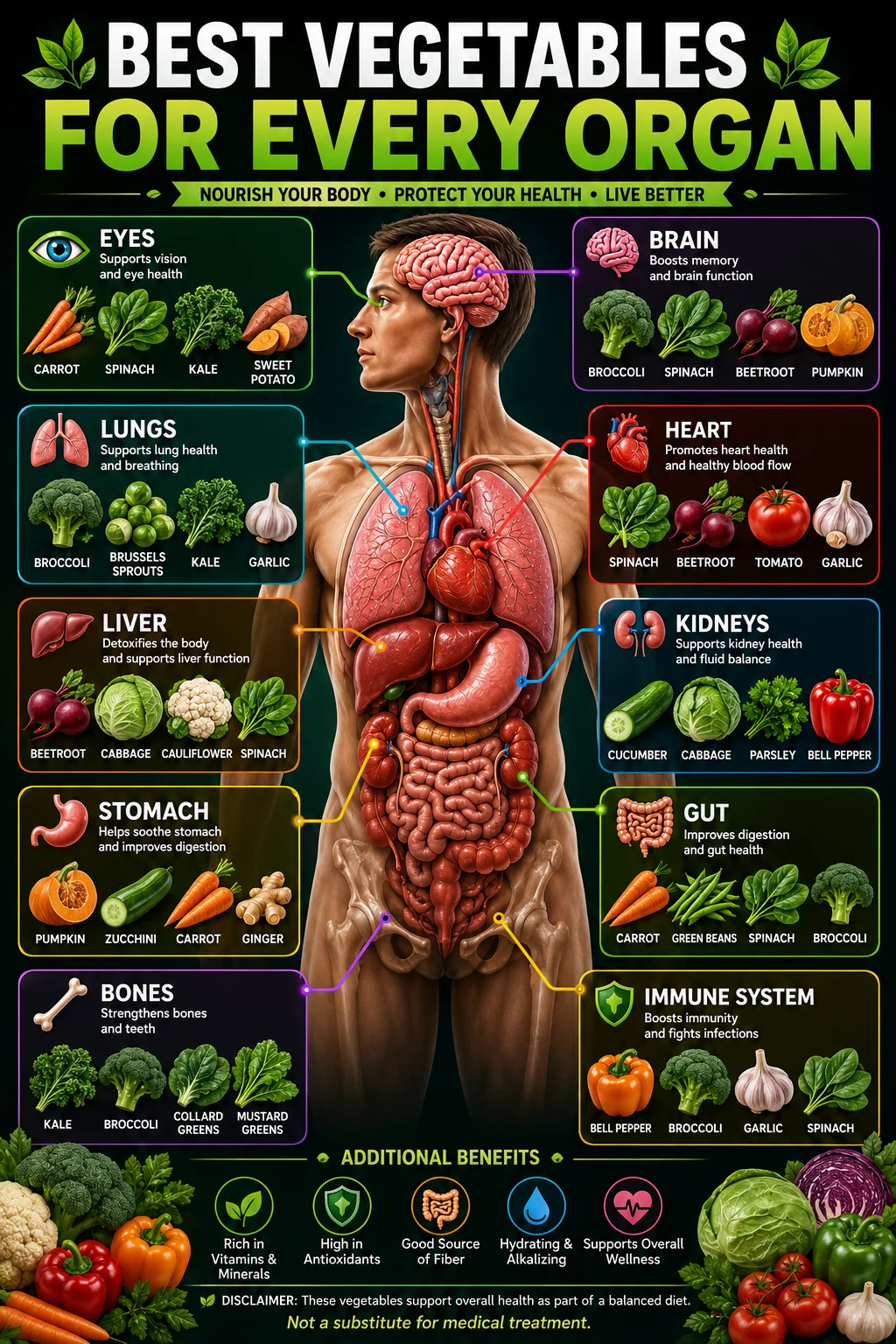
Vegetables are among the most nutrient-dense foods you can eat. They provide vitamins, minerals, antioxidants, and dietary fiber that help protect every organ in your body. Leafy greens support heart and brain health, cruciferous vegetables like broccoli may help the liver and immune system, while carrots and sweet potatoes are well known for supporting healthy vision. Colorful vegetables also contain plant compounds that fight inflammation and oxidative stress. By filling half your plate with vegetables at every meal, you can support better digestion, stronger immunity, healthier bones, and improved overall wellness. The vegetables shown in this infographic are excellent additions to a balanced eating plan designed to nourish your body naturally.
Best Nuts for Every Organ
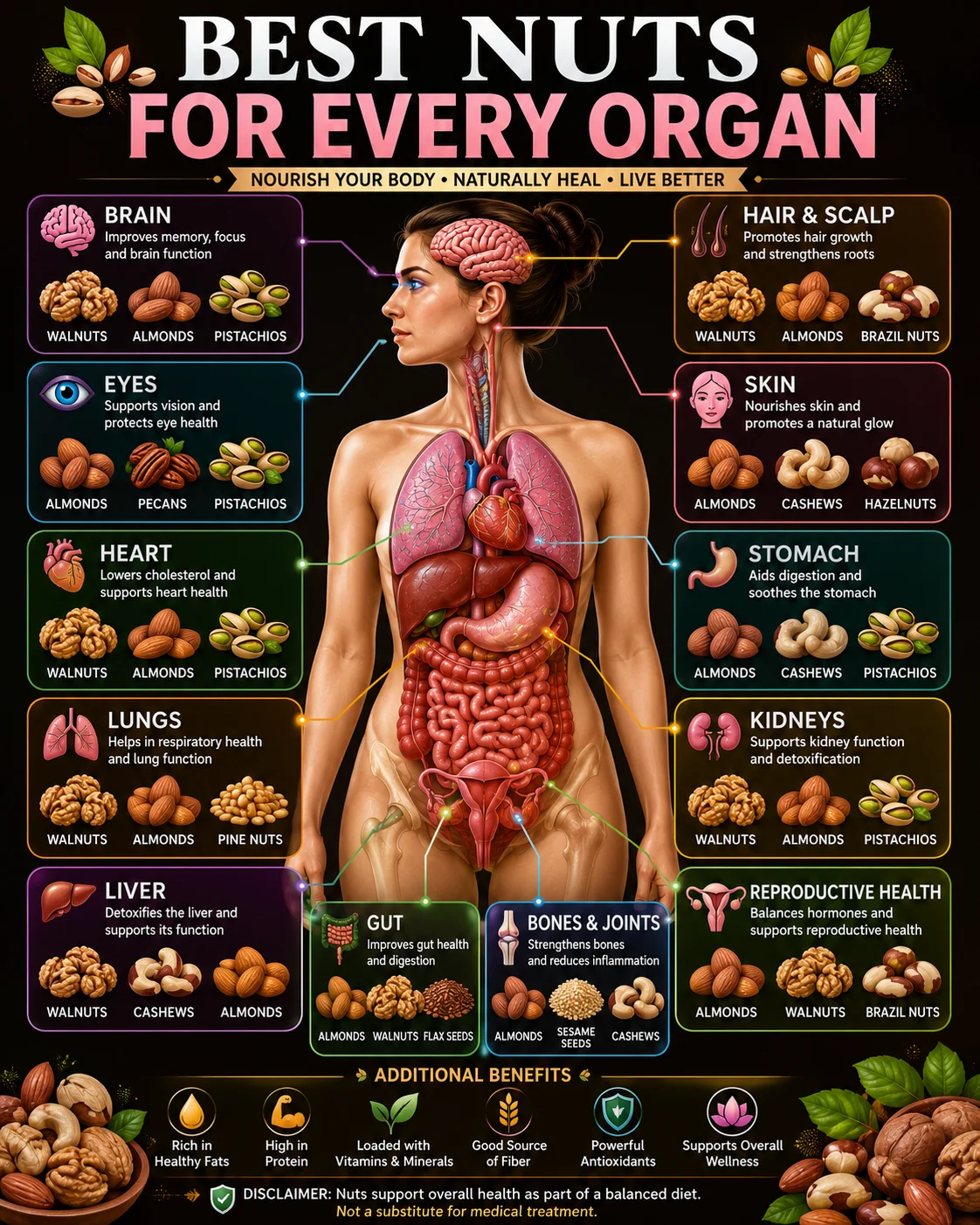
Nuts are small but packed with healthy fats, plant protein, fiber, vitamins, and essential minerals. Regularly eating moderate amounts of nuts may support heart health, brain function, healthy skin, and strong bones. Walnuts are known for their omega-3 fatty acids, almonds provide vitamin E and calcium, while pistachios offer antioxidants and protein. Because nuts contain healthy fats, they can help keep you satisfied between meals and support overall nutrition. The infographic shows different nuts that may benefit various organs, making it easy to add variety to your diet. Enjoy a small handful of unsalted nuts as a snack or sprinkle them over salads, yogurt, or oatmeal for extra nutrition.
Best Seeds for Every Organ
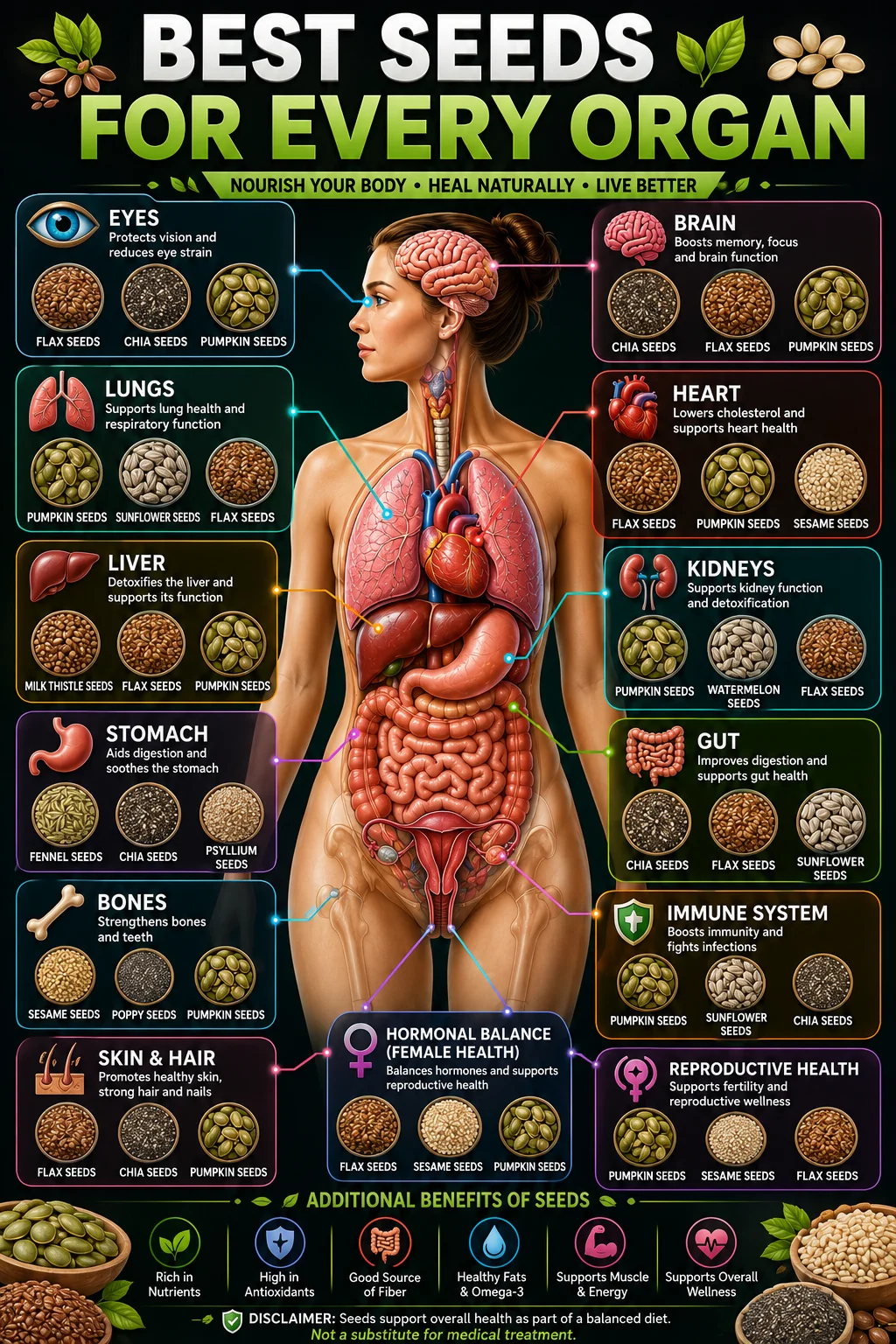
Seeds are nutritional powerhouses that contain healthy fats, fiber, protein, vitamins, and minerals. Flaxseeds and chia seeds provide omega-3 fatty acids, pumpkin seeds are rich in magnesium and zinc, while sesame seeds supply calcium and iron. These nutrients may support heart health, digestion, immune function, and bone strength. Adding seeds to smoothies, salads, yogurt, or cereals is an easy way to improve your daily nutrient intake. Although tiny in size, seeds can make a valuable contribution to a balanced diet when eaten regularly. The infographic highlights different seeds that provide nutrients associated with supporting various organs and overall health.
Best Herbs for Every Organ
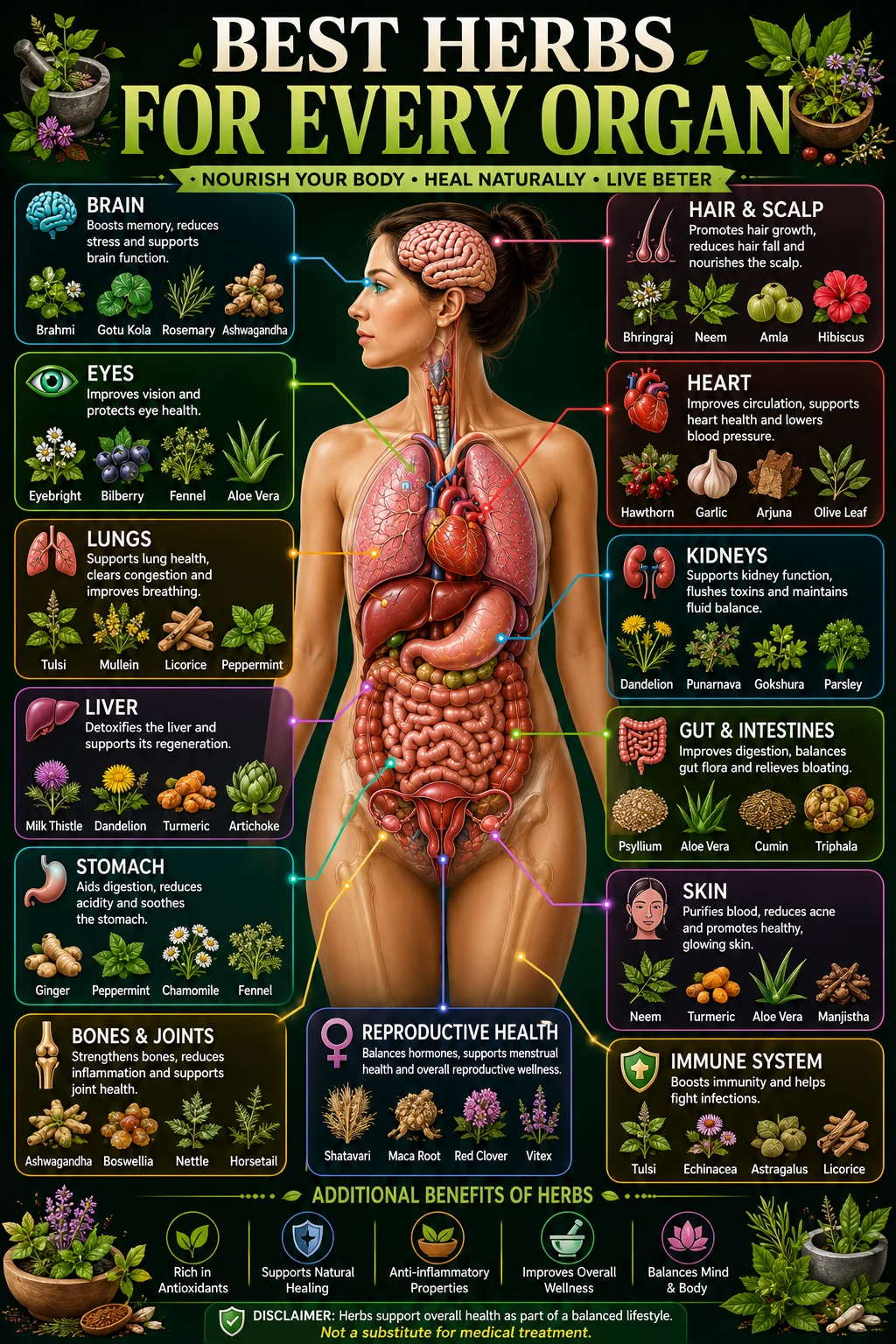
Herbs have been used in traditional diets for centuries because they contain natural plant compounds with antioxidant and anti-inflammatory properties. Fresh herbs such as rosemary, mint, parsley, basil, and turmeric add flavor while providing beneficial nutrients. Some herbs are commonly associated with supporting digestion, liver function, immune health, or respiratory wellness, although scientific evidence varies depending on the herb. Using herbs in everyday cooking is a simple way to reduce excess salt while enhancing both taste and nutrition. The infographic introduces several herbs that are traditionally linked with supporting different organs. They should be viewed as part of a healthy diet rather than as treatments for medical conditions.
Best Teas for Every Organ

Herbal and traditional teas can be a refreshing way to stay hydrated while providing beneficial plant compounds. Green tea contains antioxidants, ginger tea may help soothe digestion, peppermint tea is commonly used for stomach comfort, and chamomile tea is popular for relaxation. Different teas contain unique bioactive compounds that may contribute to overall wellness when consumed as part of a balanced lifestyle. Drinking unsweetened tea instead of sugary beverages can also support healthier daily habits. The infographic highlights several teas traditionally associated with supporting different organs, but they should not be considered cures for diseases. Enjoy tea as a healthy beverage alongside nutritious meals and regular physical activity.
Best Smoothies for Every Organ

Smoothies are an easy and delicious way to combine fruits, vegetables, seeds, yogurt, and other nutrient-rich ingredients into one nutritious drink. A well-balanced smoothie can provide fiber, vitamins, minerals, antioxidants, and healthy fats that support overall health. For example, berry smoothies are rich in antioxidants, leafy greens add vitamins and minerals, while seeds contribute healthy omega-3 fats and fiber. Smoothies are especially useful for increasing fruit and vegetable intake when made without excessive added sugar. The infographic suggests combinations that provide nutrients associated with supporting different organs. For the best results, use whole ingredients and enjoy smoothies as part of a balanced diet rather than a replacement for complete meals.
Best Soups for Every Organ
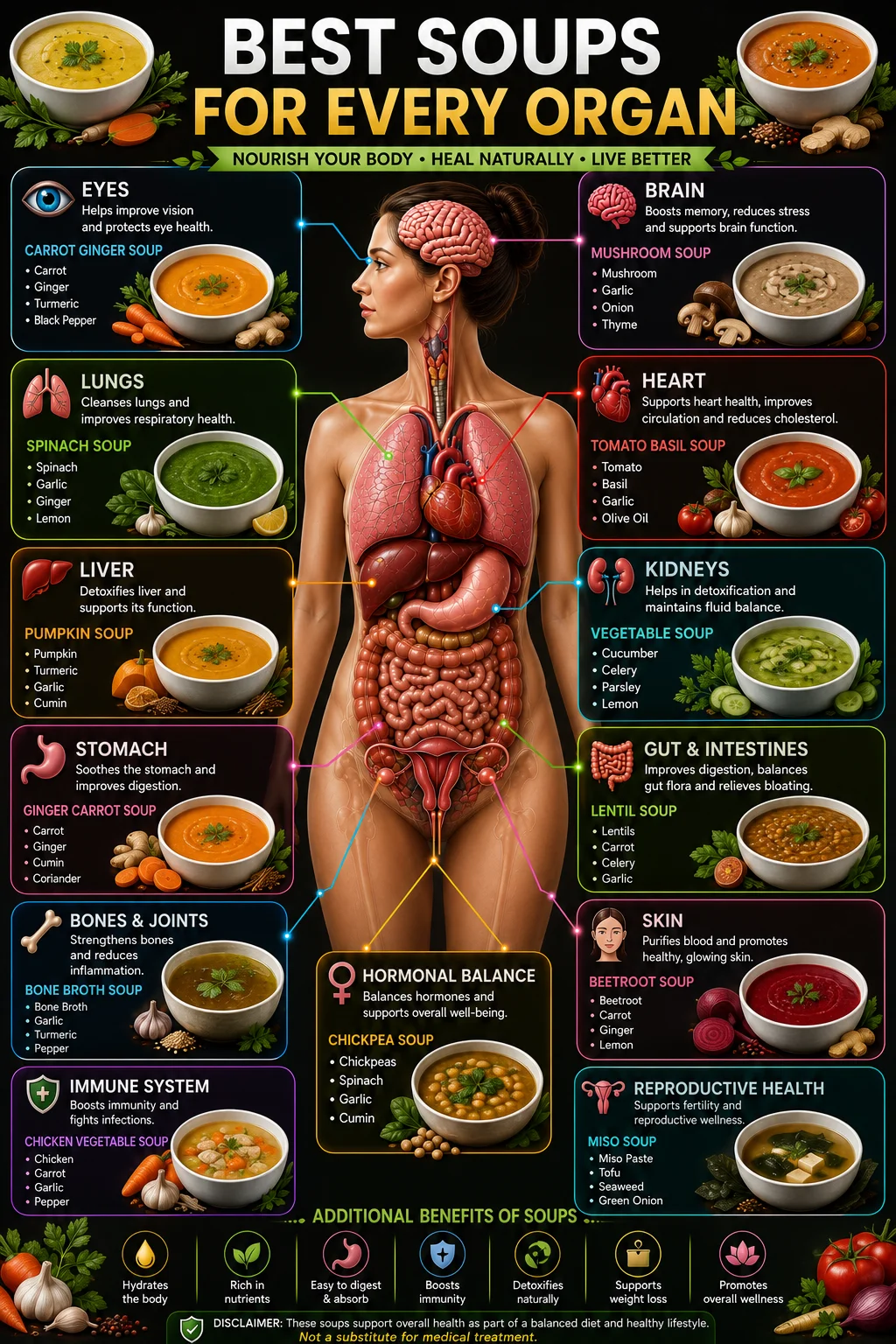
Nutritious soups are comforting, filling, and an excellent way to include vegetables, legumes, herbs, and lean proteins in your meals. Homemade soups often provide vitamins, minerals, fiber, and hydration while being lower in calories than many processed foods. Vegetable soups support overall nutrition, lentil soups offer plant protein and fiber, tomato-based soups contain antioxidants, and broth-based soups can be both nourishing and satisfying. Because soups are easy to digest, they are a popular choice during colder months or when recovering from illness. The infographic highlights different soups that provide nutrients linked with supporting various organs. Choose homemade versions with fresh ingredients and moderate salt for the greatest health benefits.