
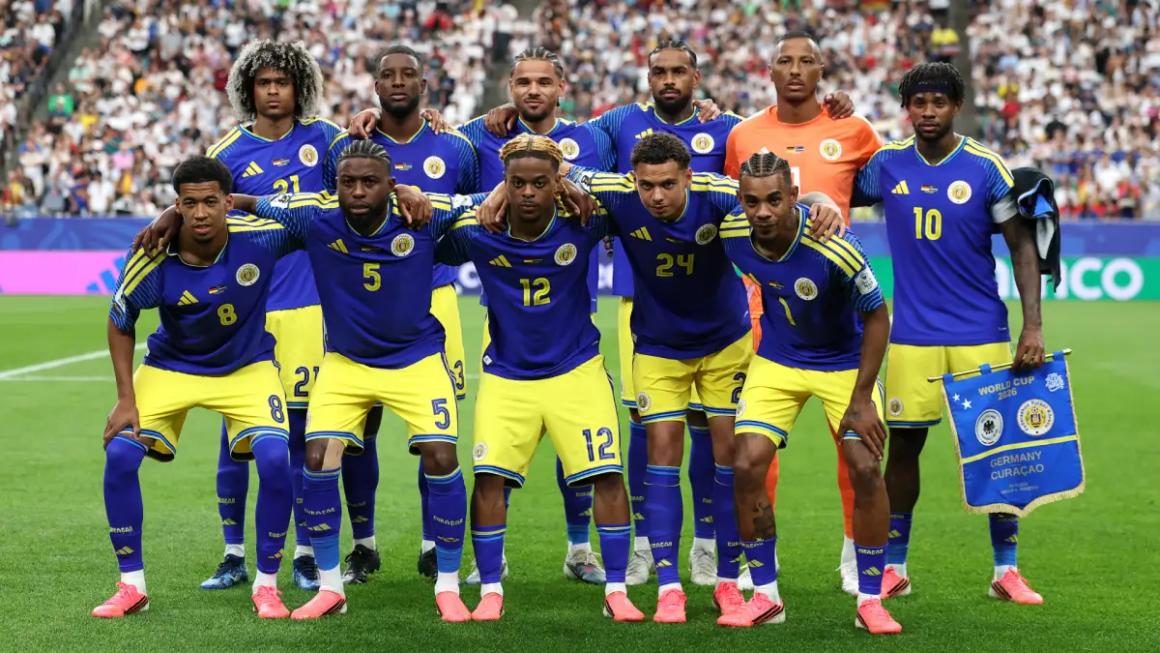
Curaçao’s qualification for the 2026 FIFA World Cup was one of the tournament’s greatest success stories. And if you also want to have success, you can try your luck at the 1x website and its football bets today.
With a population of around 150,000, the Caribbean nation became the smallest country ever to qualify for a FIFA World Cup. Rather than relying solely on its domestic league, Curaçao built a competitive national team by embracing its extensive football diaspora.
This was particularly true with players with Curaçaoan heritage who were born and developed in the Netherlands. And betting on Dutch football is another great thing you can do at the 1xBet website too.
The foundation of this strategy dates back more than 10 years. After the dissolution of the Netherlands Antilles in 2010, the Curaçao Football Federation began identifying dual-national players eligible through parents or grandparents. Former coach Remko Bicentini played a key role in recruiting these footballers by contacting 3 entities:
- clubs;
- coaches;
- and Dutch-Curaçaoan communities across Europe.
His work established the core of a squad that would eventually reach the World Cup.
Getting assistance from the Netherlands
Several high-profile Dutch football figures also helped raise the team’s profile. Patrick Kluivert, Guus Hiddink, and later Dick Advocaat all managed Curaçao, giving the project credibility and helping convince talented players to commit internationally. Goalkeeper Eloy Room became one of the first major recruits and later encouraged other eligible players to join the national team, creating a strong sense of belief within the squad.
By the time the 2026 World Cup arrived, Curaçao’s 26-man roster reflected this long-term recruitment strategy. 25 of the players had been born in the Netherlands, while nearly all had developed in Dutch professional academies before choosing to represent their ancestral homeland.
Experienced players such as Leandro Bacuna, Juninho Bacuna, Jurien Gaari, Joshua Brenet, Riechedly Bazoer, Tahith Chong, and Jürgen Locadia provided experience gained in European football. At the same time, some younger players added 2 elements: energy and technical quality.
This recruitment model did not simply assemble talented individuals. Instead, it created a cohesive team with shared cultural roots and professional training.
Many players described representing Curaçao as a way of honoring their family heritage while competing on the international stage. The federation also benefited from FIFA eligibility regulations that allowed several former Dutch youth internationals to switch allegiance.
