Learning common phrases in English is a great way to start speaking more naturally. You don’t need to know every grammar rule or memorize hundreds of difficult words. Sometimes, a few simple expressions are enough to start a conversation!
For example, phrases like “How are you?”, “Could you help me?” and “Nice to meet you” are useful in everyday life.
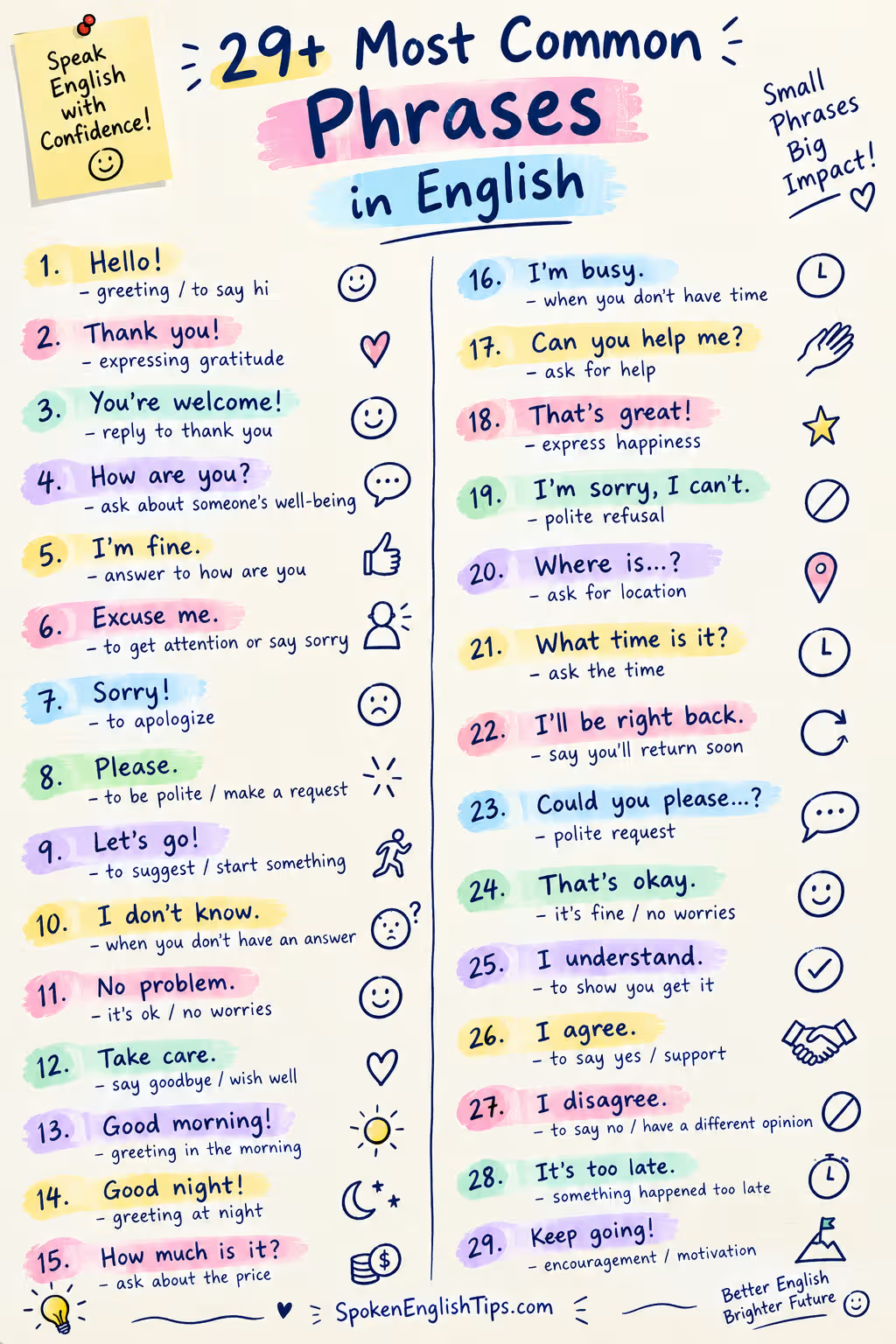
In this lesson, you’ll learn 36 common English phrases with simple explanations and examples. You’ll also discover how to respond, avoid common mistakes, and practice speaking with confidence.
Common English Phrases for Greetings and Introductions
Imagine meeting a new classmate, neighbor, or coworker. What would you say first?
These six expressions will help you introduce yourself and start a friendly conversation.
| # | English Phrase | Example or Response |
|---|---|---|
| 1 | Hi, how are you? | I’m good, thanks. How about you? |
| 2 | I’m good, thanks. | A friendly reply when someone asks how you are. |
| 3 | What’s your name? | My name is Emma. |
| 4 | My name is… | My name is Alex. |
| 5 | Nice to meet you. | Nice to meet you too! |
| 6 | Where are you from? | I’m from India. |
Learned Something New? Test Your English!

Grammar & Vocab

Learn & Practice

Track Your Progress
Remember: Use “Nice to meet you” when meeting someone for the first time. If you already know that person, “Nice to see you” is often a better choice.
You can also say “Hello” instead of “Hi.” Both are correct, although “Hi” sounds a little more casual.
Polite English Phrases for Everyday Life
Being polite is important when speaking English, especially with strangers, customers, teachers, and coworkers.
Here are six expressions you can use in different situations.
| # | English Phrase | When to Use It |
|---|---|---|
| 7 | Thank you so much. | When someone helps you or gives you something. |
| 8 | You’re welcome. | When someone thanks you. |
| 9 | Excuse me. | To get someone’s attention or politely pass someone. |
| 10 | I’m sorry. | When you make a mistake or need to apologize. |
| 11 | No problem. | An informal response to thanks or a small apology. |
| 12 | Could I sit here, please? | To politely ask for permission. |
Example conversation:
Anna: Excuse me, could I sit here, please?
David: Of course! Go ahead.
Anna: Thank you so much.
David: You’re welcome!
Quick tip: “Excuse me” and “I’m sorry” are not always interchangeable. Say “Excuse me” before interrupting someone. Say “I’m sorry” when apologizing for something you did.
English Phrases for Asking Questions and Getting Help
What happens when someone speaks too quickly, or you don’t understand what they’re saying?
Don’t worry! You can ask them to repeat their words.
| # | English Phrase | When to Use It |
|---|---|---|
| 13 | Could you help me, please? | When you need someone’s assistance. |
| 14 | I don’t understand. | When something isn’t clear. |
| 15 | Could you say that again, please? | When you need someone to repeat something. |
| 16 | Could you speak a little more slowly? | When someone speaks too fast. |
| 17 | What does this word mean? | When you want to understand a new word. |
| 18 | How do you spell that? | When you need the letters of a word or name. |
These expressions are especially useful when learning English.
For example, if your teacher uses an unfamiliar word, you can politely ask, “What does this word mean?”
You don’t need to pretend that you understand everything. Asking questions is part of learning.
Common Phrases for Daily Conversations
You probably talk about work, studies, plans, and other everyday activities.
These expressions will help you continue a conversation without using complicated sentences.
| # | English Phrase | Example or Response |
|---|---|---|
| 19 | What do you do? | I’m a student. |
| 20 | What are you doing? | I’m reading a book. |
| 21 | I’m not sure. | I think the meeting starts at nine, but I’m not sure. |
| 22 | That sounds good. | Let’s meet after lunch. — That sounds good! |
| 23 | Are you free tomorrow? | Yes, I’m free in the afternoon. |
| 24 | Let’s keep in touch. | Sure! I’ll message you. |
Notice the difference between two similar questions.
What do you do? Usually asks about someone’s job or regular occupation.
What are you doing? Asks about an activity happening now.
For example:
A: What do you do?
B: I’m a teacher.
A: What are you doing now?
B: I’m preparing tomorrow’s lesson.
See? A small change in the sentence creates a different meaning.
English Phrases for Shopping and Restaurants
Shopping and ordering food are common situations where you may need to speak English.
You can use these expressions in stores, cafés, and restaurants.
| # | English Phrase | When to Use It |
|---|---|---|
| 25 | How much is this? | To ask about a price. |
| 26 | Do you have this in a smaller size? | When shopping for clothes. |
| 27 | Can I pay by card? | To ask about payment methods. |
| 28 | Could I see the menu, please? | When ordering food. |
| 29 | I’d like a coffee, please. | To order a drink politely. |
| 30 | Could we have the bill, please? | When you’re ready to pay at a restaurant. |
Example conversation:
Customer: Good afternoon! Could I see the menu, please?
Waiter: Certainly. Here you go.
Customer: Thanks. I’d like a coffee and a sandwich, please.
Waiter: Of course. Anything else?
Customer: No, thank you.
Language tip: At a restaurant, “the bill” is common in British English, while “the check” is common in American English.
Useful English Phrases for Directions and Goodbyes
Imagine visiting a new city. You want to find a bus stop, but you don’t know where it is.
These everyday expressions can help!
| # | English Phrase | Example or Response |
|---|---|---|
| 31 | Excuse me, where is the nearest bus stop? | It’s across the street. |
| 32 | How do I get to the station? | Go straight and turn right. |
| 33 | Is it far from here? | No, it’s only a short walk. |
| 34 | Go straight ahead. | Continue walking in the same direction. |
| 35 | See you later. | A friendly way to say goodbye. |
| 36 | Have a nice day. | Thanks! You too! |
Example:
Tourist: Excuse me, how do I get to the station?
Local: Go straight ahead and turn left at the traffic lights.
Tourist: Is it far from here?
Local: No, about five minutes on foot.
Tourist: Thank you!
Local: You’re welcome. Have a nice day!
Common Mistakes Beginners Should Avoid
Learning expressions is helpful, but using them correctly is equally important.
Here are a few mistakes worth remembering.
| Incorrect | Correct |
|---|---|
| I am agree. | I agree. |
| Where you are from? | Where are you from? |
| Nice meet you. | Nice to meet you. |
| What is your good name? | What’s your name? |
| I don’t understood. | I don’t understand. |
One more tip: You don’t have to use formal English in every situation. “Hi!” is perfectly fine with friends. In a professional setting, “Good morning” may feel more appropriate.
How to Practice English Phrases Every Day
Reading is a good start, but speaking is what helps you become more comfortable using these expressions.
Try this simple five-minute routine.
1. Choose five phrases.
Pick five expressions from today’s lesson. Don’t try to memorize everything at once.
2. Read them aloud.
Say each phrase slowly, then repeat it at a natural speaking speed.
3. Practice a response.
For example, ask “Where are you from?” and answer “I’m from India.”
4. Change the information.
Replace “India” with another country. Try using your own name, job, or daily activities.
5. Create a short conversation.
Pretend you’re meeting someone for the first time. Speak both parts, or practice with a friend.
You can also listen to real conversations and repeat the expressions you hear. Try to understand when people use each phrase, not just how it sounds.
Frequently Asked Questions
What are the most useful English phrases for beginners?
Start with “How are you?”, “Nice to meet you”, “Thank you”, “Excuse me”, “Could you help me?” and “I don’t understand.” These expressions work in many everyday situations.
How many English phrases should I learn every day?
Try learning five useful phrases each day. Practice saying them, understanding their meanings, and using them in conversations. You can learn more or fewer depending on your comfort level.
How can I remember common English phrases?
Learn phrases in real situations rather than memorizing isolated words. Practice short conversations, repeat phrases aloud, and review them regularly.
Are British and American English phrases different?
Sometimes. For example, people in the UK commonly ask for the “bill” at a restaurant, while people in the US commonly ask for the “check.” Both expressions are correct.
Can I improve my spoken English by learning phrases?
Yes, learning useful phrases gives you ready-made expressions for everyday conversations. However, it’s also important to practice listening, pronunciation, vocabulary, and speaking.
Final Thoughts
Learning common phrases in English doesn’t need to be complicated. Start with a few simple expressions, understand when to use them, and practice them in your daily life.
Don’t worry about speaking perfectly. Focus on expressing your ideas clearly, listening carefully, and learning something new each day.
Your practice challenge: Choose five phrases from this article and use them in a short conversation today!