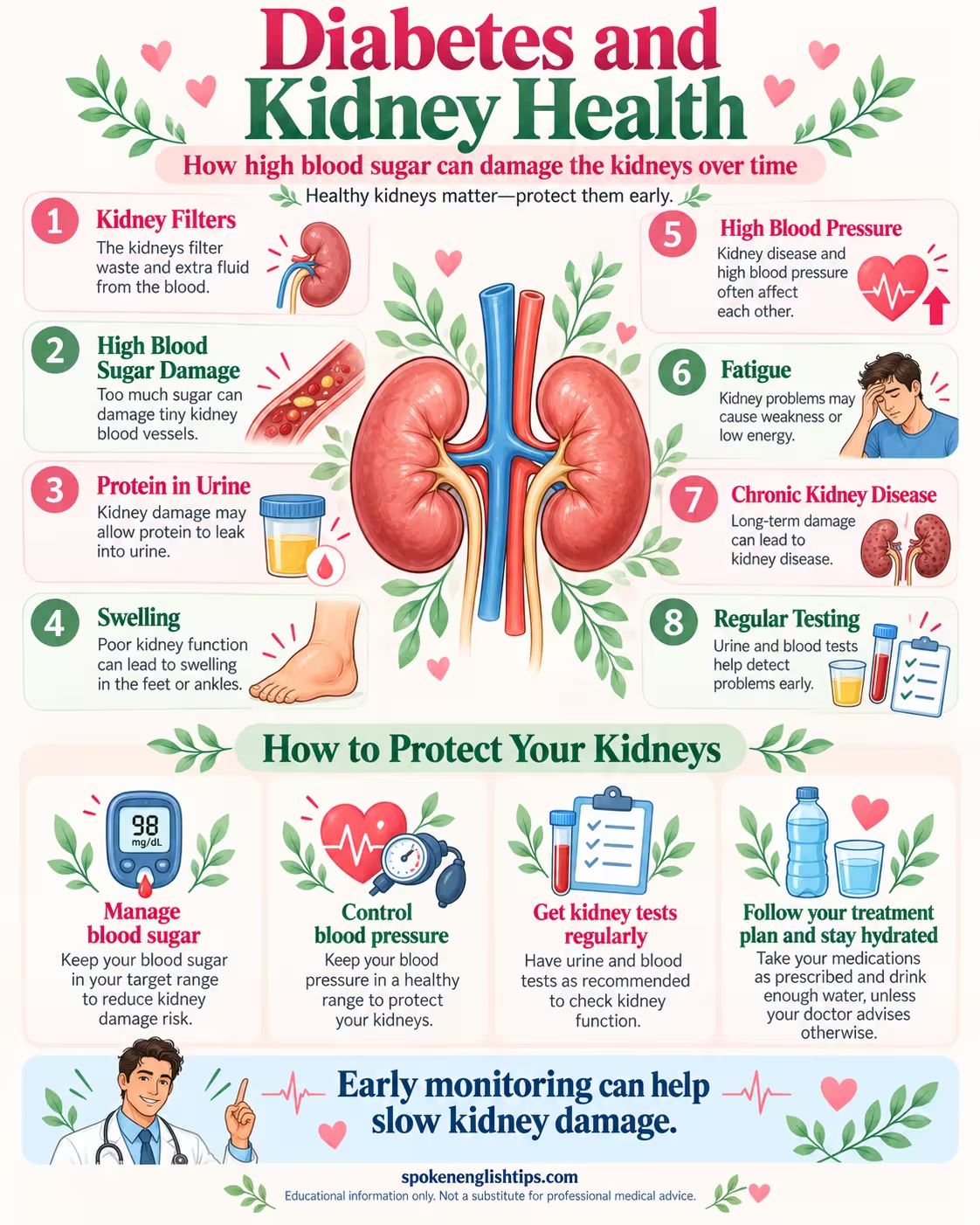
Diabetes is a long-term health condition that affects how your body uses blood sugar (glucose). When blood sugar remains too high, it can gradually damage important organs, including the heart, eyes, kidneys, and nerves.
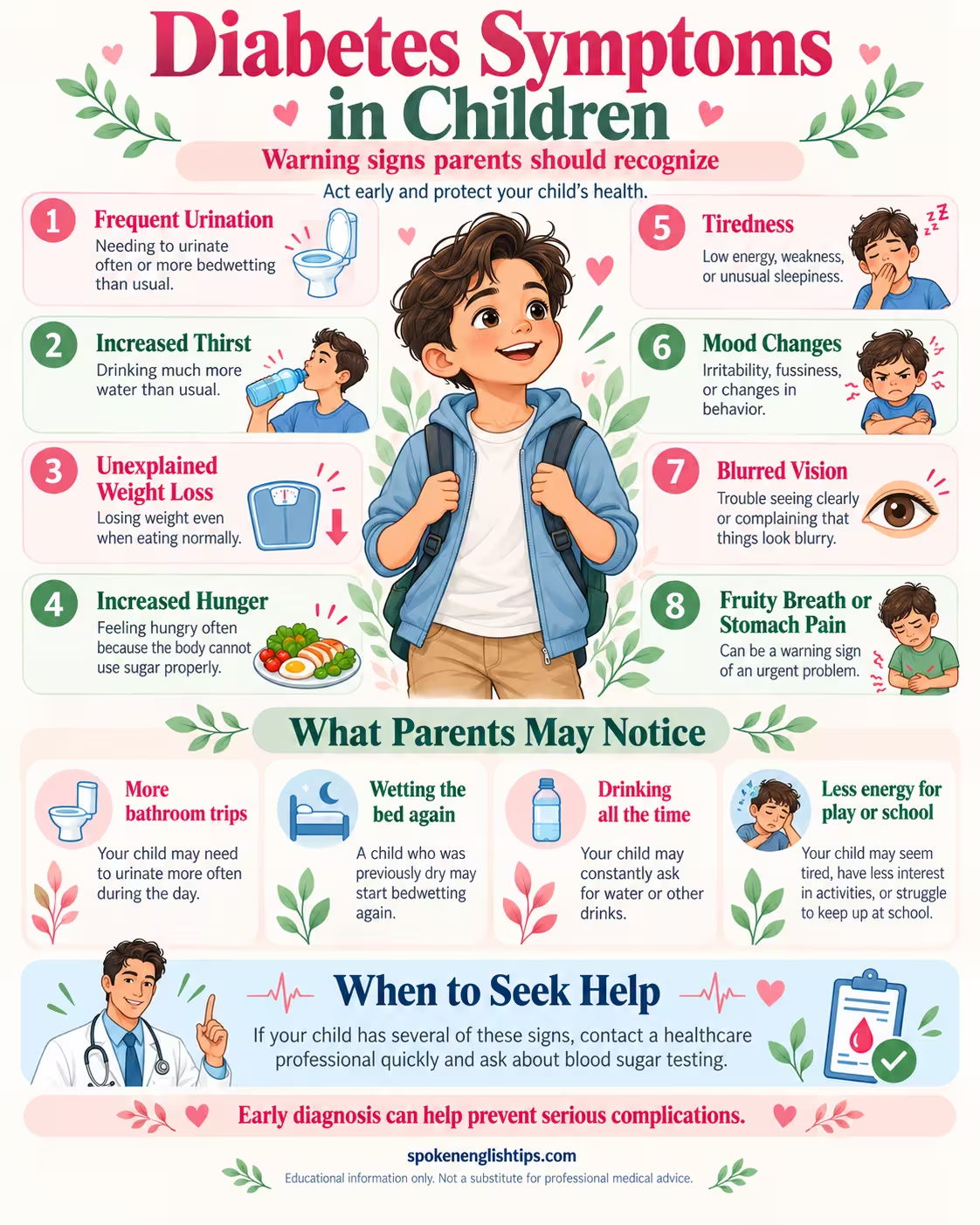
Recognizing symptoms early and getting tested can help prevent serious health complications.
10 Common Diabetes Symptoms and Their Effects on Health
| No. | Diabetes Symptom | What It Means for Your Health |
|---|---|---|
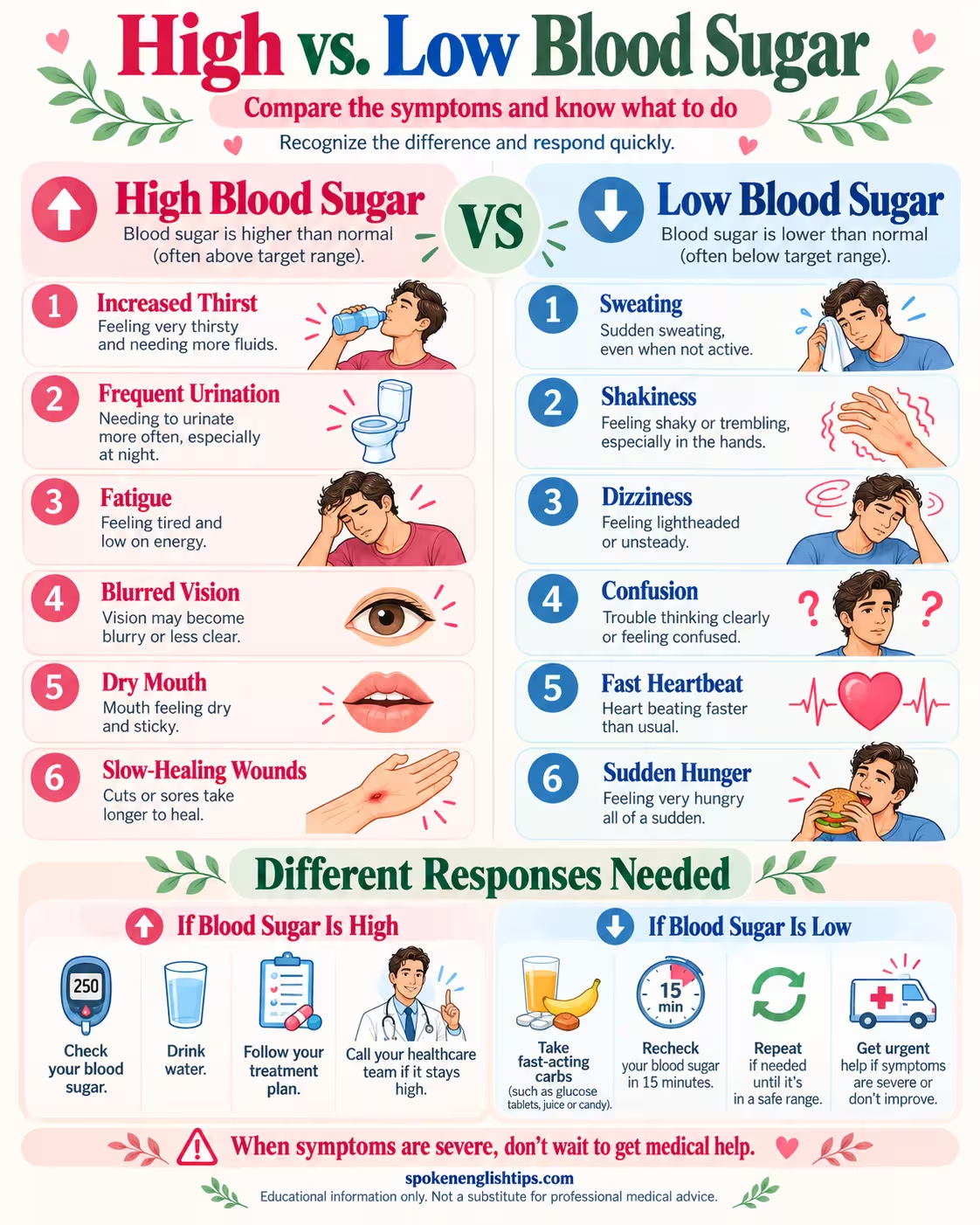
| 1 | Frequent Urination | High blood sugar makes your kidneys remove extra glucose through urine, causing more frequent bathroom visits. |
| 2 | Excessive Thirst | Losing extra fluid through urination can leave your body dehydrated and make you feel constantly thirsty. |
| 3 | Unexplained Weight Loss | When your body cannot use glucose properly, it may break down fat and muscle for energy, leading to unexpected weight loss. |
| 4 | Increased Hunger | Your body’s cells may struggle to get enough usable energy, making you feel hungry even after eating. |
| 5 | Constant Fatigue | Poor glucose use and dehydration can contribute to unusual tiredness, weakness, and low energy. |
| 6 | Blurred Vision | Changes in blood sugar can temporarily affect focusing. Long-term high blood sugar can also damage the eyes. |
| 7 | Slow-Healing Wounds | High blood sugar can interfere with healing and increase the risk of wound infections. |
| 8 | Tingling or Numbness | Diabetes-related nerve damage may cause burning, tingling, or reduced sensation, particularly in the feet and hands. |
| 9 | Frequent Infections | High blood sugar can increase susceptibility to certain infections, including skin, urinary tract, and yeast infections. |
| 10 | Mood Changes or Irritability | Changes in blood sugar and the physical strain of illness may contribute to irritability, difficulty concentrating, or mood changes. |