After a decade of helping couples tell their love stories through words and visuals, I’ve learned that the best engagement ring photos aren’t about perfect lighting or a flawless manicure (though, hey, a fresh coat of polish never hurts!). They’re about context. They’re about the tiny, beautiful details of your life and love.
So, let’s move beyond the standard selfie. I’ve gathered over 39 unique, heartfelt, and absolutely stunning engagement ring picture ideas to help you tell your unique story. Grab your phone, your ring, and let’s get creative together.

Why the Photo Matters
Before we dive in, let’s pause. This ring represents a chapter’s beginning. Photographing it thoughtfully is like bookmarking that first, breathtaking page. These photos will be the ones you look back on in 10, 20, and 50 years. They’ll be in your wedding album, on your anniversary posts, and saved in your heart. They capture the raw, new joy of engagement. So, let’s make them count.
Category 1: The Intimate & Atmospheric
These ideas are all about mood, soft light, and those quiet, personal moments.

- The Morning-After Glow: Capture the ring resting on your rumpled bedsheets, with soft morning light filtering through the window. It’s authentic, cozy, and full of promise.
- Coffee & Commitment: Your left hand curled around your favorite mug. The steam, the ceramic, the sparkle. It’s a slice of your daily life, now forever changed.
- Page-Turner: The ring resting on the pages of a beloved book. Maybe it’s the one you were reading when you met, or a romance novel for a fun touch.
- Journal Entry: Place the ring on an open journal, with a pen nearby. Hint at the story being written: “Chapter 1: He asked…”.
- Candlelit Sparkle: At dusk, use the flame of a candle as your only light source. The warm, flickering light makes the diamond dance in a magical way.
- Windowpane Silhouette: On a rainy day, place your hand against a foggy or rain-streaked window. The diffused light is incredibly romantic and dramatic.
- Bath Time Bliss: Bubbles, a bath bomb fizzing, or the serene surface of water with your hand resting on the tub’s edge. Elegant and serene.
Category 2: The Great Outdoors
Nature provides the most breathtaking, free backdrop imaginable.
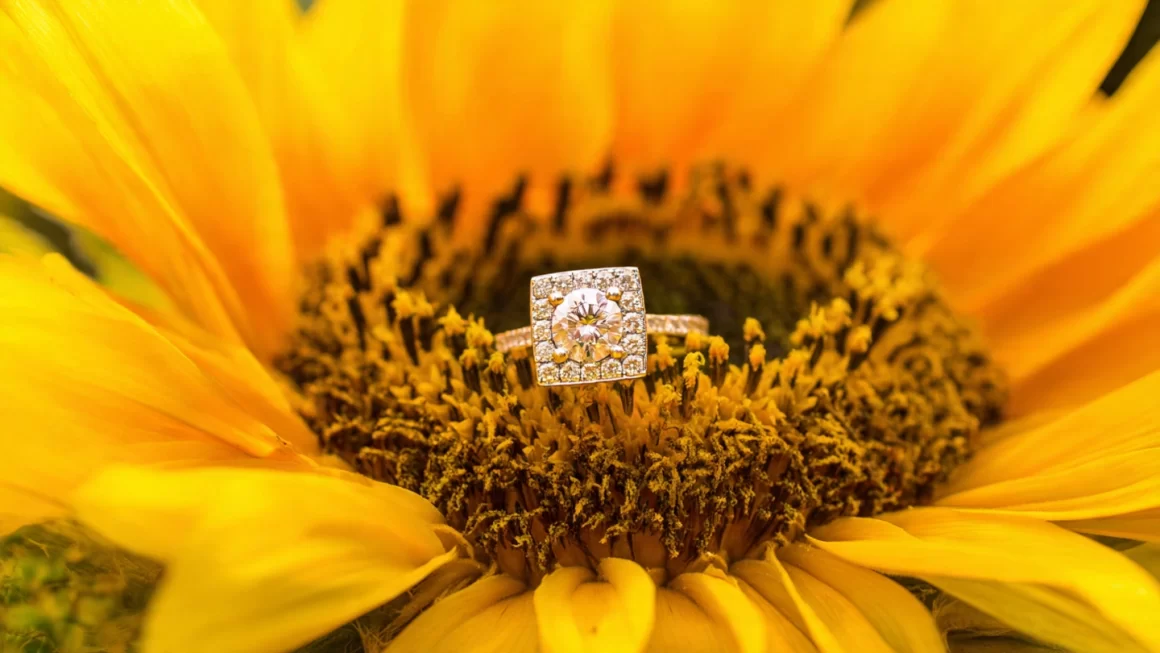
- Sunflower Salute: Gently nestle the ring in the center of a large flower. Sunflowers for joy, roses for romance, wildflowers for a free-spirited vibe.
- Forest Floor Find: Place the ring on a bed of moss, a interesting piece of bark, or nestled among fallen autumn leaves. It looks like discovering a rare treasure.
- Beachcomber’s Treasure: In the sand at golden hour, with the waves gently rolling in. You can write “Yes” or your initials in the sand beside it.
- Snowy Sparkle: For winter engagements, the contrast of a brilliant diamond against pure white snow is simply stunning.
- Mountain Top Moment: If you’re adventurers, get a shot with the ring in the foreground and the epic, vast landscape behind it. A symbol of the heights you’ll climb together.
- Holding a Leaf or Pinecone: A simple, beautiful way to incorporate nature without putting your ring down.
- Desert Dreams: The stark, beautiful contrast of your ring on terracotta earth or a rugged rock formation.
- Puddle Reflection: After a rain, find a clear puddle and capture the ring’s reflection from above. A clever, artsy shot.
Category 3: The Celebration & Connection
Including your person, your friends, and the joy of the moment.

- The “Just Said Yes” Hug: Have your partner hug you from behind, their hands over yours, with both your faces in profile and the ring prominently visible. Pure, unscripted emotion.
- Champagne Clink: Focus on two flutes of champagne being clinked, with your ringed hand front and center. The bubbles add fantastic texture.
- With Your Besties: A shot of your hand stacked with your closest friends’ hands. It’s a celebration of all the love in your life.
- The Groom’s Reaction: A behind-the-scenes shot of him admiring the ring on your finger. His proud, happy smile says it all.
- Family Heirloom Combo: If you have an heirloom band or piece of jewelry, photograph your new ring alongside it. It’s a beautiful nod to past and future.
- Map to the Moment: Photograph the ring on a map, with a pin or circle marking the location where you got engaged.
- Puppy Love: If you have a fur-baby, get a shot of them gently sniffing or nuzzling your ring hand. (Supervised, of course!).
Category 4: The Lifestyle & Detail-Oriented
Highlighting your personal style and the ring’s exquisite details.

- On Your Engagement Calendar: Open your planner or phone calendar to the month you’re engaged, with the ring marking the special date.
- With Your Wedding Inspo: A flat lay with the ring beside a piece of lace, a paint swatch in your wedding color, or a printed wedding inspiration photo.
- Bride Magazine Moment: The ring sitting on an open page of a bridal magazine. A classic for a reason.
- Shoe Game: A shot of your gorgeous ring hand holding a fabulous pair of wedding shoes or sneakers (for the cool bride!).
- The “Getting Ready” Robe: Your hand with the ring holding a luxurious silk or lace robe. It feels editorial and dreamy.
- Details, Details: Use your phone’s macro mode (or get very close!) to capture the unique details of your ring—the side profile, the engraving, the intricate setting.
- Against Texture: Play with contrasting textures: a chunky knit sweater, a sleek leather jacket, a delicate lace tablecloth.
Category 5: The Playful & Creative
For the bride who loves to think outside the box.

- Through a Prism: Use a crystal or glass prism to create a rainbow that falls directly across your ring. Magical and scientific!
- Movie Night: The ring in the popcorn bowl, or with the Netflix “Are you still watching?” screen in the background. For the couple that loves cozy nights in.
- Board Game Bond: Place the ring on the “GO” square of a Monopoly board or as a piece in your favorite couple’s game.
- Doughnut Dazzler: A fun, sugary shot with the ring beside (or carefully on) a beautiful, sprinkle-covered doughnut. “Donut” know what I’d do without you!
- Polaroid Perfection: Hold a Polaroid picture of you and your fiancé, with your ring hand positioned so the ring is front and center.
- Succulent Style: Tuck the ring into a small, beautiful succulent or cactus planter. A modern, earthy vibe.
- Vinyl Love: For music lovers, place the ring on the label of your “song” vinyl record.
Category 6: The Seasonal & Holiday
Incorporate the time of year you said “Yes.”

- Pumpkin Patch Pro: A fall engagement? Nestle the ring in the stem of a mini pumpkin or gourds.
- Festive Lights: Around Christmas, weave the ring through string lights or place it on a bed of pine needles and cranberries.
- New Year’s Sparkle: Coordinate with fireworks (sparklers are safe and work great!) for a dazzling effect.
- Spring Blooms: With cherry blossoms, tulips, or a basket of fresh-picked flowers.
- Fourth of July: A patriotic shot with the ring and red, white, and blue elements (berries, fabric, etc.).
Your Quick-Start Guide
Lighting is Queen: Natural, indirect light is your best friend. A cloudy day is actually perfect! Avoid harsh, direct noon sun and dark shadows.
Clean That Sparkler: Use a soft toothbrush, mild dish soap, and warm water to make your diamond shine like new before a shoot.
Steady Hands: Prop your phone or camera on a stack of books to avoid blur. Use the timer or a Bluetooth shutter remote.
Focus & Exposure: Tap directly on the ring on your phone screen to focus. Then slide your finger up or down to adjust the exposure if it’s too dark or bright.
Edit with Intention: Free apps like VSCO or Snapseed are great. Slightly increase brightness, contrast, and “sharpness.” But don’t over-filter—let the genuine sparkle shine.
The Most Important Idea of All:
Idea #42: The Unposed, Imperfect, Perfect Moment. The shot where you’re laughing so hard you’re crying. The one where your hand is intertwined with his, and the ring is just there, a part of the real, messy, beautiful love. Don’t get so caught up in the perfect photo that you miss the perfect feeling.
At the end of the day, your engagement ring photos are the first visual chapter of your wedding story. They should smell like your morning coffee, feel like your favorite sweater, and sparkle with your unique joy.
So, go on. Tell your story. We can’t wait to see it.
![How to Remove Hesitation While Speaking English Step by Step If you're wondering exactly how to remove hesitation while speaking English, follow these practical steps. 1. Start Speaking Before You Feel Ready Many learners wait until their grammar becomes perfect. That day never comes. Start speaking with the English you already know. Instead of saying: "I will start speaking English after improving my vocabulary." Say: "I will improve my vocabulary by speaking English." 2. Speak in Short Sentences First Long sentences increase mental pressure. Start with simple structures: I work in sales. I live in Lucknow. I enjoy reading books. I am learning English every day. Confidence grows faster when you can complete sentences smoothly. 3. Practice Speaking Out Loud Daily Speaking silently in your mind is not enough. Read articles, stories, or conversations aloud for 10-15 minutes every day. This trains your mouth and brain to work together. [INTERNAL LINK: daily spoken English practice routine for beginners] 4. Record Yourself Speaking Most students avoid recording themselves because it feels uncomfortable. However, it is one of the fastest ways to improve. Choose a simple topic: My job My hometown My daily routine My future goals Record for one minute and listen carefully. You will quickly identify: Frequent pauses Pronunciation issues Repeated words 5. Think in English Instead of translating, start creating simple thoughts directly in English. For example: While drinking tea, think: This tea is hot. I need to finish my work. The weather is pleasant today. Small habits create big improvements. Stop Translating in Your Head One major reason behind hesitation is mental translation. Why Translation Creates Delays Imagine someone asks: "What did you do yesterday?" If your brain follows this path: Hindi → English Translation → Grammar Check → Speak You will hesitate. Instead, train yourself to answer directly: "I visited my friend." "I watched a movie." "I completed a project." A Simple Exercise For 5 minutes daily: Look around your room and describe objects in English. Examples: The fan is running. My laptop is on the table. I need to clean this shelf. This helps your brain create English thoughts naturally. [INTERNAL LINK: how to think in English without translating] Build Speaking Confidence With Daily Practice Confidence does not come before speaking. Confidence comes from speaking repeatedly. Student Story #1 One of my students, a software engineer from Pune, understood English very well but hesitated badly during meetings. Whenever someone asked a question, he would spend several seconds forming the perfect answer. I encouraged him to focus on communicating rather than being perfect. Within six weeks of daily speaking practice, his hesitation reduced dramatically and he became much more active in discussions. Student Story #2 I remember teaching a customer support executive who constantly said "umm..." and "actually..." before every sentence. We practiced one-minute speaking exercises every day for a month. By replacing filler words with brief pauses and improving speaking confidence, she started speaking much more naturally during client calls. In my experience teaching hundreds of Indian learners, hesitation decreases fastest when students practice speaking consistently rather than studying grammar for hours. Common Mistakes That Increase Hesitation Many learners unknowingly make these mistakes. Mistake Result Translating every sentence Slow speech Trying to sound perfect Increased anxiety Memorizing without speaking Low confidence Fear of mistakes Longer pauses Comparing yourself to fluent speakers Reduced motivation Avoiding conversations No real improvement Avoiding these habits can significantly improve your fluency. Useful English Phrases When You Get Stuck Even fluent speakers sometimes need a moment to think. Instead of becoming silent, use these phrases. When You Need Time to Think That's an interesting question. Let me think for a moment. As far as I know... From my experience... When You Don't Understand Instead of saying: "What?" Say: Could you please repeat that? Sorry, I didn't catch that. Could you say that again? When You Forget a Word Try: I'm not sure of the exact word, but... What I mean is... Let me explain differently. These phrases help maintain the flow of conversation. [INTERNAL LINK: useful English phrases for daily conversation] 15 Practical Tips to Remove Hesitation Quickly Here are some practical strategies you can start today: Speak English for at least 15 minutes daily. Stop waiting for perfect grammar. Think in English during routine activities. Record your voice regularly. Read aloud every day. Learn useful speaking phrases. Join English conversation groups. Talk to yourself in English. Practice answering common interview questions. Focus on communication, not perfection. Improve pronunciation gradually. Watch English content actively. Shadow native speakers. Celebrate small improvements. Speak even when you feel nervous. The goal is progress, not perfection. A Simple 15-Minute Daily Routine to Reduce Hesitation If you're busy, follow this routine. Minutes 1-5: Read Aloud Choose any English article or story. Focus on: Clear pronunciation Natural pace Confidence Minutes 6-10: Speak on a Topic Choose one topic: My family My career My favorite movie My goals Speak continuously. Do not stop for mistakes. Minutes 11-15: Think and Describe Describe: Your room Your surroundings Your plans Only in English. Do this consistently for 30 days and you will notice a visible reduction in hesitation. [INTERNAL LINK: best daily English speaking exercises at home] What to Do During Interviews or Meetings Many learners hesitate most during professional situations. Try these strategies: Slow Down Slightly Speaking slowly is better than speaking nervously. A calm pace sounds more confident. Focus on the Message Your goal is communication, not perfection. Interviewers care more about clarity than flawless grammar. Use Familiar Vocabulary Don't force difficult words. Simple English spoken confidently creates a stronger impression. Example: Instead of: "I possess exceptional interpersonal communication capabilities." Say: "I communicate well with people and enjoy teamwork." The second version sounds more natural and confident. How Long Does It Take to Remove Hesitation? The answer depends on your current level and practice consistency. Most learners notice improvement within: 2-4 weeks of daily practice 2-3 months of regular speaking 6 months of consistent conversation practice In over 8 years of teaching spoken English, I've noticed that students who speak daily improve much faster than students who only study grammar and vocabulary. Consistency beats intensity every time. Conclusion Learning how to remove hesitation while speaking English is not about becoming perfect overnight. It is about speaking regularly, making peace with mistakes, and training yourself to think and respond in English naturally. Start with just 15 minutes of daily speaking practice. Over time, your confidence will grow, your pauses will reduce, and speaking English will begin to feel much more natural. If you try any of the techniques from this article, share your experience in the comments and let us know what helped you most. Frequently Asked Questions Can hesitation while speaking English be completely removed? Yes, hesitation can be reduced significantly through regular speaking practice, confidence-building exercises, and thinking in English instead of translating. Even fluent speakers pause occasionally, but frequent hesitation can be overcome with consistency. Why do I hesitate even when I know English? This usually happens because of fear of mistakes, overthinking grammar, lack of speaking practice, or translating from your native language before speaking. How can I remove hesitation while speaking English at home? Practice reading aloud, record yourself speaking, talk to yourself in English, and describe daily activities in English. Just 15 minutes a day can make a noticeable difference. Does grammar cause hesitation? Sometimes, but not always. More often, hesitation comes from fear of making grammar mistakes rather than actual grammar weakness. How long does it take to speak English confidently? Many learners notice improvement within a few weeks of daily practice. Significant confidence usually develops over a few months of regular speaking. Is it okay to make mistakes while speaking English? Absolutely. Mistakes are a natural part of learning. Every fluent speaker made countless mistakes before becoming confident. FAQ Schema-ready Q&A Pairs Question: Can hesitation while speaking English be completely removed? Answer: Yes, hesitation can be reduced significantly through regular speaking practice, confidence-building exercises, and thinking in English instead of translating. Consistent practice helps develop fluency and confidence over time. Question: Why do I hesitate even when I know English? Answer: Most learners hesitate because of fear of making mistakes, overthinking grammar, lack of speaking practice, or translating from their native language before speaking. Question: How can I remove hesitation while speaking English at home? Answer: Practice reading aloud, record your voice, talk to yourself in English, and describe your surroundings in English daily. These exercises help build fluency and confidence. Question: Does grammar cause hesitation while speaking English? Answer: Grammar can contribute to hesitation, but fear of making grammar mistakes is often a bigger issue. Focusing on communication rather than perfection helps reduce hesitation. Question: How long does it take to speak English confidently? Answer: Many learners see improvement within 2-4 weeks of consistent practice. Strong confidence and fluency typically develop over several months of regular speaking. Question: Is it okay to make mistakes while speaking English? Answer: Yes. Making mistakes is a normal part of language learning. Every fluent speaker makes mistakes while learning, and speaking regularly is more important than speaking perfectly.](https://spokenenglishtips.com/wp-content/uploads/2026/06/How-to-Remove-Hesitation-While-Speaking-English-Step-by-Step-800x533.webp)