If you are looking for best infographics of diabetes then you are at right place here i am going to share with you more than 15 basic to pro level information of infographics with researched and analyzed infographics that help you to prevent from them, all are info from available researched sources.
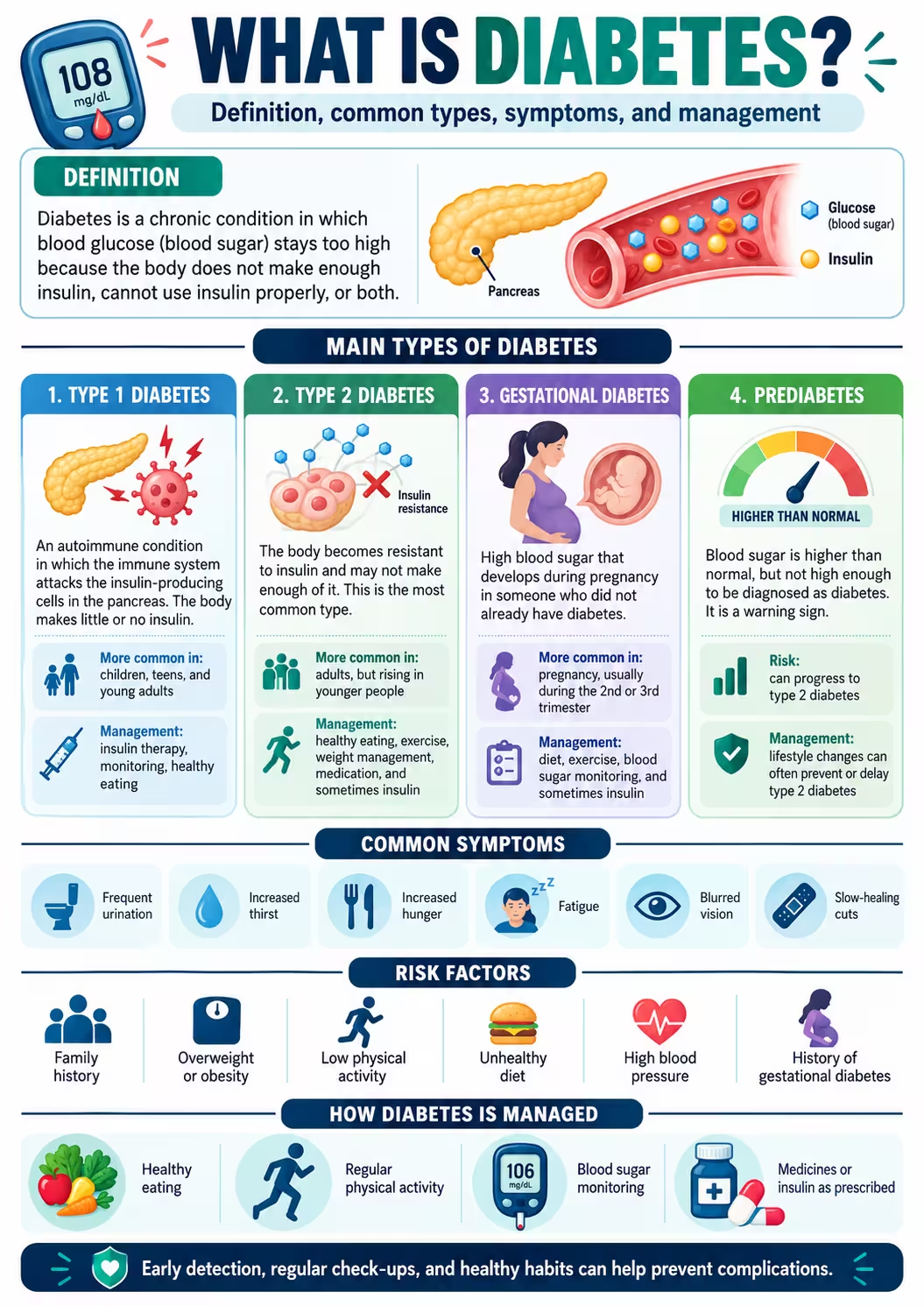
Diabetes is a health condition in which the level of sugar (glucose) in the blood becomes too high. This happens when the body does not produce enough insulin or cannot use insulin properly. Insulin is a hormone that helps the body’s cells use sugar for energy. If diabetes is not managed properly, high blood sugar can gradually damage important organs, including the heart, kidneys, eyes, and nerves.
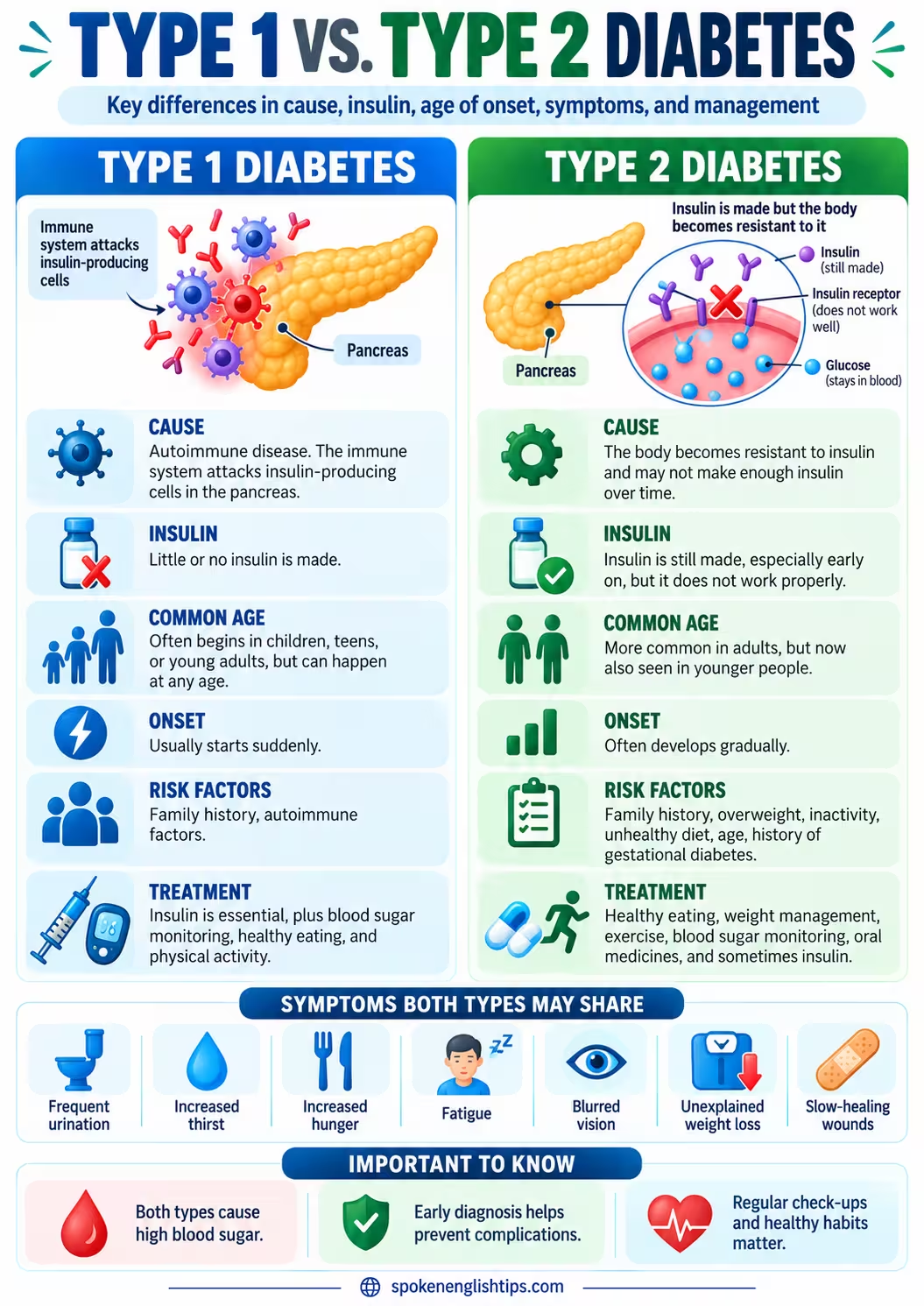
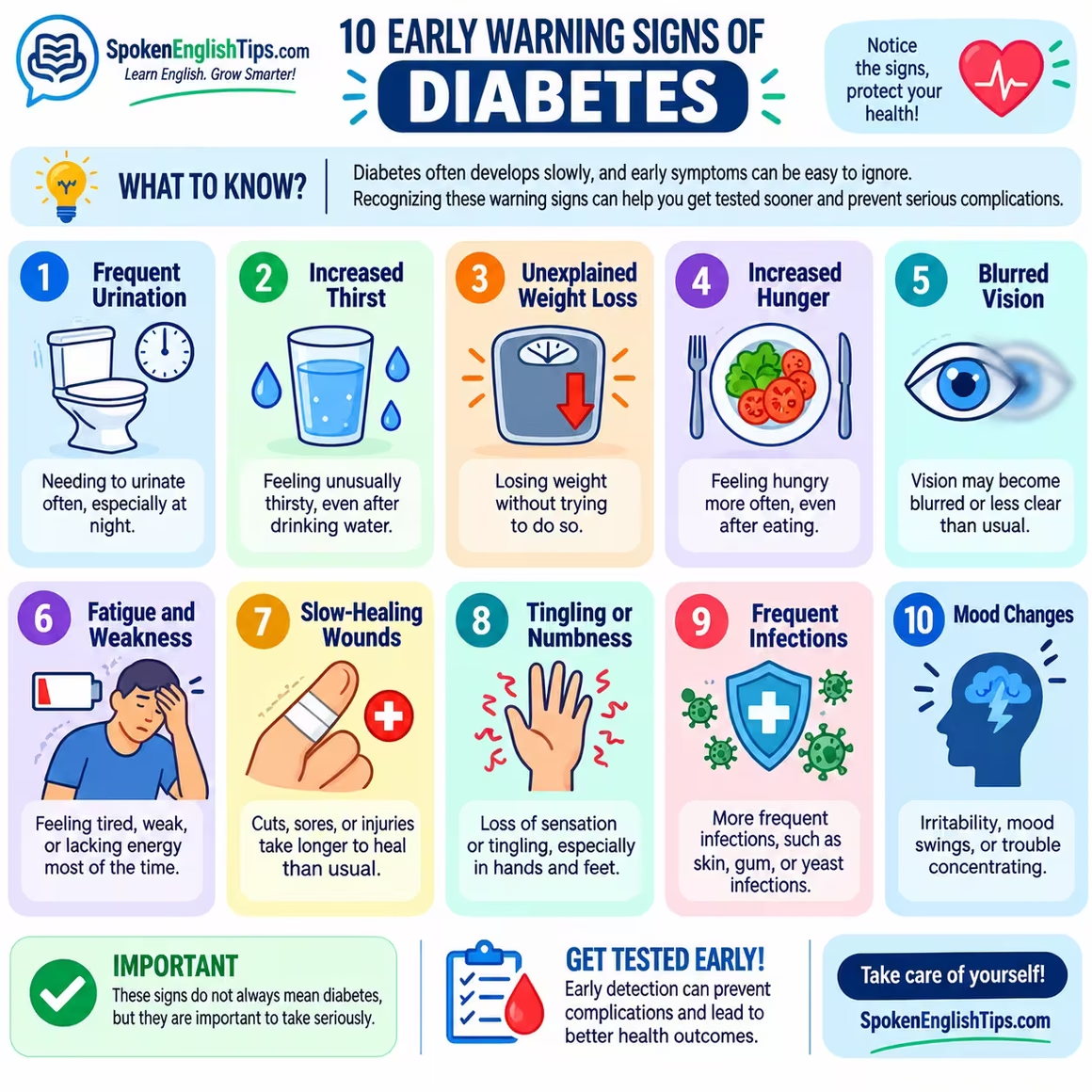
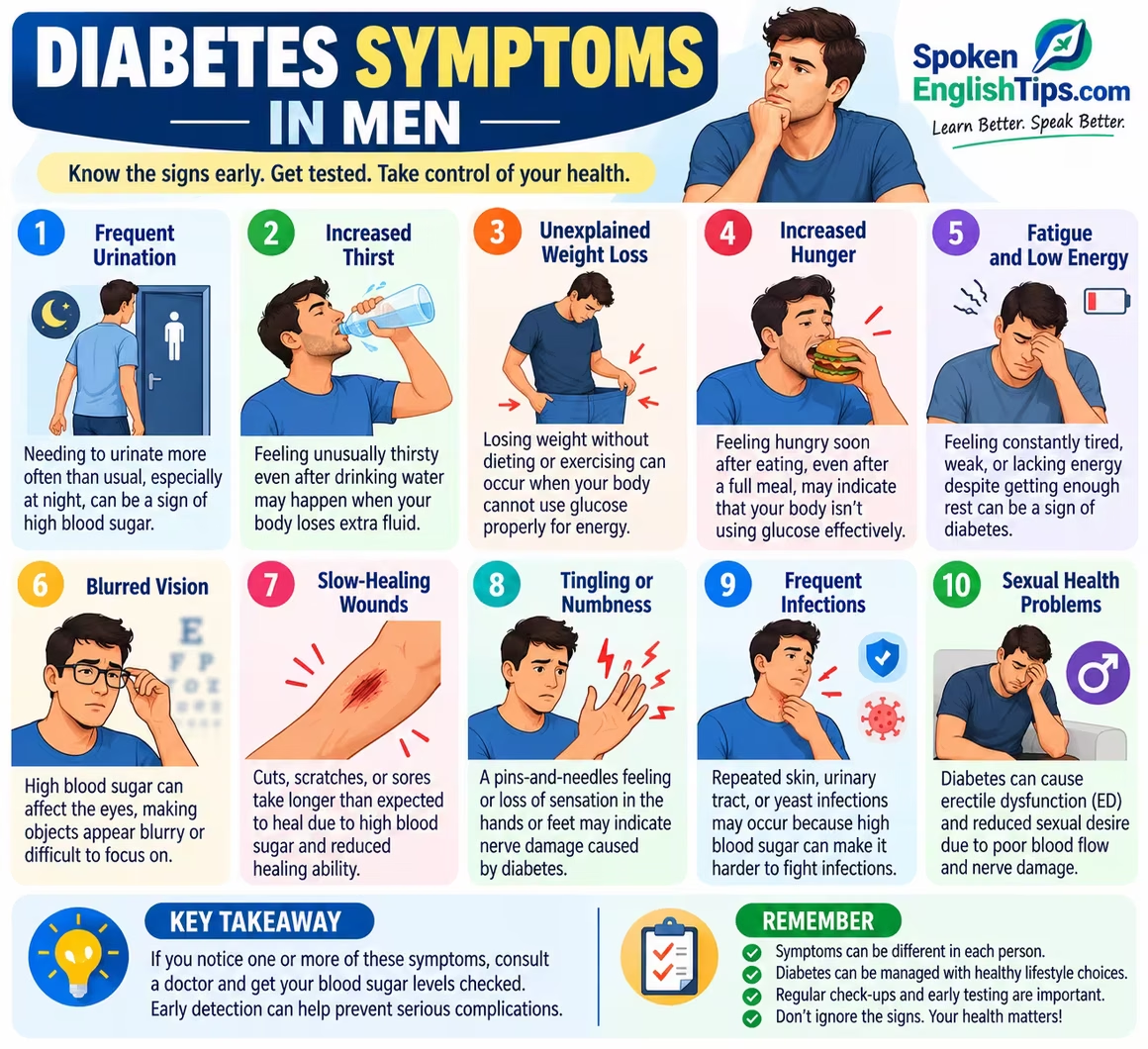
10 Early Warning Signs of Diabetes
Diabetes can develop gradually, and its early symptoms are sometimes easy to overlook. Recognizing unusual changes in your body may help you seek medical advice and get your blood sugar checked sooner.
| No. | Warning Sign | Simple Explanation |
|---|---|---|
| 1 | Frequent Urination | Needing to urinate more often than usual, especially at night, can happen when your body tries to remove excess sugar through urine. |
| 2 | Increased Thirst | Feeling unusually thirsty, even after drinking water, may occur because frequent urination causes your body to lose fluids. |
| 3 | Unexplained Weight Loss | Losing weight without changing your diet or exercise routine may happen when your body cannot use glucose effectively for energy. |
| 4 | Increased Hunger | Feeling hungry shortly after eating can occur when your body’s cells cannot get or use enough glucose for energy. |
| 5 | Blurred Vision | High blood sugar can temporarily affect the eye’s lens, making objects appear blurry or difficult to focus on. |
| 6 | Constant Fatigue | Feeling unusually tired or weak, even after adequate sleep, can occur when your body struggles to use glucose properly. |
| 7 | Slow-Healing Wounds | Cuts, scratches, or sores that take longer than expected to heal may be associated with high blood sugar and impaired healing. |
| 8 | Tingling or Numbness | A pins-and-needles feeling or reduced sensation in your hands or feet may indicate nerve damage associated with diabetes. This is often a later sign. |
| 9 | Frequent Infections | Repeated skin, urinary tract, or yeast infections may occur because high blood sugar can make it harder for your body to fight infections. |
| 10 | Irritability or Mood Changes | Unusual irritability, frustration, or mood changes can sometimes accompany blood sugar problems, although many other conditions can cause them. |
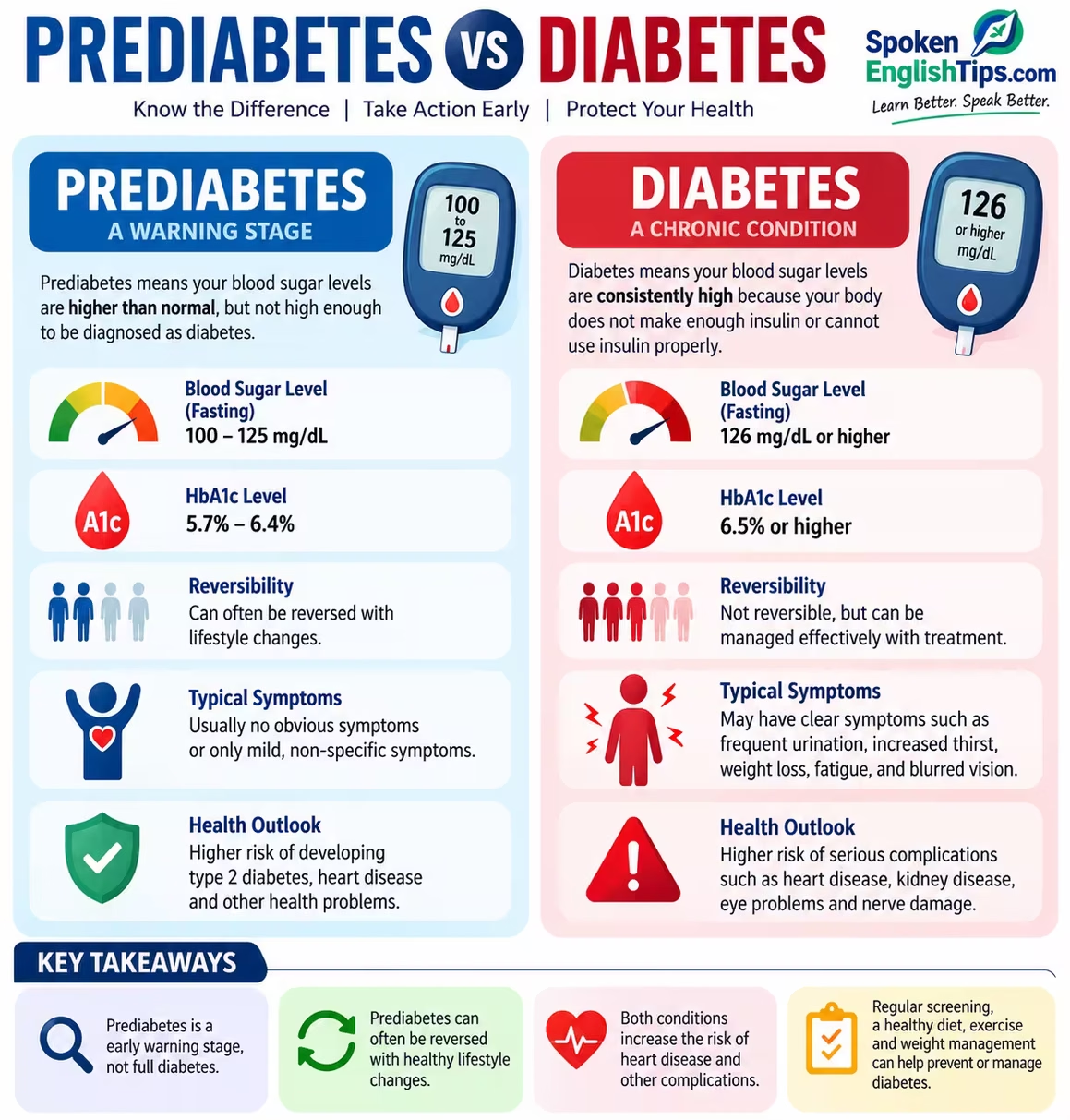
Prediabetes vs. Diabetes: What’s the Difference?
Prediabetes means your blood sugar is higher than normal but not high enough to be diagnosed as diabetes. Diabetes occurs when blood sugar reaches the diabetic range.
| Feature | Prediabetes | Diabetes |
|---|---|---|
| Blood Sugar | Higher than normal | High enough for a diabetes diagnosis |
| HbA1c Level | 5.7%–6.4% | 6.5% or higher |
| Fasting Blood Sugar | 100–125 mg/dL | 126 mg/dL or higher |
| 2-Hour Glucose Test | 140–199 mg/dL | 200 mg/dL or higher |
| Symptoms | Usually no clear symptoms | May cause thirst, fatigue, and frequent urination |
| Health Risks | Increased risk of type 2 diabetes and heart disease | Risk of damage to the eyes, kidneys, nerves, and heart |
| Management | Healthy eating, exercise, weight management, and sometimes medication | Healthy habits, blood sugar monitoring, and medication or insulin when needed |
| Can It Improve? | Often possible to return blood sugar to the normal range | Type 2 diabetes may enter remission; type 1 requires ongoing insulin treatment |
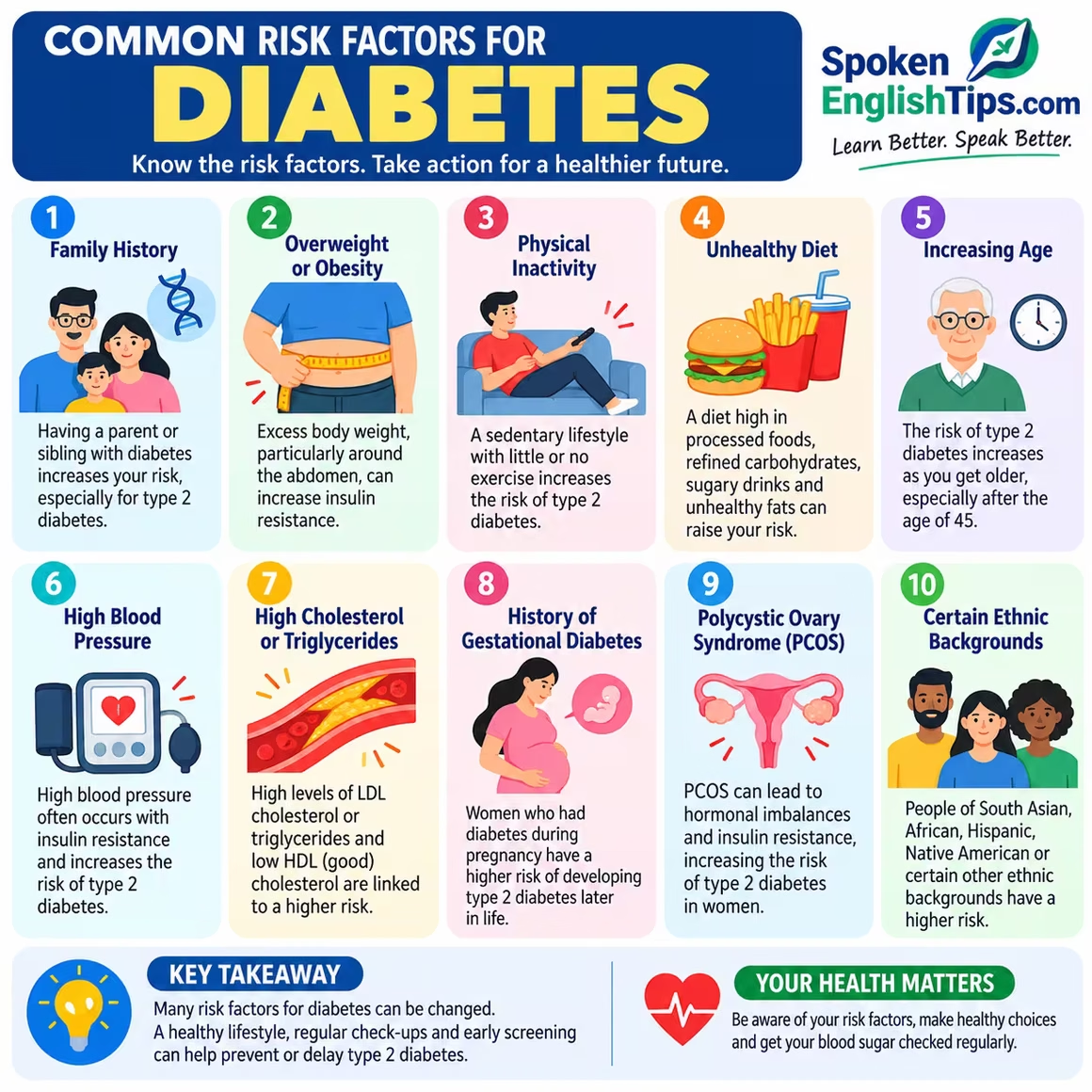
Common Risk Factors for Type 2 Diabetes
| No. | Risk Factor | Simple Explanation |
|---|---|---|
| 1 | Family History | Having a parent, brother, or sister with type 2 diabetes increases your chances of developing the condition. |
| 2 | Overweight or Obesity | Excess body fat, especially around the waist, can make it harder for your body to use insulin effectively. |
| 3 | Physical Inactivity | Spending long periods sitting and getting little exercise can increase insulin resistance and diabetes risk. |
| 4 | Unhealthy Eating Habits | Frequently consuming sugary drinks, refined carbohydrates, and heavily processed foods may contribute to weight gain and increased diabetes risk. |
| 5 | Increasing Age | The risk of type 2 diabetes generally increases with age, although children and younger adults can also develop it. |
| 6 | High Blood Pressure | People with high blood pressure are more likely to develop type 2 diabetes, especially when other metabolic risk factors are present. |
| 7 | Abnormal Cholesterol Levels | Low HDL (good) cholesterol or high triglyceride levels are associated with an increased risk of type 2 diabetes. |
| 8 | History of Gestational Diabetes | Having diabetes during pregnancy increases the chance of developing type 2 diabetes later in life. |
| 9 | Polycystic Ovary Syndrome (PCOS) | PCOS is associated with insulin resistance, which can increase the risk of developing type 2 diabetes. |
| 10 | Prediabetes | Having blood sugar levels higher than normal but below the diabetes range significantly increases the risk of developing type 2 diabetes. |
Medical Disclaimer
For Educational Purposes Only: This infographic is intended to provide general health information and is not a substitute for professional medical advice, diagnosis, or treatment. Diabetes symptoms can vary from person to person and may also be caused by other medical conditions. If you experience any of these symptoms, consult a qualified healthcare professional for proper evaluation and blood sugar testing. Never ignore symptoms or delay seeking medical care based on this information.