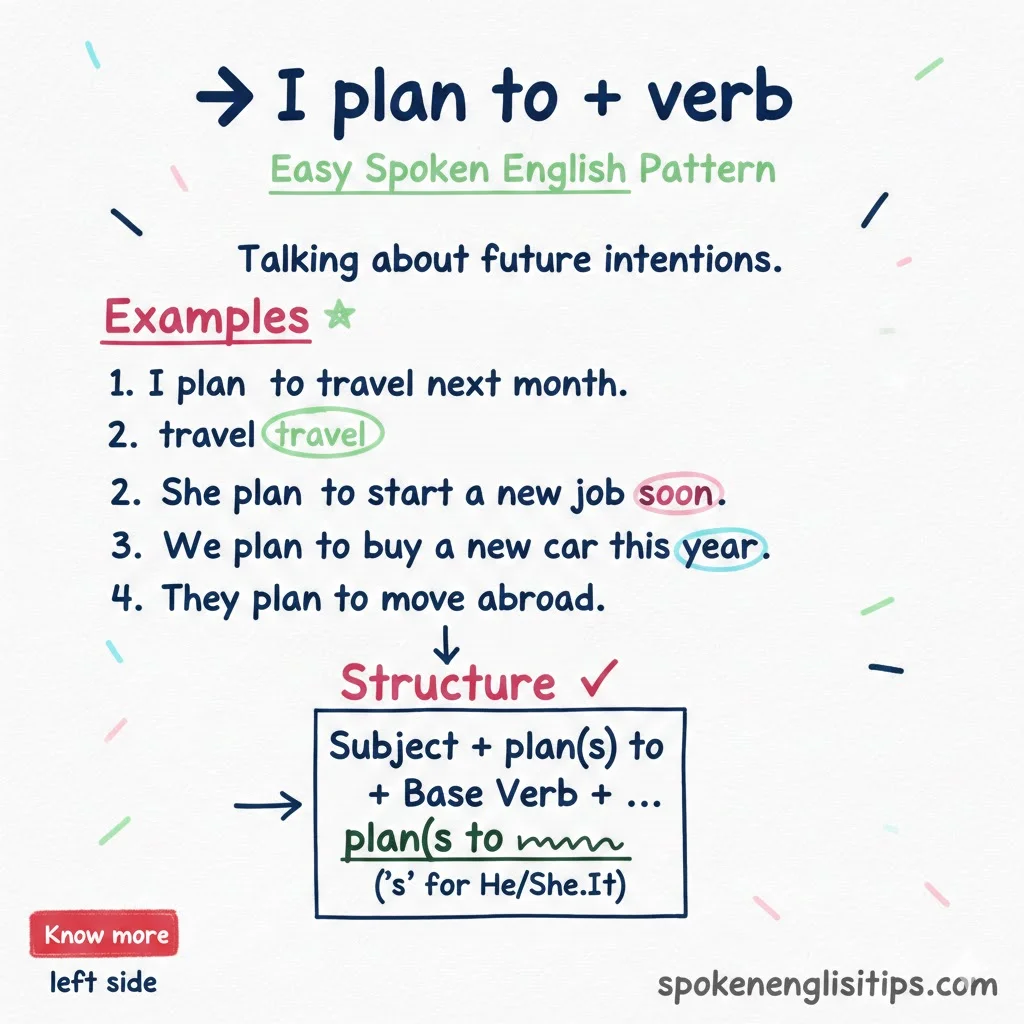
“I can’t + verb” is a very common English pattern used to say that you are unable to do something or that something is not possible for you. Native speakers use it every day in conversations at home, work, school, and while traveling. It helps you express limitations, difficulties, or inability in a simple way. For example, you can say, “I can’t drive,” “I can’t come today,” or “I can’t understand this.” Learning this structure will help you speak naturally and confidently in daily situations. It is easy to use because you only need “I can’t” followed by the base form of a verb.
◎ Important Points
- Use I can’t to express inability or impossibility.
- Always use the base form of the verb after “can’t”.
- Do not add to after “can’t”.
- Use it in everyday conversations.
- It can talk about present situations and abilities.
- Pronounce “can’t” clearly while speaking.
- Keep the sentence simple and natural.
➤Key Concept
✅ Sentence Structure: Subject + can’t + Verb (Base Form) + Object/Other Information
Example: I can’t swim.
Concept:
Use “I can’t + verb” when you want to say that you are unable to do something.
Speaking Tip:
Practice common sentences with “I can’t” to sound more natural in conversations.
➤ Common Mistakes To Avoid
| Common Mistake | Wrong Example | Correct Example |
|---|---|---|
| Using “to” after can’t | I can’t to swim. | I can’t swim. |
| Using verb with -ing | I can’t swimming. | I can’t swim. |
| Using wrong verb form | I can’t went there. | I can’t go there. |
| Missing verb | I can’t today. | I can’t come today. |
| Double negative | I can’t not understand. | I can’t understand. |
➤ Examples
- I can’t drive a car.
- I can’t come to the office today.
- I can’t understand this question.
- I can’t find my keys.
- I can’t attend the meeting tomorrow.
- I can’t sleep at night.
- I can’t carry this heavy bag.
- I can’t hear you clearly.
- I can’t finish the work today.
- I can’t remember his name.
➤ Practice Examples
A. Fill in the Blanks
- I can’t _______ French. (speak)
- I can’t _______ the door. (open)
- I can’t _______ with you today. (come)
- I can’t _______ my wallet. (find)
- I can’t _______ this box. (lift)
B. Change Incorrect Sentence to Correct One
- I can’t to drive.
- I can’t driving a bike.
- I can’t went there.
- I can’t opening the window.
- I can’t to understand English.
C. Speak These Sentences Aloud
- I can’t answer your question right now.
- I can’t go out because I am busy.
- I can’t hear the announcement.
- I can’t finish this task today.
- I can’t remember where I parked my car.