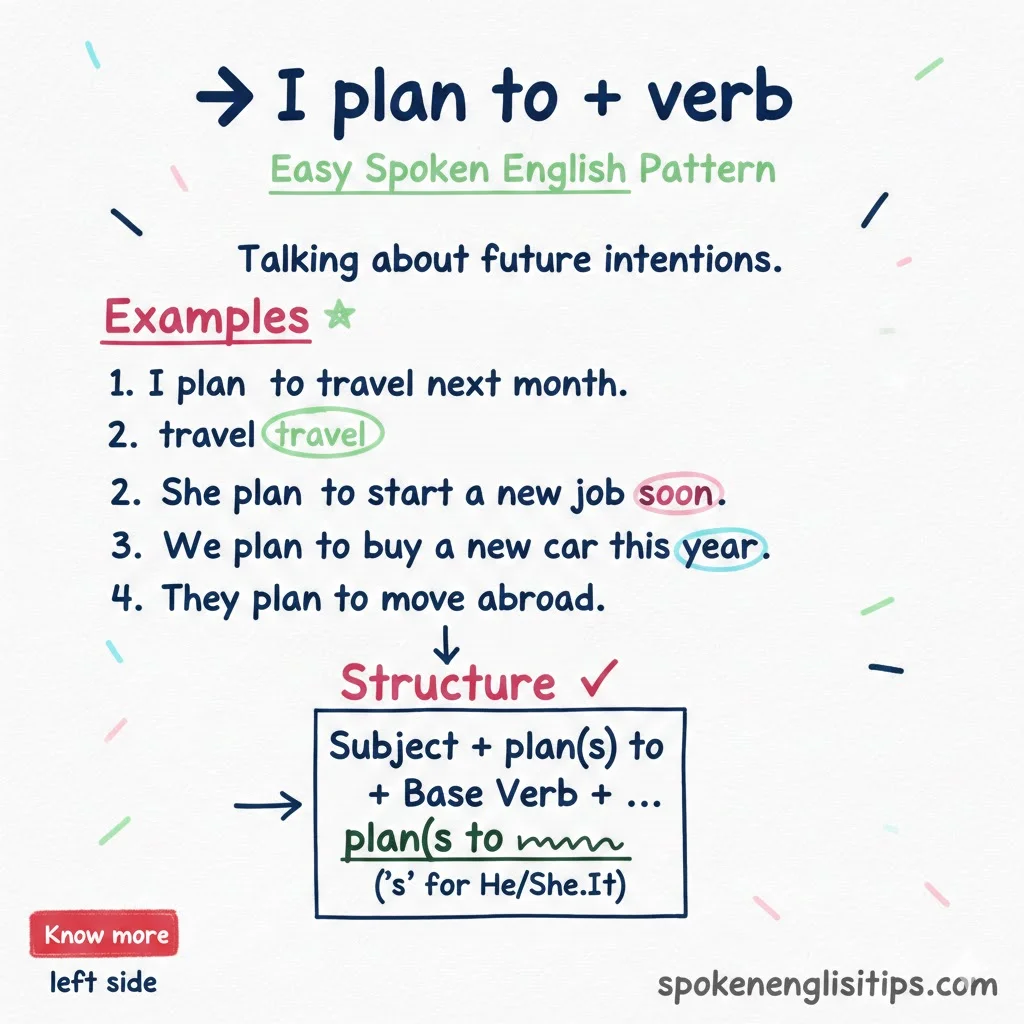
“I’m expected to + verb” is a useful English structure used when people think you should do something because it is your duty, responsibility, or part of a plan. It often shows what others want or require you to do.
We use this structure in daily conversations at work, school, home, and social situations. For example, if your manager asks you to finish a report, you can say, “I’m expected to finish the report today.”
Using this expression makes your English sound natural and professional. It helps you talk about responsibilities, duties, and expectations clearly in real-life situations.
◎ Important Points
- “I’m expected to” is followed by the base form of a verb.
- It talks about duties, responsibilities, or expectations.
- It is commonly used in workplaces and formal situations.
- The structure shows what other people expect from you.
- Do not use “to” twice after “expected.”
- Use the base verb after “to” (go, finish, attend, call, etc.).
- It helps make your spoken English sound more natural and mature.
➤Key Concept
✅ Sentence Structure: Subject + am/is/are + expected to + base verb + object/complement
Example:
I’m expected to attend the meeting tomorrow.
Concept:
Use “expected to” when someone thinks you should do something or when it is your responsibility.
💡 Speaking Tip:
Use this structure when talking about your job, studies, family duties, or future plans.
➤ Common Mistakes To Avoid
| Common Mistake | Wrong Example | Correct Example |
|---|---|---|
| Using verb-ing form | I’m expected to attending the meeting. | I’m expected to attend the meeting. |
| Missing “to” | I’m expected finish this work. | I’m expected to finish this work. |
| Using past verb after “to” | I’m expected to finished it today. | I’m expected to finish it today. |
| Wrong helping verb | I expected to attend the meeting. | I’m expected to attend the meeting. |
| Using double “to” | I’m expected to to call him. | I’m expected to call him. |
➤ Examples
- I’m expected to arrive at the office by 9 a.m.
- I’m expected to finish this project this week.
- I’m expected to help my parents at home.
- I’m expected to attend the team meeting tomorrow.
- I’m expected to reply to customer emails quickly.
- I’m expected to follow the company rules.
- I’m expected to pick up my friend from the airport.
- I’m expected to submit my assignment on time.
- I’m expected to call my manager after the meeting.
- I’m expected to be ready before the guests arrive.
➤ Practice Examples
A. Fill in the Blanks
- I’m expected to ______ the report today.
- I’m expected to ______ the meeting tomorrow.
- I’m expected to ______ my homework before dinner.
- I’m expected to ______ the customer politely.
- I’m expected to ______ on time every day.
Answers: finish, attend, complete, help, arrive
B. Change the Incorrect Sentence to Correct One
- I’m expected to attending the class.
- I’m expected finish the task.
- I’m expected to completed the work.
- I’m expected to to call my boss.
- I’m expected attend the meeting.
Answers:
- I’m expected to attend the class.
- I’m expected to finish the task.
- I’m expected to complete the work.
- I’m expected to call my boss.
- I’m expected to attend the meeting.
C. Speak These Sentences Aloud
- I’m expected to finish my work before lunch.
- I’m expected to attend an important meeting today.
- I’m expected to help my family this weekend.
- I’m expected to follow the instructions carefully.
- I’m expected to arrive on time every morning.
D. Make Your Own Sentences
Complete these with your own ideas:
- I’m expected to _____________.
- At work, I’m expected to _____________.
- At home, I’m expected to _____________.
- Tomorrow, I’m expected to _____________.
- As a student/employee, I’m expected to _____________.
E. Daily Speaking Practice
Say these sentences naturally:
- I’m expected to complete this task today.
- I’m expected to attend every training session.
- I’m expected to keep my room clean.
- I’m expected to help new team members.
- I’m expected to follow all safety rules.