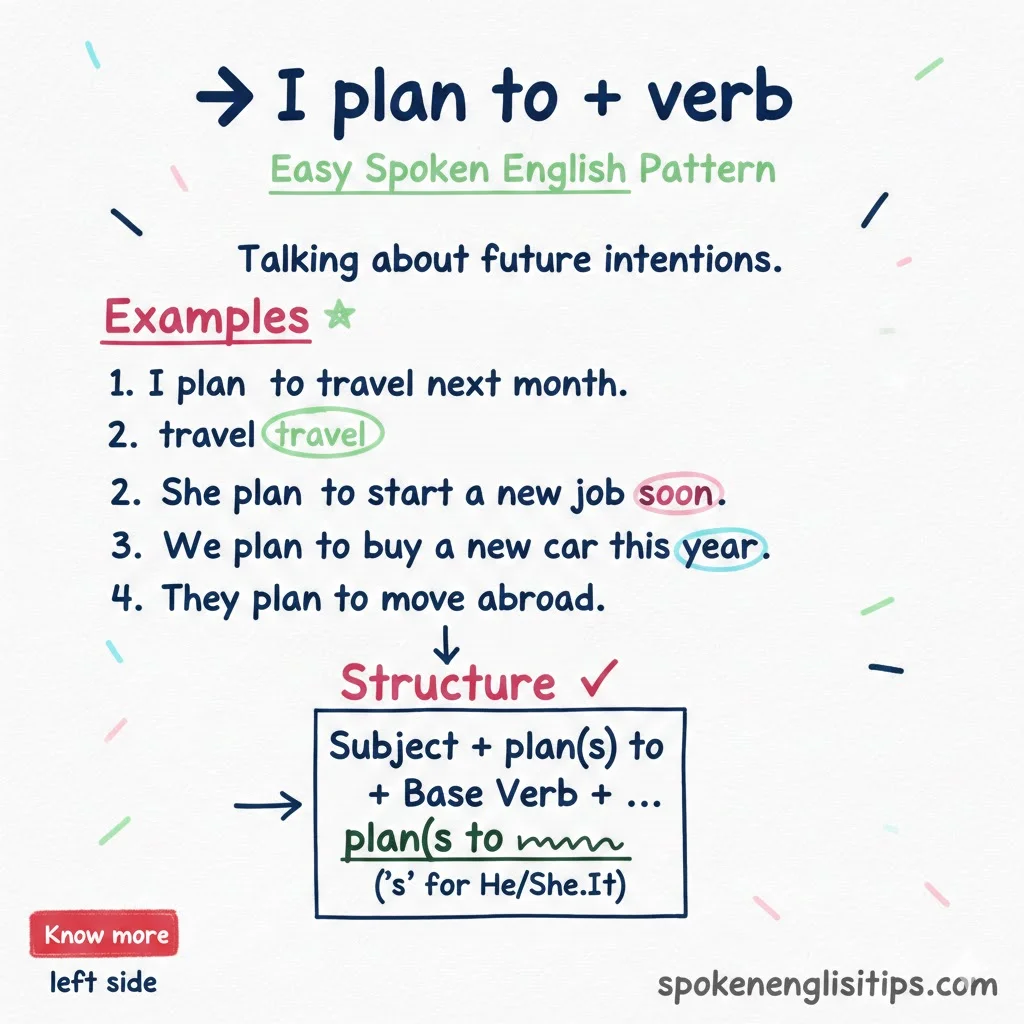
“I must not + verb” is used when you want to say that something is not allowed, should not be done, or is very important to avoid. It shows a strong prohibition or warning. People often use it in daily conversations about rules, safety, work, school, health, and personal responsibilities.
For example, if you are driving, you can say, “I must not use my phone while driving.” At work, you may say, “I must not be late for the meeting.” This structure helps learners express strong self-discipline and follow important rules. It is simple, useful, and commonly used in spoken English.
◎ Important Points
- “Must not” becomes mustn’t in informal speaking.
- Use the base form of the verb after “must not”.
- It expresses a strong rule, prohibition, or warning.
- Do not add “to” after “must not”.
- It is often used for safety rules and responsibilities.
- The structure remains the same for all subjects.
- “Must not” is stronger than “should not”.
➤Key Concept
✅ Sentence Structure: Subject + must not + base verb + object/complement
Example: I must not forget my passport.
Main Concept:
Use “must not” when something is forbidden, unsafe, or very important to avoid.
Speaking Tip:
Practice saying “mustn’t” naturally in conversations to sound more fluent.
➤ Common Mistakes To Avoid
| Common Mistake | Wrong Example | Correct Example |
|---|---|---|
| Using “to” after must not | I must not to go there. | I must not go there. |
| Using verb with -ing | I must not going out late. | I must not go out late. |
| Using past form of verb | I must not went there. | I must not go there. |
| Missing the verb | I must not late. | I must not be late. |
| Double negative | I must not don’t forget. | I must not forget. |
➤ Examples
- I must not forget my keys at home.
- I must not be late for the office meeting.
- I must not use my phone while driving.
- I must not spend too much money this month.
- I must not talk loudly in the library.
- I must not miss my train tomorrow.
- I must not eat too much junk food.
- I must not disturb my friend during work hours.
- I must not share my password with anyone.
- I must not leave the door unlocked at night.
➤ Practice Examples
A. Fill in the Blanks
- I must not _______ my homework. (forget)
- I must not _______ late today. (be)
- I must not _______ while driving. (text)
- I must not _______ too much sugar. (eat)
- I must not _______ the meeting tomorrow. (miss)
B. Change Incorrect Sentence to Correct One
- I must not to speak loudly.
- I must not going there.
- I must not forgot my bag.
- I must not don’t call him.
- I must not late for class.
C. Speak This Sentence Aloud
- I must not forget my important documents.
- I must not use my phone during the meeting.
- I must not be late for work.
- I must not waste my time on unnecessary things.
- I must not leave without informing my manager.
D. Make Your Own Sentences
- Write one sentence about school.
- Write one sentence about work.
- Write one sentence about health.
- Write one sentence about travel.
- Write one sentence about family rules.
E. Daily Speaking Practice
- I must not forget my wallet.
- I must not skip my exercise today.
- I must not waste electricity.
- I must not miss this opportunity.
- I must not break the rules.