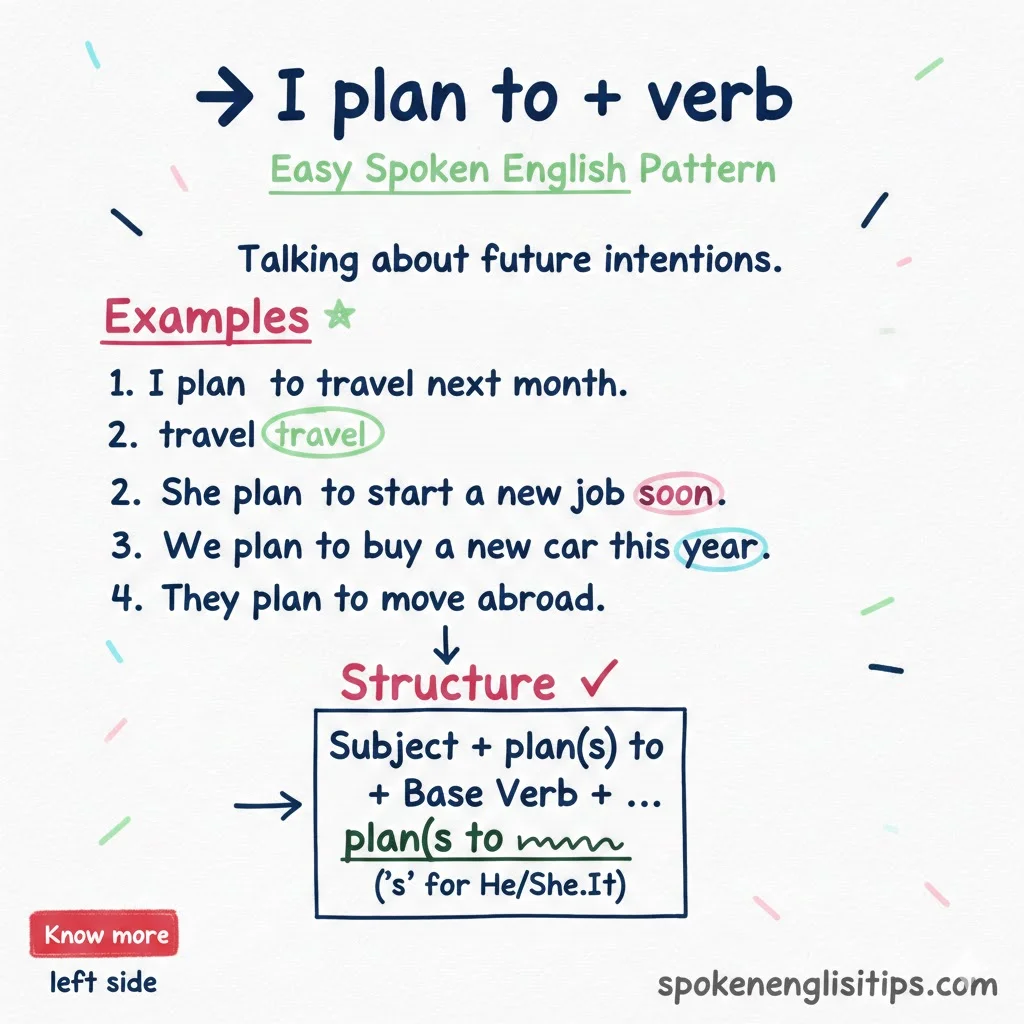
“I’m happy to + verb” is a common English expression used to show pleasure, willingness, or satisfaction about doing something. Native speakers use this pattern in daily conversations, workplaces, schools, and social situations. It helps you sound polite, friendly, and positive. For example, you can say, “I’m happy to help you” or “I’m happy to join the meeting.” This structure is easy to use and very useful in spoken English. Learning it will help you express your feelings naturally when talking about actions you enjoy doing or are willing to do for someone.
◎ Important Points
- Use “I’m happy to” before the base form of a verb.
- It shows pleasure, willingness, or a positive feeling.
- The verb should not be in the -ing form.
- It is commonly used in formal and informal conversations.
- It helps you sound polite and friendly.
- You can use it in personal and professional situations.
- The sentence usually talks about a present or future action.
➤Key Concept
✅ Sentence Structure: Subject + am/is/are + happy + to + base verb + object
Example: I’m happy to help my friend.
Concept: Use “happy to” when you feel pleased or willing to do an action.
Speaking Tip: Replace simple answers like “Okay” with “I’m happy to help” to sound more natural and polite.
➤ Common Mistakes To Avoid
| Common Mistake | Wrong Example | Correct Example |
|---|---|---|
| Using verb + ing | I’m happy to helping you. | I’m happy to help you. |
| Missing “to” | I’m happy help you. | I’m happy to help you. |
| Using past verb | I’m happy to helped you. | I’m happy to help you. |
| Wrong be verb | I happy to join. | I’m happy to join. |
| Using noun instead of verb | I’m happy to assistance you. | I’m happy to assist you. |
➤ Examples
- I’m happy to help you with your homework.
- I’m happy to meet your family.
- I’m happy to join the team today.
- I’m happy to answer your questions.
- I’m happy to travel with my friends.
- I’m happy to work on this project.
- I’m happy to see you again.
- I’m happy to share my notes with you.
- I’m happy to attend the meeting tomorrow.
- I’m happy to support my colleagues.
➤ Practice Examples
A. Fill in the Blanks
- I’m happy to ______ you. (help)
- She is happy to ______ the event. (join)
- We are happy to ______ our friends. (meet)
- He is happy to ______ the project. (finish)
- They are happy to ______ their experience. (share)
B. Change Incorrect Sentence to Correct One
- I’m happy to helping you.
- I happy to join the meeting.
- She is happy join us.
- We are happy to completed the work.
- He is happy to watching the match.
C. Speak These Sentences Aloud
- I’m happy to help my team.
- I’m happy to learn English every day.
- I’m happy to meet new people.
- I’m happy to support my family.
- I’m happy to be here today.
D. Make Your Own Sentences
- I’m happy to __________.
- I’m happy to __________ tomorrow.
- I’m happy to __________ with my friends.
- I’m happy to __________ at work.
- I’m happy to __________ for my family.
E. Daily Speaking Practice
- Say one thing you are happy to do today.
- Tell a friend something you are happy to help with.
- Say a sentence about work using “I’m happy to.”
- Say a sentence about family using “I’m happy to.”
- Say a sentence about learning English using “I’m happy to.”