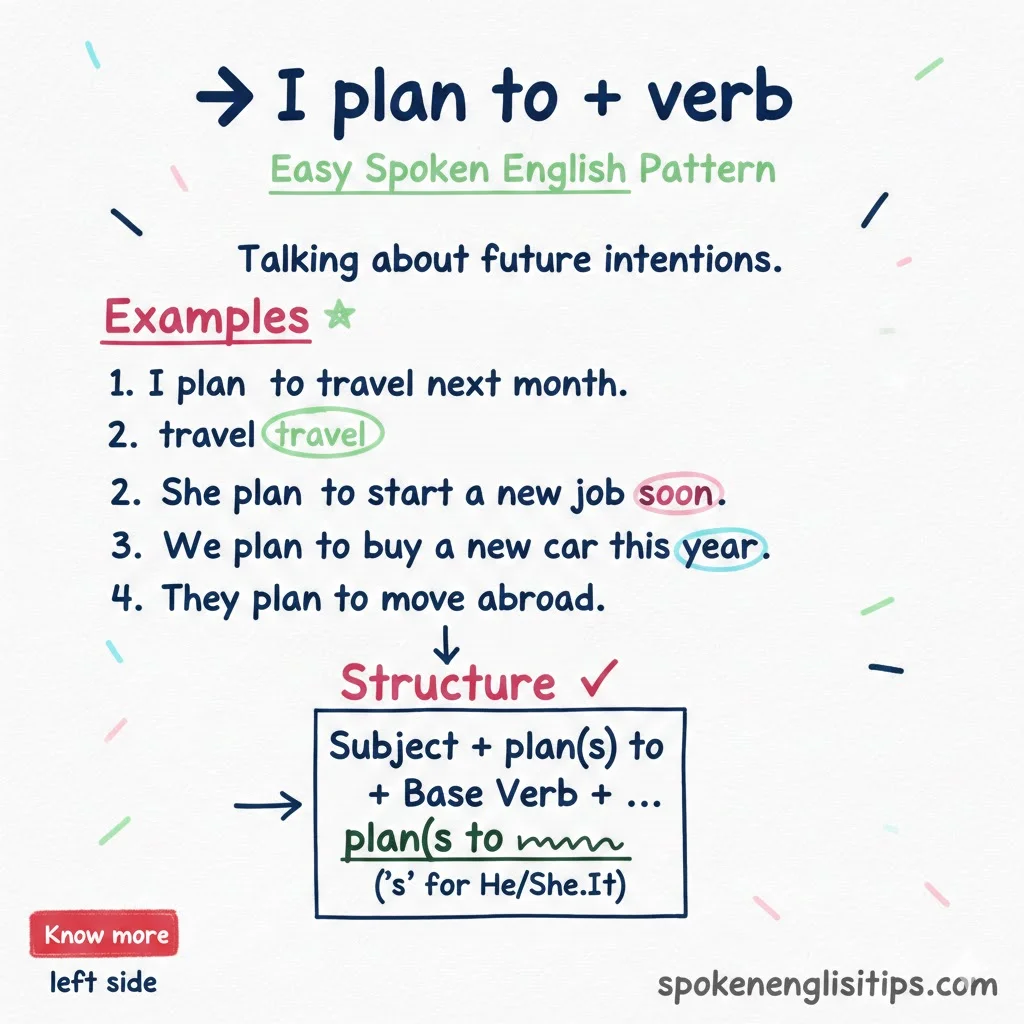
We use “I may + verb” when we talk about a possibility in the present or future. It shows that something is not certain, but it can happen. This structure is very common in daily English conversations. For example, if you are not sure about your plans, you can say, “I may visit my friend tomorrow.” If you are thinking about doing something, you can use “may” to express that idea politely and naturally. Native speakers often use this pattern in personal, social, travel, and work-related situations. Learning this structure will help you sound more natural and confident in English speaking.
◎ Important Points
Use may to talk about possibility.
After may, always use the base form of the verb.
Do not add to after may.
May can be used for present or future possibilities.
It shows uncertainty, not a fixed plan.
May is more polite and formal than some other modal verbs.
Use may when you are not completely sure about something.
➤Key Concept
✅ Sentence Structure: Subject + may + Verb (Base Form) + Object/Other Information
Example: I may go to Delhi next week.
Main Concept: Use “I may + verb” when there is a chance that something will happen, but you are not completely sure.
Speaking Tip: Use “I may” in conversations when discussing future plans that are not confirmed.
Alok Kumar is an educational content creator, YouTuber, and English speaker dedicated to helping learners grow with clarity and confidence. Through his engaging videos and easy-to-understand teaching style, he simplifies complex topics and makes learning accessible to a wide audience.
We use cookies to ensure that we give you the best experience on our website. If you continue to use this site we will assume that you are happy with it. Privacy policy