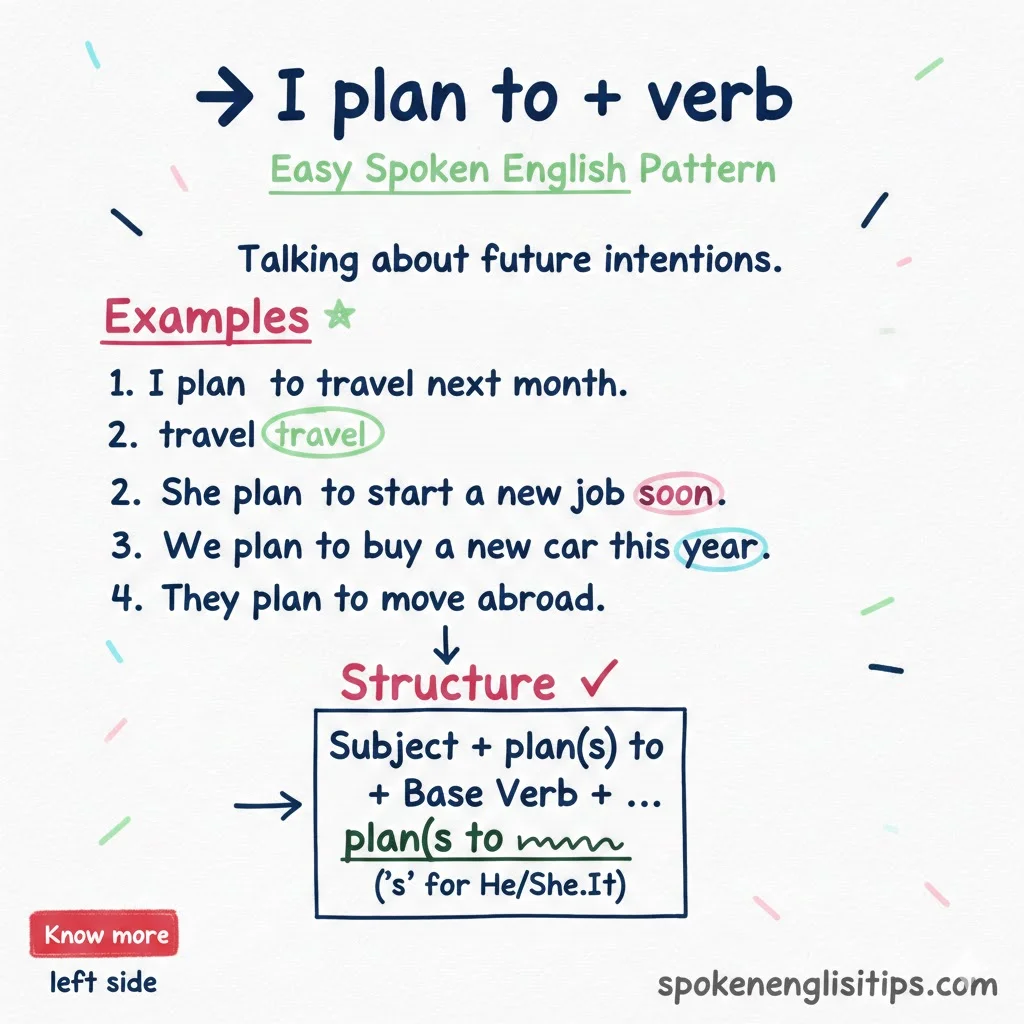
“I’m able to + verb” is used to talk about something you can do successfully. It shows ability, skill, or possibility in a situation. People often use this structure in daily conversations at home, at work, while traveling, or when talking with friends. It sounds natural and polite in spoken English. You can use it when describing your skills, explaining what you can do now, or talking about something you managed to do. Learning this structure helps you speak more confidently and clearly in everyday situations. It is a useful expression for beginners because it can be used in many real-life conversations.
◎ Important Points
- Use “I’m able to” to show ability.
- Always use the base form of the verb after “to”.
- It can be used in present, past, and future situations.
- It sounds slightly more formal than “I can”.
- Do not add “-ing” after “to”.
- Use it in both personal and professional conversations.
- It is useful when talking about achievements and skills.
➤Key Concept
✅ Sentence Structure: Subject + am/is/are + able to + base verb + object
Example: I am able to solve this problem.
Main Concept:
Use “able to” when you want to express that someone has the ability or opportunity to do something.
Speaking Tip:
Practice replacing “I can” with “I am able to” in daily conversations to improve your English variety.
➤ Common Mistakes To Avoid
| Common Mistake | Wrong Example | Correct Example |
|---|
| Using verb-ing after to | I am able to driving. | I am able to drive. |
| Missing “to” | I am able drive a car. | I am able to drive a car. |
| Using wrong helping verb | I able to speak English. | I am able to speak English. |
| Using past verb after to | I am able to drove. | I am able to drive. |
| Using double ability words | I can able to swim. | I am able to swim. |
➤ Examples
- I am able to finish my work on time.
- I am able to cook dinner for my family.
- I am able to speak with clients confidently.
- I am able to find the hotel easily.
- I am able to help my friend with homework.
- I am able to attend the meeting today.
- I am able to understand this lesson.
- I am able to carry these bags myself.
- I am able to book tickets online.
- I am able to answer your question now.
➤ Practice Examples
A. Fill in the Blanks
- I am able to ______ English fluently.
- She is able to ______ the report today.
- We are able to ______ the train on time.
- He is able to ______ the computer easily.
- They are able to ______ the problem quickly.
B. Change the Incorrect Sentence to Correct One
- I am able to speaking English.
- She able to finish the task.
- We are able catch the bus.
- He is able to drove a car.
- I can able to help you.
C. Speak These Sentences Aloud
- I am able to complete my work before dinner.
- I am able to communicate with new people confidently.
- I am able to manage my time effectively.
- I am able to learn new skills every day.
- I am able to solve small problems independently.
Answers
Fill in the Blanks (Sample Answers)
- speak
- finish
- catch
- use
- solve
Correct Sentences
- I am able to speak English.
- She is able to finish the task.
- We are able to catch the bus.
- He is able to drive a car.
- I am able to help you.