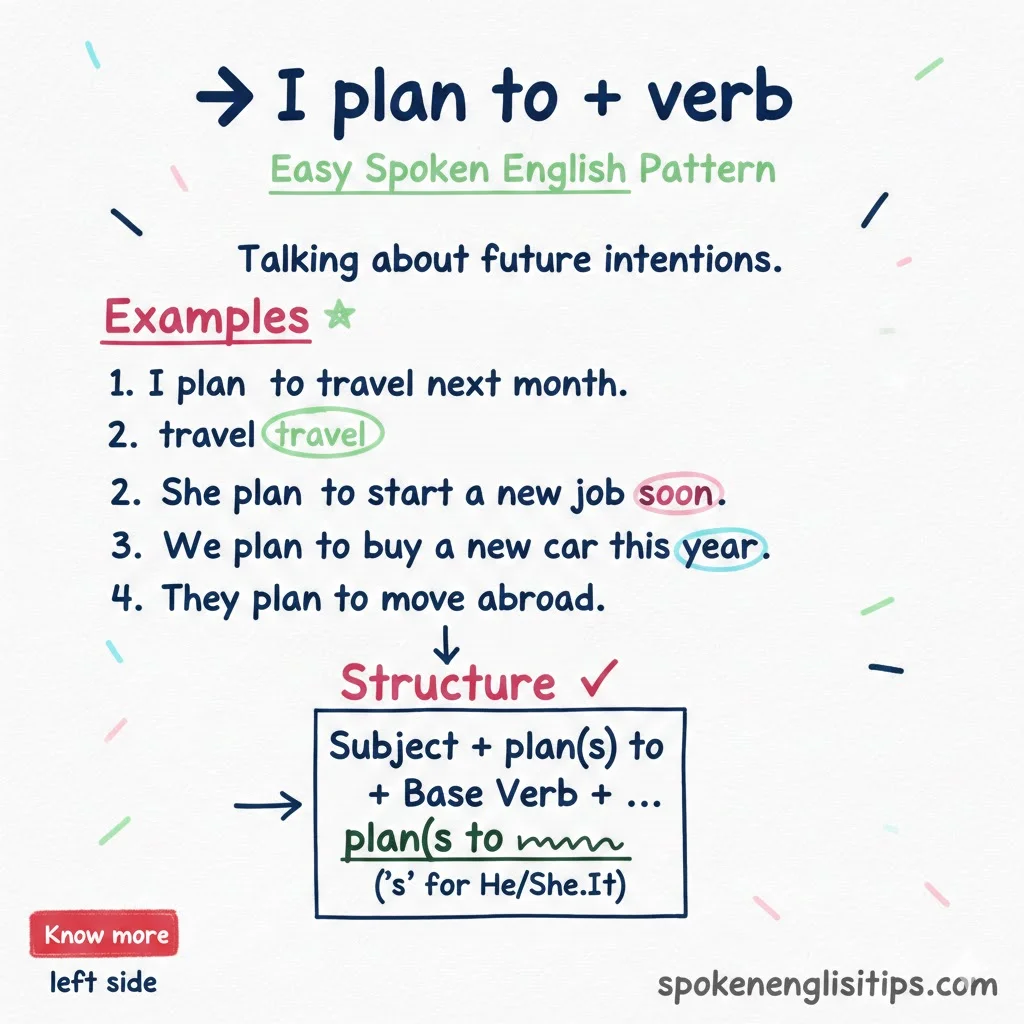
“I hate to + verb” is a common English expression used when you do not like doing something or when you feel uncomfortable about saying or doing something. It sounds polite and natural in everyday conversations. People often use it before giving bad news, refusing something, or talking about tasks they dislike. For example, “I hate to wake up early” means you do not enjoy waking up early. Similarly, “I hate to say this” is often used before sharing an unpleasant opinion. Learning this structure helps you sound more natural and confident in daily English speaking situations at home, work, school, and while talking with friends.
◎ Important Points
- “I hate to + verb” is used to express dislike or discomfort.
- The verb after “to” must be in its base form.
- It is commonly used in everyday conversations.
- It can show personal feelings politely.
- It is often used before bad news or criticism.
- Do not use “-ing” after “to” in this structure.
- The expression sounds natural and conversational.
➤Key Concept
✅ Sentence Structure: Subject + hate/hates + to + base verb + object/complement
Example: I hate to wait in long lines.
Main Concept:
Use “I hate to + verb” when you want to say that you dislike doing something or feel uncomfortable about doing it.
Speaking Tip:
Use this structure in daily conversations to express your feelings politely and naturally.
➤ Common Mistakes To Avoid
| Common Mistake | Wrong Example | Correct Example |
|---|---|---|
| Using verb + ing after to | I hate to waiting. | I hate to wait. |
| Missing “to” | I hate wake up early. | I hate to wake up early. |
| Using wrong verb form | I hate to goes there. | I hate to go there. |
| Wrong subject agreement | She hate to cook. | She hates to cook. |
| Using extra words | I hate to can do this. | I hate to do this. |
➤ Examples
- I hate to wake up early on Sundays.
- I hate to wait for buses in the rain.
- I hate to say this, but you are late again.
- I hate to interrupt your meeting.
- I hate to spend hours in traffic.
- I hate to clean the kitchen after a party.
- I hate to miss important deadlines at work.
- I hate to travel without a plan.
- I hate to disappoint my friends.
- I hate to leave the office before finishing my work.
➤ Practice Examples
A. Fill in the Blanks
- I hate to _______ in long queues. (wait)
- She hates to _______ bad news. (hear)
- We hate to _______ important meetings. (miss)
- He hates to _______ early every day. (wake up)
- They hate to _______ in heavy traffic. (drive)
B. Change the Incorrect Sentence to Correct
- I hate to waiting here.
- She hate to cook dinner.
- We hate miss the train.
- He hates to goes alone.
- They hate to driving at night.
C. Speak These Sentences Aloud
- I hate to wake up early on weekends.
- I hate to wait for people who are late.
- I hate to spend money on unnecessary things.
- I hate to interrupt someone while they are speaking.
- I hate to miss a good opportunity.
D. Make Your Own Sentences
- I hate to __________.
- My friend hates to __________.
- We hate to __________.
- She hates to __________.
- They hate to __________.
E. Conversation Practice
- I hate to wake up early for work.
- I hate to wait for late friends.
- I hate to travel during rush hour.
- I hate to clean my room every day.
- I hate to say no to people.