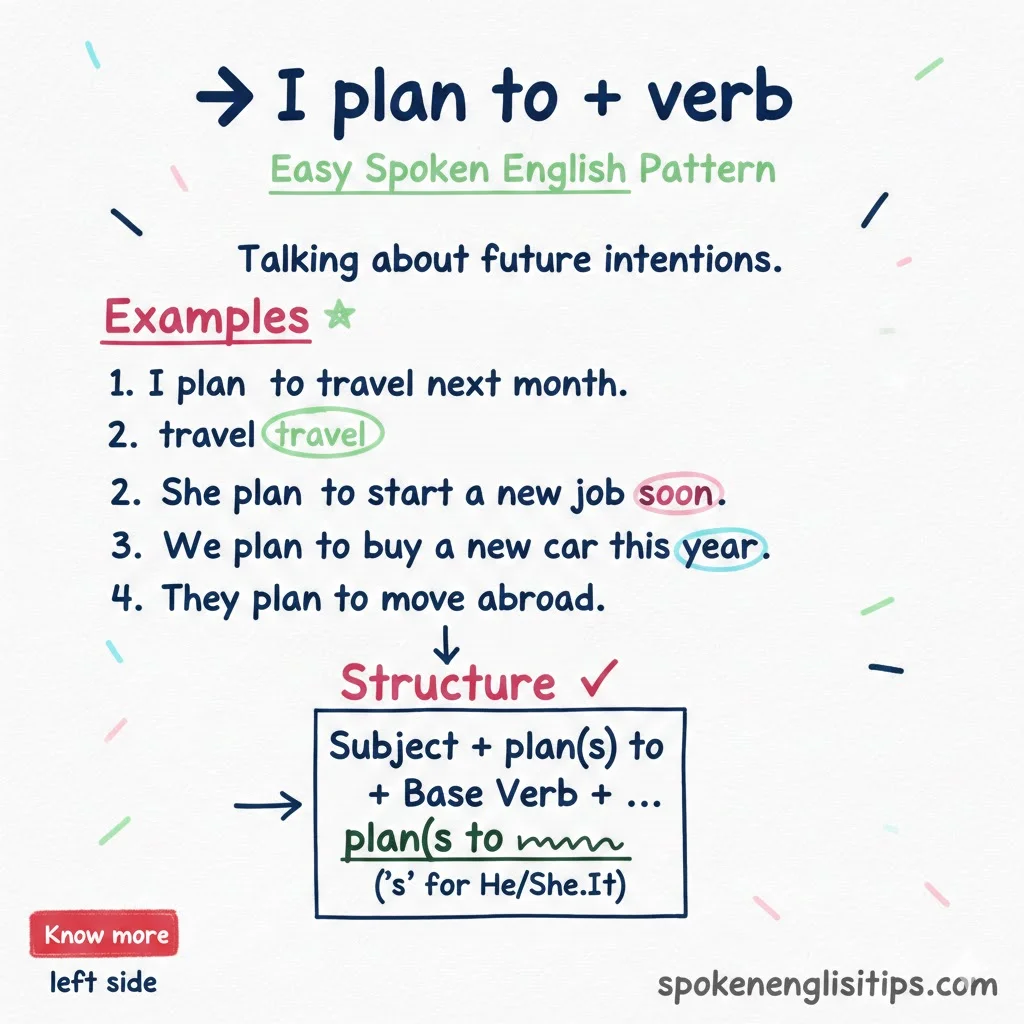
“I’m excited to + verb” is a very common English expression used to talk about something you are happy and eager to do in the future. Native speakers use this phrase in daily conversations, at work, while traveling, with friends, and in many other situations. It helps you express positive feelings and enthusiasm. For example, if you are waiting for a vacation, meeting a friend, starting a new job, or watching a movie, you can use this structure. Learning this phrase will make your English sound more natural and confident. It is simple to use and very useful in everyday speaking situations.
◎ Important Points
- Use “I’m excited to” when talking about future actions.
- Always use the base form of the verb after “to”.
- It shows happiness, enthusiasm, or eagerness.
- It is commonly used in both formal and informal conversations.
- Do not use “verb + ing” after “to” in this structure.
- You can use it for personal, professional, and social situations.
- It makes your spoken English sound natural and friendly.
➤Key Concept
✅ Sentence Structure: Subject + am/is/are + excited + to + base verb + object
Example: I am excited to start my new job.
Main Concept: Use this structure when you feel happy and eager about doing something in the future.
Speaking Tip: Stress the word “excited” while speaking to sound more natural and expressive.
➤ Common Mistakes To Avoid
| Common Mistake | Wrong Example | Correct Example |
|---|
| Using verb + ing after to | I’m excited to going home. | I’m excited to go home. |
| Missing “to” | I’m excited start my course. | I’m excited to start my course. |
| Wrong helping verb | I excited to travel. | I’m excited to travel. |
| Using past verb after to | I’m excited to started work. | I’m excited to start work. |
| Incorrect word order | Excited I’m to meet you. | I’m excited to meet you. |
➤ Examples
- I’m excited to meet my friends this weekend.
- I’m excited to start my English speaking course.
- I’m excited to travel to a new city next month.
- I’m excited to watch the cricket match tonight.
- I’m excited to join the new project at work.
- I’m excited to learn new skills this year.
- I’m excited to visit my grandparents tomorrow.
- I’m excited to try this new restaurant.
- I’m excited to buy my first car.
- I’m excited to attend the office meeting.
➤ Practice Examples
A. Fill in the Blanks
- I’m excited to ______ a new language.
- She is excited to ______ her family.
- We are excited to ______ on vacation.
- He is excited to ______ his new job.
- They are excited to ______ the concert.
Answers: learn, meet, go, start, attend
B. Change Incorrect Sentence to Correct One
- I’m excited to going abroad.
- I excited to meet you.
- She is excited start college.
- We are excited to visited Delhi.
- He excited to learn English.
Correct Answers:
- I’m excited to go abroad.
- I’m excited to meet you.
- She is excited to start college.
- We are excited to visit Delhi.
- He is excited to learn English.
C. Speak These Sentences Aloud
- I’m excited to learn English every day.
- I’m excited to meet new people.
- I’m excited to start a new journey.
- I’m excited to travel with my family.
- I’m excited to achieve my goals.