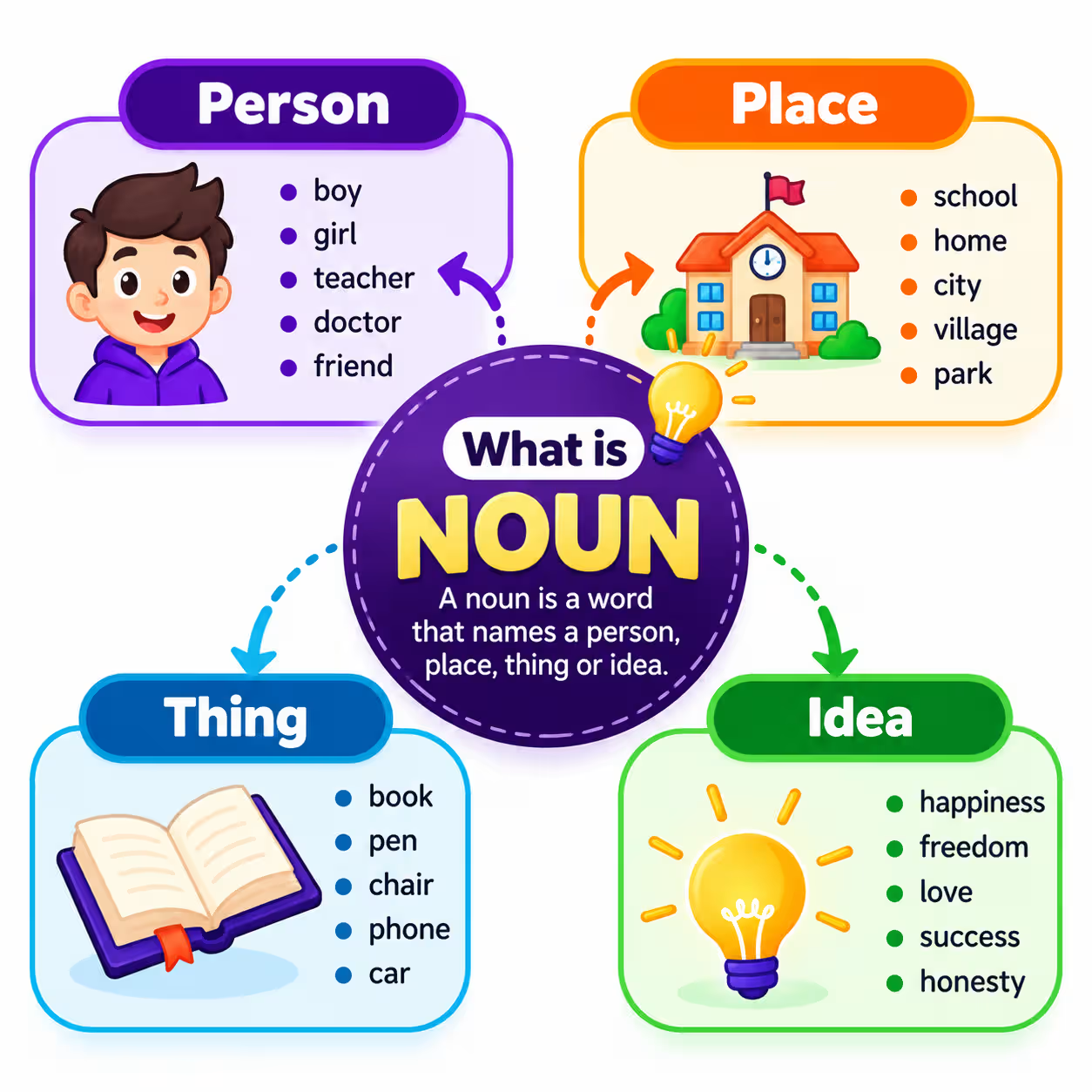
A noun is a word that names a person, place, animal, thing, or idea. Words like teacher, London, elephant, book, and happiness are all nouns.
Nouns are one of the most important parts of English grammar. We use them every day when speaking, reading, and writing. Without nouns, it would be difficult to explain who we are talking about or what we mean.
In this guide, you’ll learn what nouns are, their different types, how to identify them in sentences, and the basic rules for using them correctly.
What Is a Noun?
A noun is a naming word used to identify people, places, animals, objects, feelings, and ideas.
For example, consider this sentence:
“The girl is reading a book in the library.”
It contains three nouns:
- Girl (Person): Names someone.
- Book (Thing): Names an object.
- Library (Place): Names a location.
Nouns don’t always name something you can see or touch. Words like love, courage, and freedom are also nouns because they name feelings, qualities, or ideas.
Ready to Test Your Noun Knowledge?
Take a quick practice quiz on Proper and Common Nouns. Check your understanding, challenge yourself, and learn from helpful explanations.
Start Practice QuizExamples of Nouns in Everyday Life
| What the noun names | Example | Classification |
|---|---|---|
| Person | Teacher | Common noun |
| Place | London | Proper noun |
| Animal | Elephant | Common noun |
| Thing | Phone | Common, concrete noun |
| Feeling | Happiness | Abstract noun |
| Idea | Freedom | Abstract noun |
These examples show that nouns can name both physical things and things that exist only as ideas or feelings.
Types of Nouns With Examples
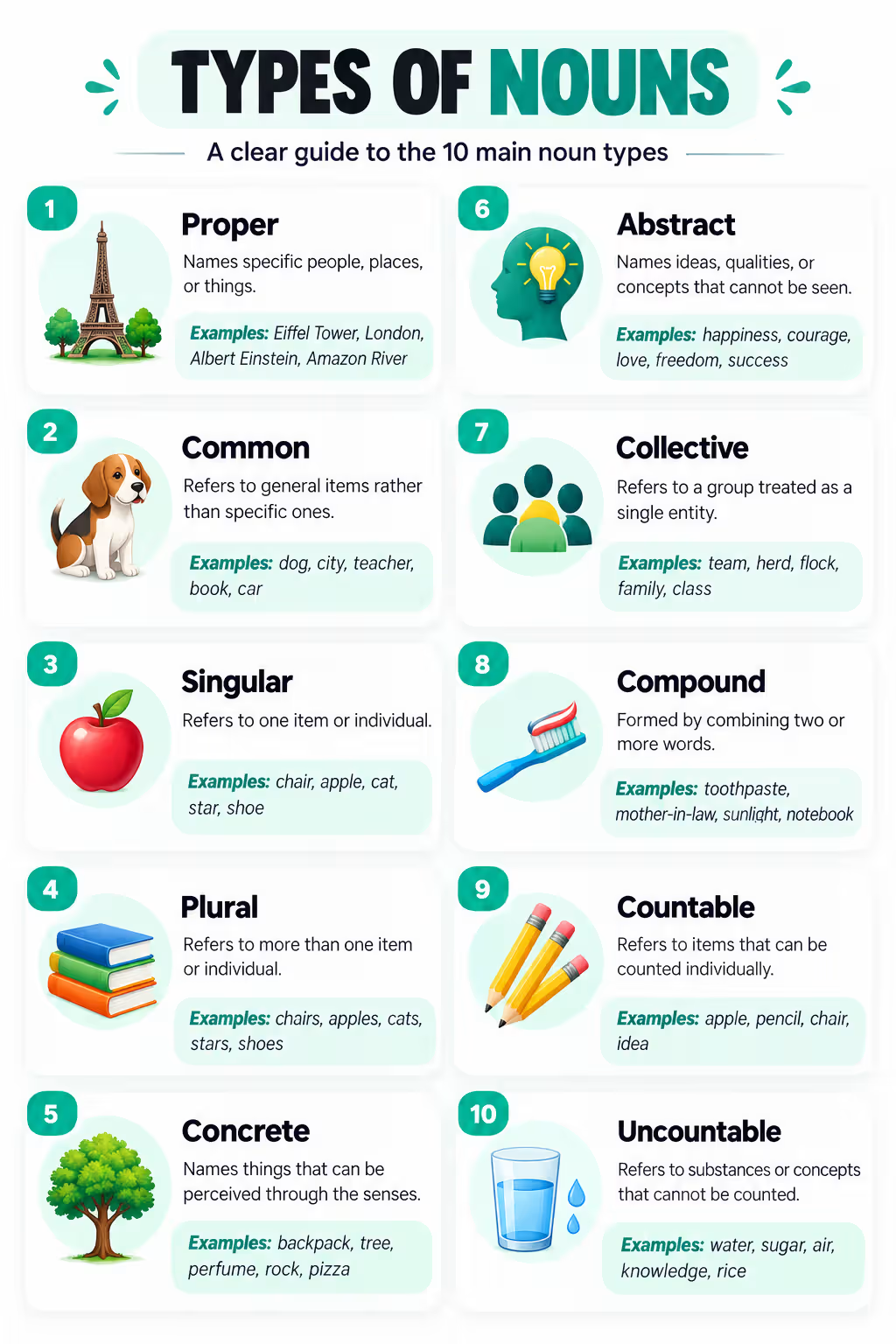
Nouns can be classified in different ways according to their meaning and how they are used in sentences.
Let’s explore the main types.
1. Common Nouns and Proper Nouns
Common nouns are general names for people, places, animals, or things. They usually begin with lowercase letters unless they appear at the beginning of a sentence.
Examples: teacher, city, dog, school.
Proper nouns name specific people, places, organizations, or other unique things. They begin with capital letters.
Examples: Aisha, Tokyo, Amazon, India.
| Common noun | Proper noun |
|---|---|
| country | Canada |
| city | Paris |
| river | Nile |
| person | Maria |
Example: “Maria lives in a beautiful city.”
Here, Maria is a proper noun, while city is a common noun.
2. Concrete Nouns and Abstract Nouns
Concrete nouns name things we can experience through our physical senses, such as seeing, touching, hearing, smelling, or tasting.
Examples: apple, flower, music, chair.
Abstract nouns name feelings, qualities, ideas, or conditions that cannot be physically touched.
Examples: honesty, love, courage, happiness.
Example: “The child showed great courage.”
- Child: Concrete noun.
- Courage: Abstract noun.
The child is a physical person, but courage is a quality.
3. Countable Nouns and Uncountable Nouns
Countable nouns refer to things we can count as individual items.
Examples: one apple, two books, three chairs.
They can usually have singular and plural forms.
Uncountable nouns refer to substances, materials, or concepts that we don’t normally count as separate items.
Examples: water, rice, furniture, information.
We say “a glass of water” instead of “a water” when referring to a quantity of water.
Remember: Some nouns can be countable or uncountable depending on their meaning. For example, glass can mean a drinking container (countable) or the material used in windows (uncountable).
4. Collective Nouns and Compound Nouns
Collective nouns name groups of people, animals, or things considered together.
Examples:
- Team: A group of players.
- Flock: A group of birds.
- Family: A group of related people.
Compound nouns are formed by combining two or more words to name something.
Examples:
- Toothbrush: One-word compound noun.
- Bus stop: Open compound noun.
- Mother-in-law: Hyphenated compound noun.
Important: Noun categories can overlap. For example, apple is a common, concrete, countable noun. These labels describe different features of the same word.
How to Identify a Noun in a Sentence
Finding nouns becomes easier when you know what to look for.
Three Easy Ways to Recognize Nouns
1. Look for naming words.
Find words naming people, places, animals, things, or ideas.
Example: “The doctor visited the hospital.”
Doctor (person) and hospital (place) are common nouns.
2. Check for words like a, an, or the.
These words often appear before nouns.
Example: “A bird landed on the tree.”
Bird and tree are common, concrete, countable nouns.
However, not every noun needs an article.
3. Ask who or what the sentence is about.
Example: “Maya opened the door.”
Maya is a proper noun naming a person. Door is a common, concrete, countable noun naming a thing.
These methods are useful clues, but they do not identify every noun automatically.
How Are Nouns Used in Sentences?
Nouns do more than name things. They also perform different jobs in sentences.
Nouns as Subjects
A subject tells us who or what the sentence is about.
Example: “The dog barked loudly.”
Dog is the subject noun because it tells us which animal performed the action.
Nouns as Objects
An object can receive the action of a verb.
Example: “Sara reads a book.”
- Sara: Proper noun functioning as the subject.
- Book: Common noun functioning as the direct object.
Nouns as Complements
A noun can also describe or identify the subject after a linking verb.
Example: “Sara is a teacher.”
Teacher is a common noun that identifies Sara.
Understanding these roles makes it easier to build clear sentences.
Important Noun Rules and Common Mistakes
Knowing a few basic rules can help you avoid common English grammar mistakes.
Singular and Plural Nouns
A singular noun refers to one person or thing. A plural noun usually refers to more than one.
| Singular noun | Plural noun | Classification |
|---|---|---|
| Book | Books | Regular plural |
| Box | Boxes | Regular plural |
| Child | Children | Irregular plural |
| Man | Men | Irregular plural |
Most countable nouns form their plurals by adding -s or -es. Some, such as child and man, have irregular forms.
Capitalization and Possessive Nouns
Proper nouns begin with capital letters.
Correct: “Emma visited London.”
Possessive nouns show ownership or relationships.
Examples:
- The girl’s bag: One girl owns the bag.
- The students’ books: The books belong to multiple students.
Common Mistakes With Uncountable Nouns
| Incorrect | Correct |
|---|---|
| She gave me an advice. | She gave me some advice. |
| We bought new furnitures. | We bought new furniture. |
| I have two childs. | I have two children. |
Advice and furniture are normally uncountable, so they do not take the plural forms shown above. Children is the correct irregular plural of child.
Noun vs. Pronoun vs. Verb
Nouns, pronouns, and verbs have different functions in English grammar.
| Word class | Function | Example |
|---|---|---|
| Noun | Names someone or something | Teacher |
| Pronoun | Refers to someone or something | She |
| Verb | Shows an action or state | Teaches |
Compare these sentences:
“The teacher helps students.”
“She helps students.”
In the first sentence, teacher is a noun. In the second, she is a pronoun referring to the teacher.
Some words can belong to different word classes depending on how they are used.
Noun Examples and Quick Practice
Test your understanding by identifying the nouns in these sentences.
- Amina visited Paris.
- The children played in the garden.
- Honesty builds trust.
- Our team won the match.
Answers With Noun Classifications
| Sentence | Noun | Classification |
|---|---|---|
| 1 | Amina | Proper noun |
| 1 | Paris | Proper noun |
| 2 | Children | Common, concrete, plural countable noun |
| 2 | Garden | Common, concrete, countable noun |
| 3 | Honesty | Abstract, uncountable noun |
| 3 | Trust | Abstract, uncountable noun |
| 4 | Team | Common, collective, countable noun |
| 4 | Match | Common, countable noun |
Notice how some nouns have more than one classification. This is normal because different categories describe different characteristics.
Learned Something New? Test Your English!

Grammar & Vocab

Learn & Practice

Track Your Progress
Frequently Asked Questions About Nouns
1. Is Love a Noun?
Yes. Love is an abstract noun when it names a feeling.
Example: “Love is important.”
However, it can also be a verb, as in “I love music.”
2. Can One Noun Belong to Different Types?
Yes. A noun can have several classifications.
For example, teacher is a common, concrete, countable noun because it names a general type of person who can be physically identified and counted.
3. Is Running a Noun or a Verb?
Running can work as either, depending on the sentence.
- Gerund (noun function): “Running is good exercise.”
- Verb form: “She is running.”
A gerund is an -ing form of a verb used like a noun.
4. What Are Five Examples of Nouns?
Five simple examples are boy (common noun), school (common noun), cat (common noun), London (proper noun), and honesty (abstract noun).
Conclusion
A noun is a word that names a person, place, animal, thing, or idea. Understanding noun types and their uses is an important step toward better English grammar.
Practice identifying nouns in everyday sentences, and you’ll become more confident in reading, speaking, and writing.
Further Reading