Your heart is one of the most important organs in your body. It works day and night to pump blood to every part of your body. To keep your heart healthy, you need to eat good food, stay active, drink enough water, and get proper sleep.
Fruits are a great part of a healthy diet. They provide vitamins, minerals, fiber, and other helpful nutrients. Some fruits may help maintain healthy blood pressure, support good cholesterol levels, and protect the body from damage.
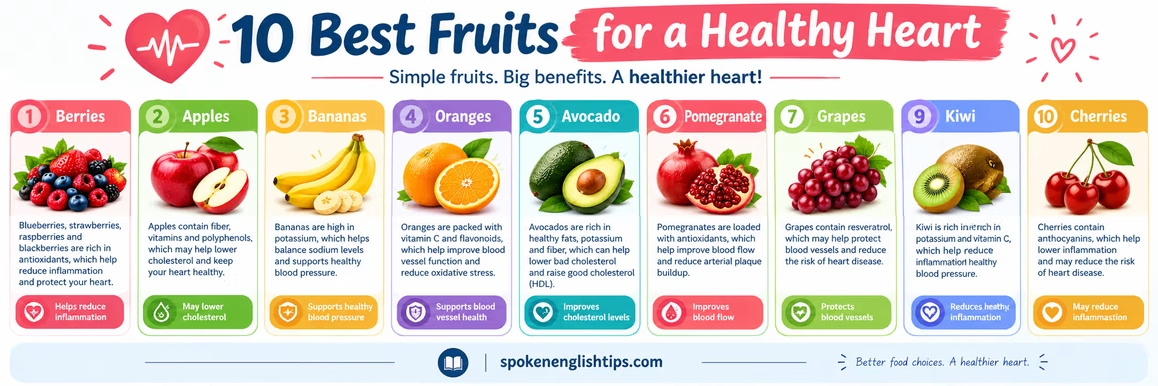
Let’s explore the 10 best fruits for a healthy heart and learn how they can support your health.
1. Berries
Berries include strawberries, blueberries, raspberries, and blackberries. They are small fruits packed with useful nutrients.
Berries contain fiber and antioxidants. Antioxidants help protect the body’s cells from damage. Eating berries as part of a balanced diet may support heart health.
How to eat them: Add fresh berries to oatmeal, yogurt, or a fruit salad. You can also enjoy them as a simple snack.
2. Apples
Apples are easy to find and simple to carry to school or work. They contain fiber, vitamins, and plant compounds that are good for your body.
The fiber in apples may help support healthy cholesterol levels. Eating apples with their skin gives you more fiber, so wash them well before eating.
How to eat them: Eat a whole apple between meals or cut it into slices for a healthy snack.
3. Bananas
Bananas are known for their potassium content. Potassium is a mineral that helps your muscles work properly and supports healthy blood pressure.
Bananas also provide carbohydrates, which give your body energy for daily activities.
How to eat them: Eat a banana at breakfast, add it to oatmeal, or blend it into a smoothie without adding much sugar.
4. Oranges
Oranges are rich in vitamin C, which helps your body maintain healthy skin and supports your immune system. They also contain fiber and other useful plant compounds.
Eating whole oranges is usually a better choice than drinking orange juice because whole fruit contains more fiber and takes longer to eat.
How to eat them: Peel an orange and enjoy it as a snack, or add orange pieces to a fruit salad.
5. Avocados
Avocados are different from many other fruits because they contain healthy unsaturated fats. They also provide fiber and potassium.
Replacing some foods high in saturated fat with foods containing unsaturated fats may help improve cholesterol levels. Avocados can be part of this healthy eating pattern.
How to eat them: Add a few avocado slices to whole-grain toast or a sandwich. You can also mix them into a salad.
6. Pomegranates
Pomegranates contain fiber and plant compounds called polyphenols. These compounds have antioxidant properties that help protect cells from damage.
Pomegranate seeds are colorful, juicy, and full of flavor. They can add variety to a balanced diet, although no single fruit can prevent heart disease on its own.
How to eat them: Sprinkle pomegranate seeds over yogurt, oatmeal, or a fresh salad.
7. Grapes
Grapes are sweet, juicy, and easy to enjoy as a snack. They contain water, natural sugars, and plant compounds, including polyphenols.
Red and purple grapes contain compounds that are being studied for their possible role in heart health. Whole grapes are a convenient choice when you want something sweet.
How to eat them: Wash grapes well and eat them fresh. You can also add them to a fruit bowl.
8. Kiwi
Kiwi is a small fruit with bright green flesh and tiny black seeds. It provides vitamin C, fiber, and potassium.
Its fiber supports digestion, while its nutrients help your body work properly. Kiwi can be a refreshing addition to a heart-friendly eating plan.
How to eat it: Cut a kiwi in half and scoop out the flesh with a spoon, or peel and slice it into a fruit salad.
9. Strawberries
Strawberries are tasty fruits that contain vitamin C, fiber, and antioxidants. Their bright red color makes them a popular choice for snacks and desserts.
Eating strawberries as part of a balanced diet helps you get a variety of nutrients. They are also a good way to enjoy something sweet without always choosing sugary snacks.
How to eat them: Add sliced strawberries to plain yogurt, oatmeal, or a homemade fruit salad.
10. Cherries
Cherries contain fiber, vitamin C, and plant compounds called anthocyanins. These compounds give many red, blue, and purple fruits their rich colors.
Cherries can add variety to your diet and help you enjoy more whole fruits. However, more research is needed to understand their specific effects on heart health.
How to eat them: Enjoy fresh cherries when they are in season. Remove the pits before giving them to young children.
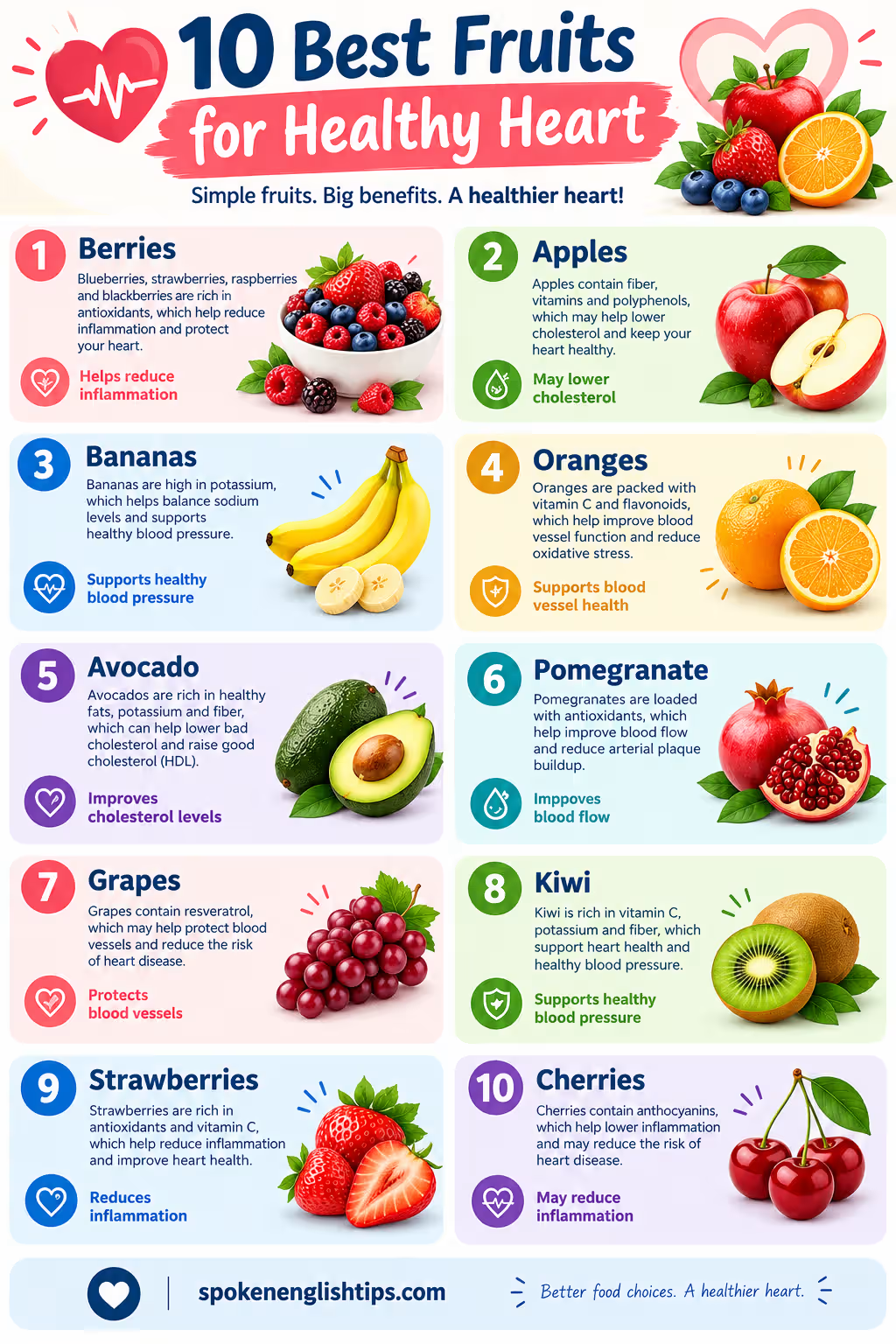
How to Keep Your Heart Healthy Every Day
Eating fruit is a good start, but your daily habits matter too. Here are some simple ways to care for your heart:
- Eat a variety of foods: Include fruits, vegetables, whole grains, beans, nuts, and other nutritious foods in your meals.
- Choose whole fruits: Whole fruits usually provide more fiber than fruit juice.
- Stay active: Walk, cycle, dance, play sports, or take part in another activity you enjoy.
- Limit excess salt and added sugar: Too much salt can raise blood pressure, while frequent sugary drinks can add extra calories.
- Drink water regularly: Water helps your body function properly.
- Get enough sleep: A regular sleep routine supports your overall health.
- Avoid smoking: Smoking harms blood vessels and increases the risk of heart disease.
Frequently Asked Questions
Which fruit is best for heart health?
There is no single best fruit for everyone. Berries, apples, oranges, bananas, and other whole fruits provide different nutrients. Eating a variety of fruits is a smart choice.
Can eating fruit prevent heart disease?
No single food can guarantee that you will avoid heart disease. However, eating fruit as part of a balanced diet can support heart health and may help reduce certain risk factors.
Is whole fruit better than fruit juice?
Whole fruit is usually the better everyday choice because it contains fiber. Fruit juice can contain a lot of natural sugar and is easier to drink in large amounts.
How many fruits should I eat each day?
A common guideline for many adults is about 1.5 to 2 cups of fruit per day, depending on age, activity level, and individual needs. Children may need different amounts.
Final Thoughts
Taking care of your heart does not have to be difficult. Small choices, such as eating an apple instead of a sugary snack or adding berries to breakfast, can help you build healthier habits.
Try different fruits throughout the week instead of eating only one kind. Combine them with vegetables, whole grains, regular physical activity, and enough sleep.
Remember: A healthy heart is supported by your overall lifestyle, not by one special fruit. Start with small, simple changes and keep following them every day.