Understanding the 8 parts of speech is one of the most important steps in learning English grammar. Every word in a sentence has a role, and parts of speech help us understand how those words work together. The eight parts of speech are nouns, pronouns, verbs, adjectives, adverbs, prepositions, conjunctions, and interjections.
These grammar notes explain each part of speech in simple language with clear definitions and examples. They are useful for students, English learners, teachers, and anyone who wants to improve their grammar skills. You can read the notes online or download them for easy revision.
1. Noun
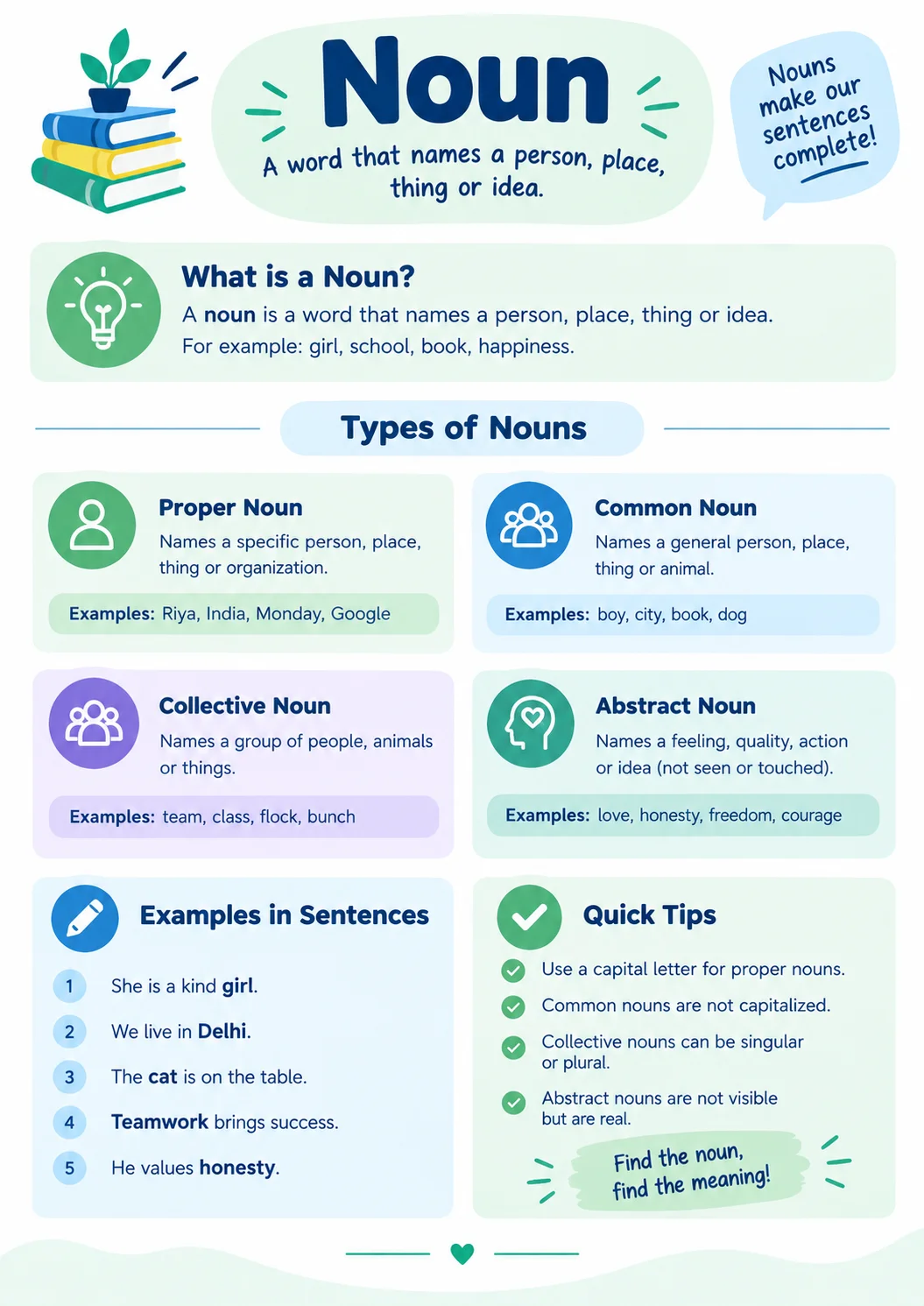
A noun is a word used to name a person, place, animal, thing, or idea. Nouns can be common, proper, abstract, or collective. They help us identify who or what we are talking about in a sentence.
Examples: teacher, India, dog, book, happiness.
2. Pronoun
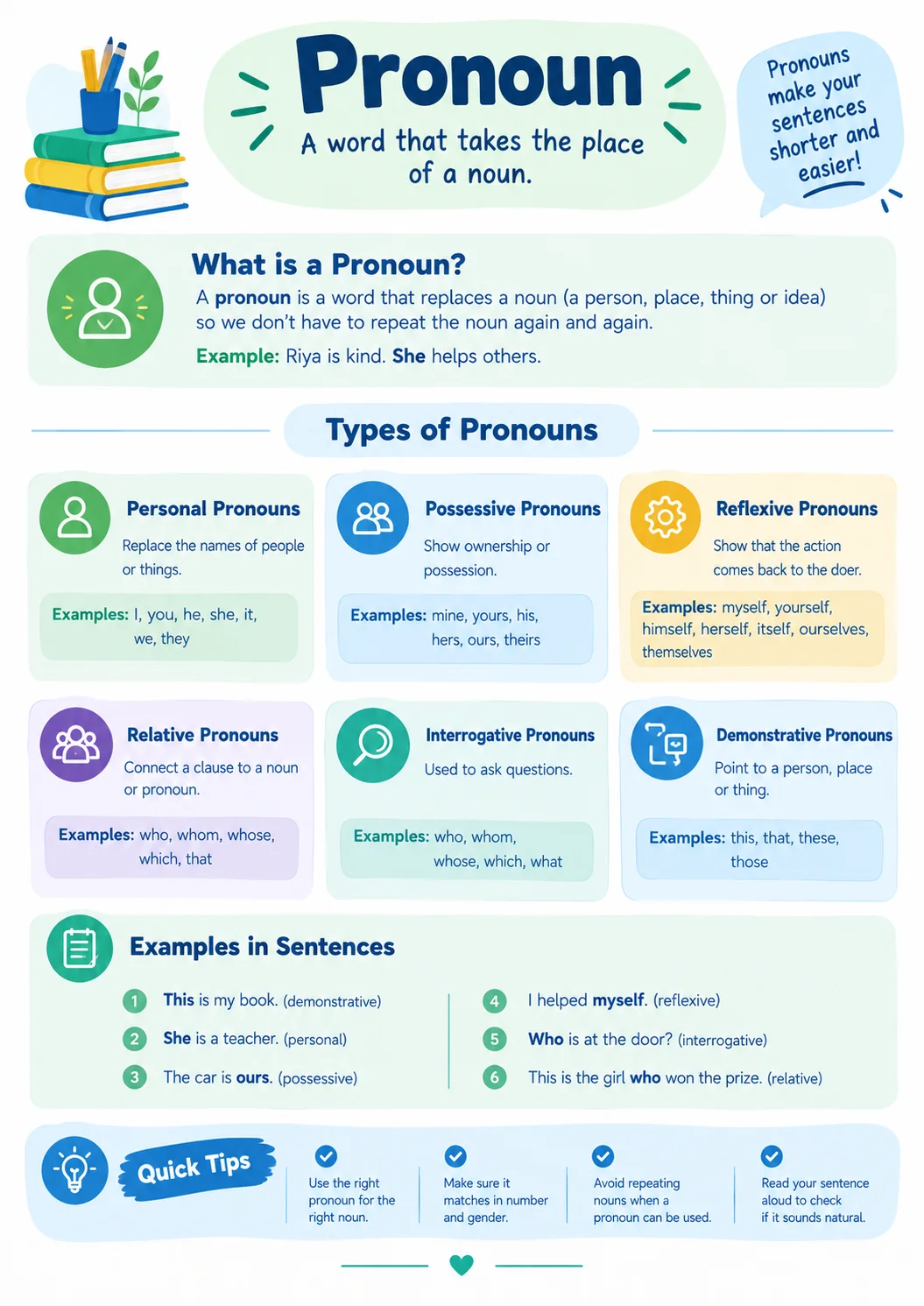
A pronoun is a word used instead of a noun. It helps avoid repeating the same noun many times and makes sentences smoother. Common pronouns include personal, possessive, demonstrative, and relative pronouns.
Examples: I, you, he, she, it, we, they, this, who.
3. Verb
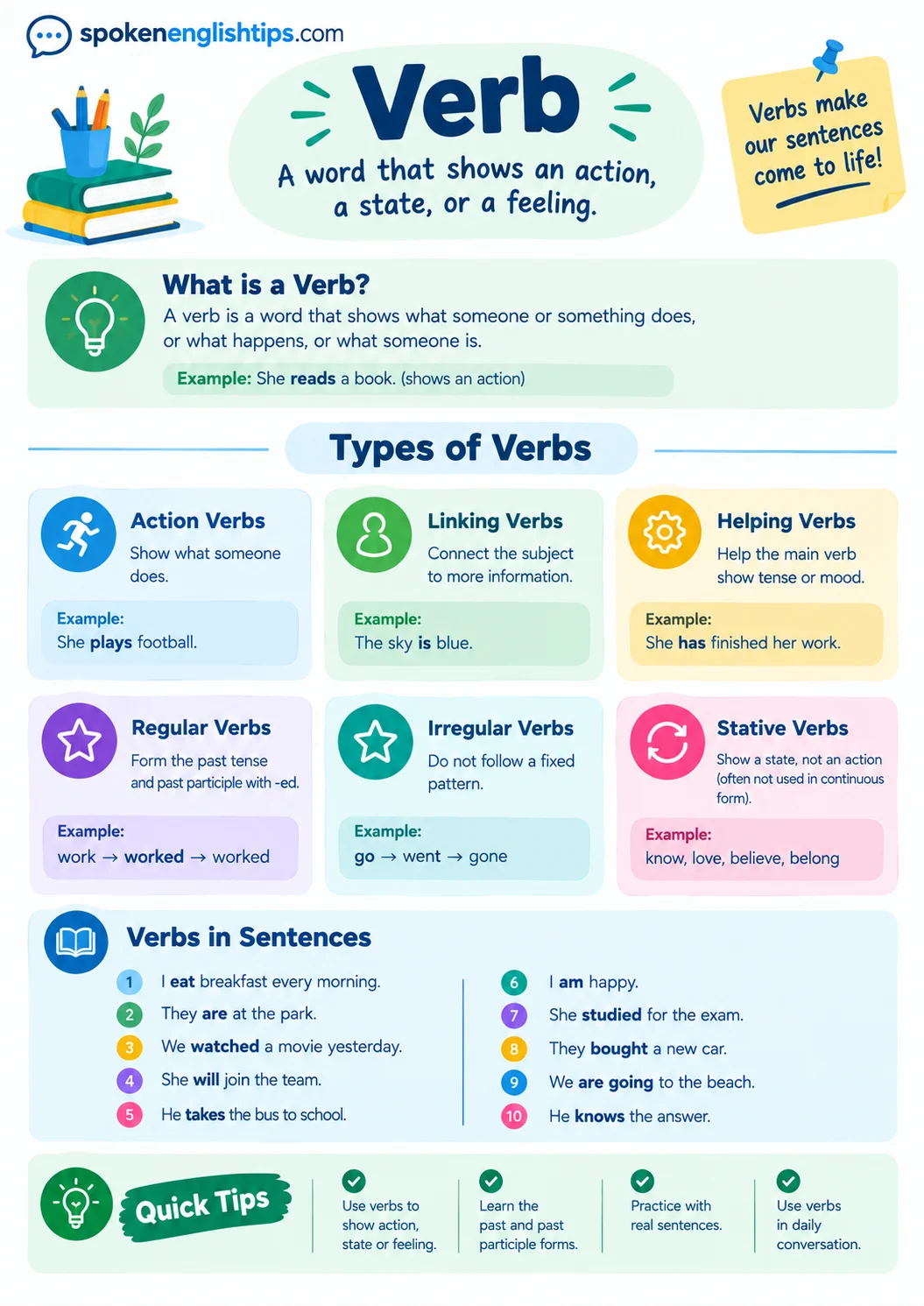
A verb shows an action, occurrence, or state of being. Every complete sentence usually needs a verb to tell what the subject does or what happens. Verbs can describe physical actions, mental actions, or conditions.
Examples: run, write, think, eat, sleep, is, are, become.
4. Adjective
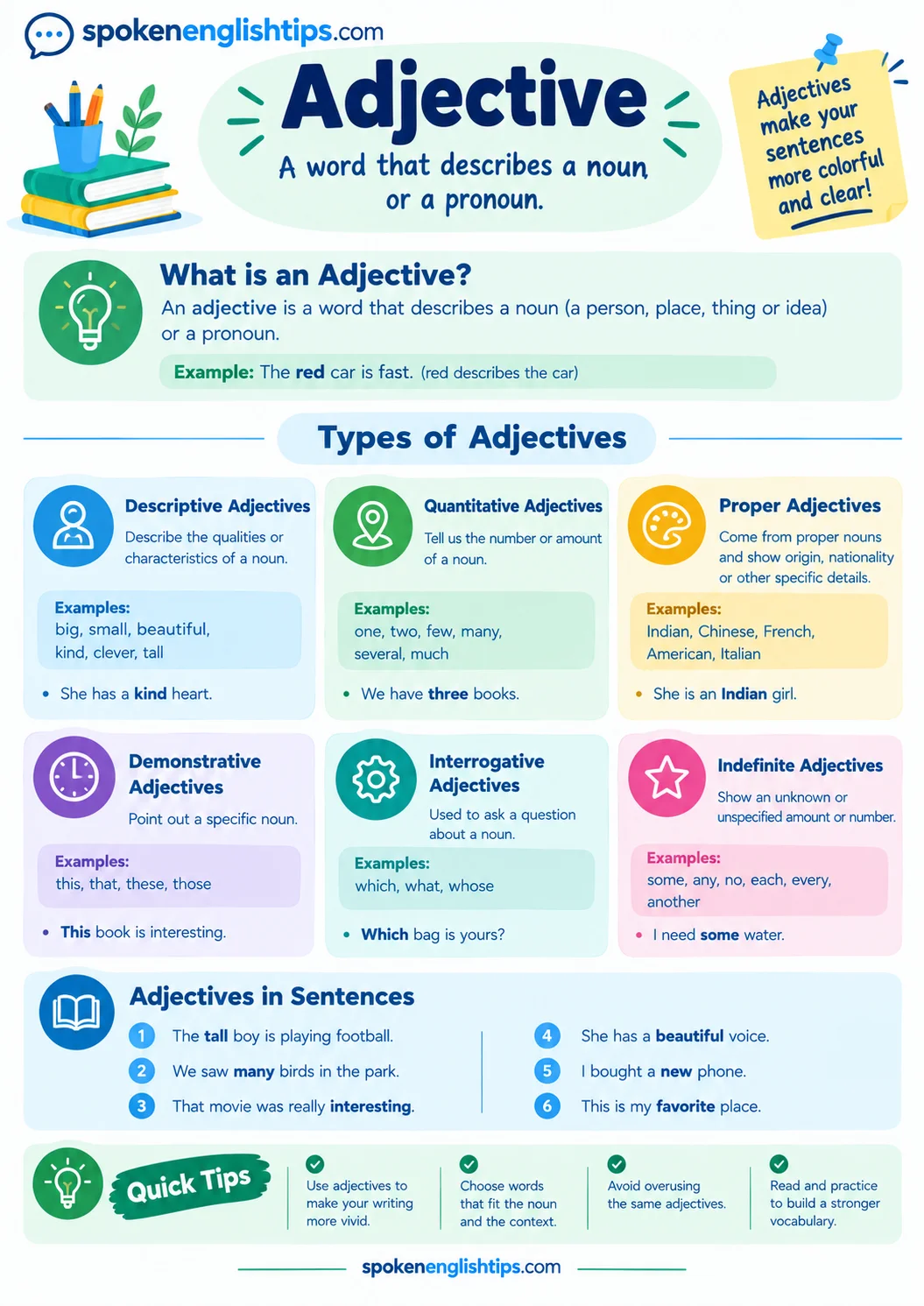
An adjective is a word that describes or gives more information about a noun or pronoun. It can tell us about size, color, number, shape, quality, or condition. Adjectives make writing more specific and interesting.
Examples: beautiful, tall, red, five, clever, expensive.
5. Adverb
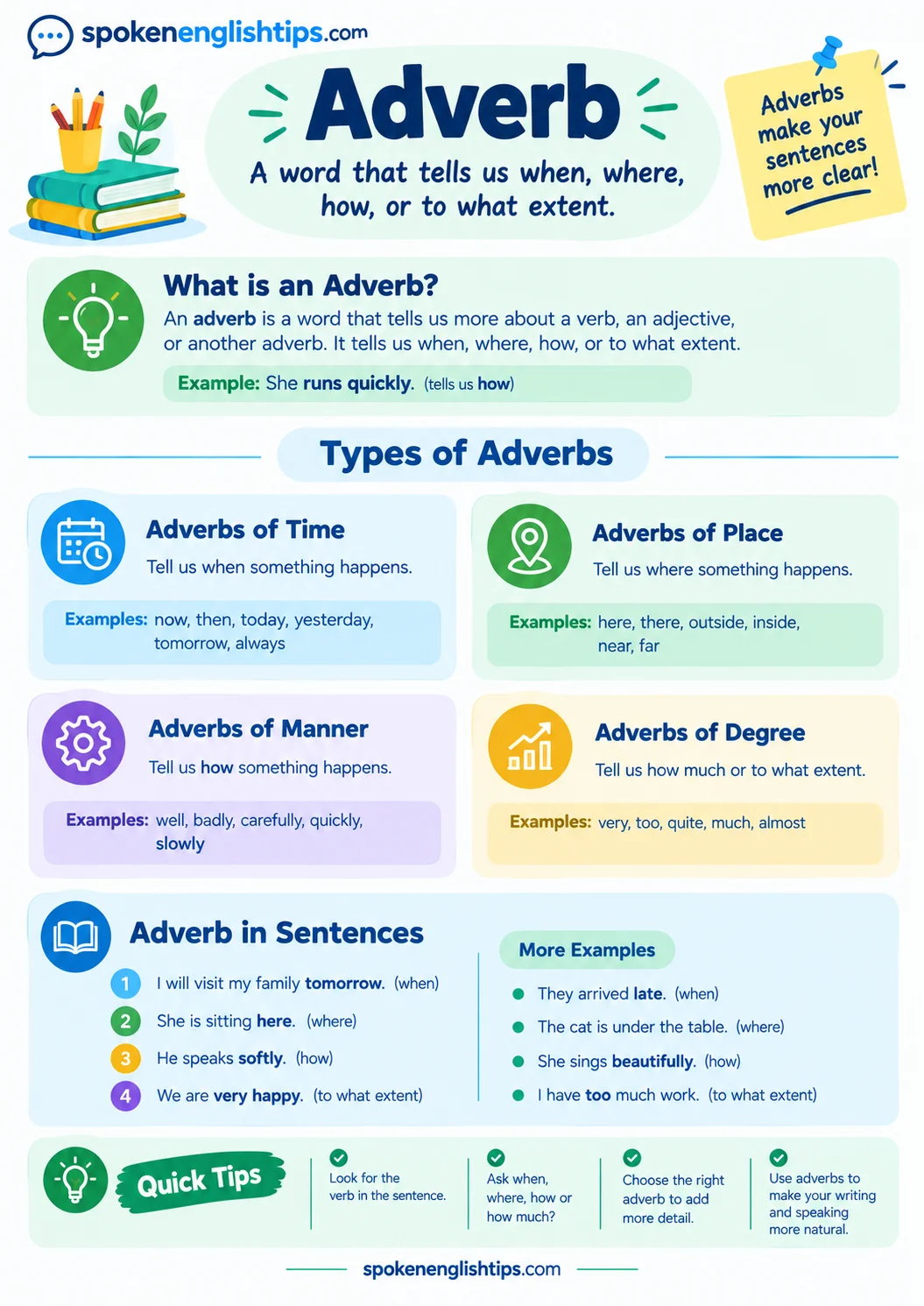
An adverb gives more information about a verb, adjective, or another adverb. It commonly tells us how, when, where, or how often something happens. Many adverbs end in -ly, although not all do.
Examples: quickly, slowly, very, yesterday, often, here, carefully.
6. Preposition
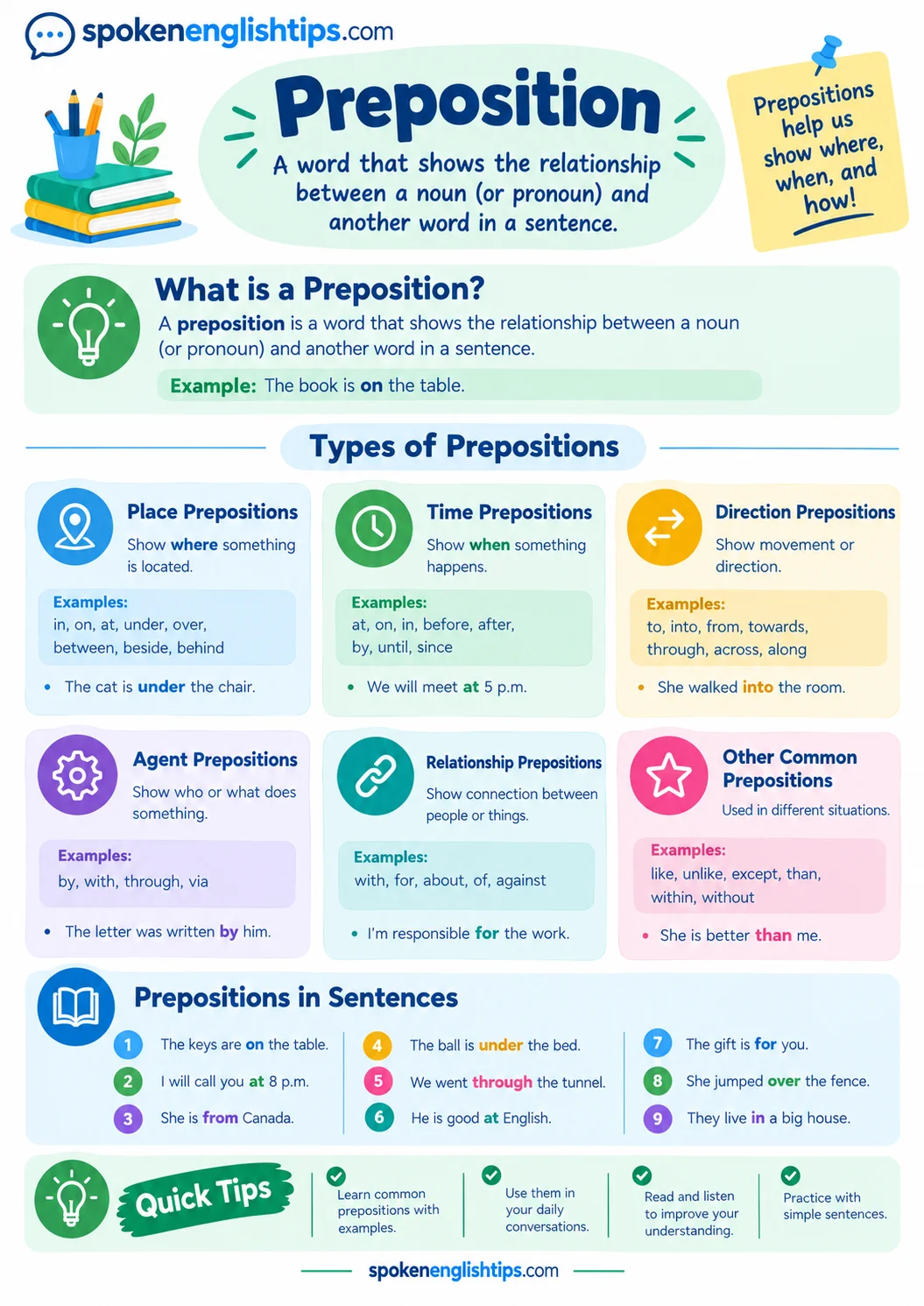
A preposition shows the relationship between a noun or pronoun and another word in a sentence. It often indicates location, direction, time, position, or connection. Prepositions are usually followed by a noun or pronoun.
Examples: in, on, under, beside, between, before, after, through.
7. Conjunction
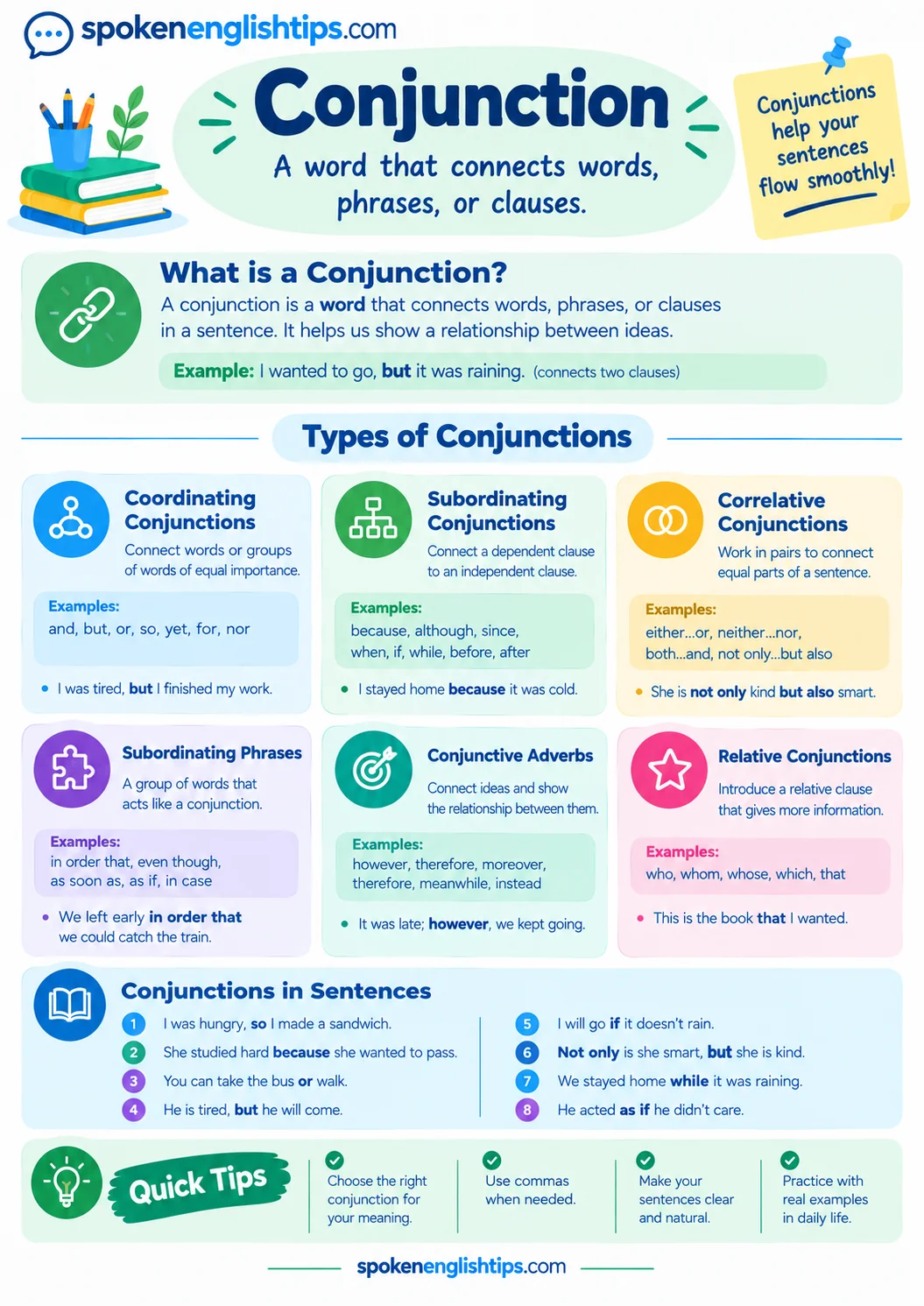
A conjunction is a word that connects words, phrases, or clauses. It helps combine ideas and makes sentences flow naturally. Common conjunctions include and, but, or, so, because, although, if, and while.
Example: I wanted to go, but it started raining.
8. Interjection
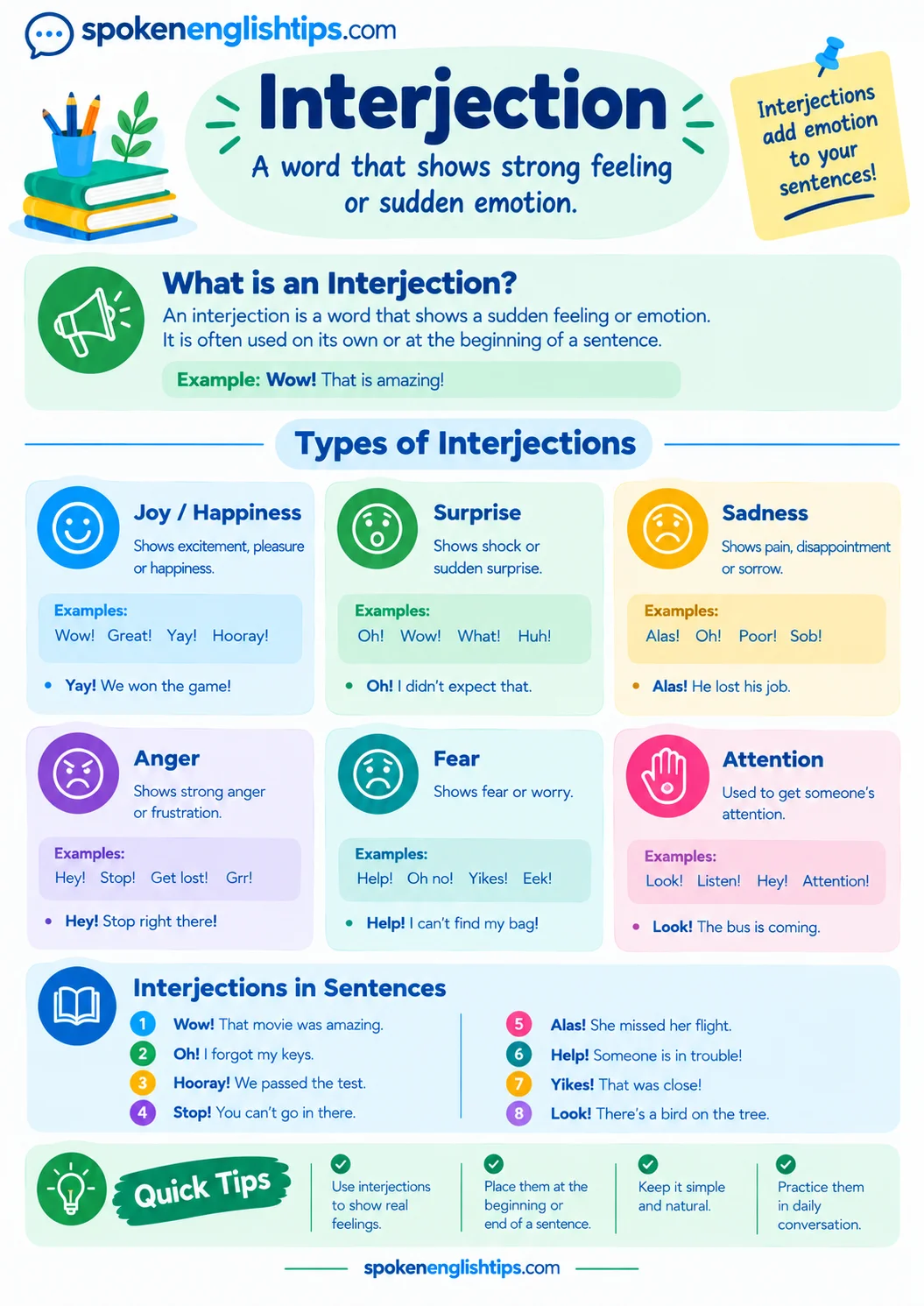
An interjection is a word or short expression that shows a sudden feeling, emotion, reaction, or excitement. It can express happiness, surprise, pain, anger, or sadness. Interjections are often followed by an exclamation mark, although a comma can also be used.
Examples: Wow! Oh! Ouch! Hurray! Alas!