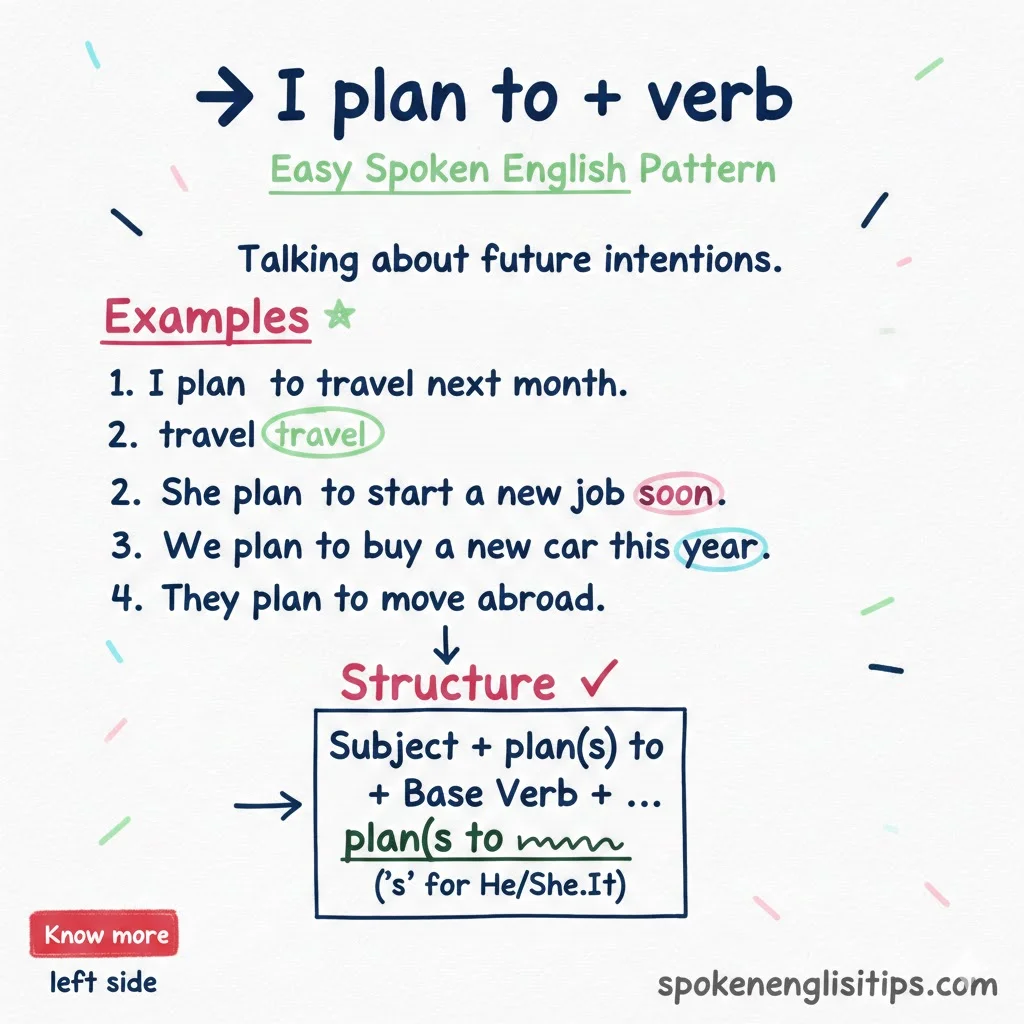
“I’m not allowed to + verb” is a common English expression used when someone does not have permission to do something. We use it in daily conversations at home, school, work, or public places. It helps us explain rules, restrictions, or situations where permission is not given. For example, a student may say, “I’m not allowed to use my phone in class.” An employee might say, “I’m not allowed to share company information.” This structure is very useful in spoken English because it sounds natural and polite. Learning this pattern will help you talk about rules and permissions confidently in real-life situations.
◎ Important Points
- Use this pattern when permission is not given.
- Always use the base form of the verb after “to”.
- It is commonly used in everyday conversations.
- It can talk about personal, school, office, or public rules.
- “Allowed” already shows permission, so do not add extra permission words.
- The structure remains the same for most subjects.
- It sounds polite and natural in spoken English.
➤Key Concept
✅ Sentence Structure: Subject + am/is/are + not allowed to + Verb + Object
Example: I’m not allowed to park my car here.
Main Concept:
Use “not allowed to” when you want to say that a rule or authority does not permit an action.
💡 Speaking Tip:
Practice using this structure with daily activities to sound more natural in conversations.
➤ Common Mistakes To Avoid
| Common Mistake | Wrong Example | Correct Example |
|---|---|---|
| Using verb with -ing | I’m not allowed to smoking here. | I’m not allowed to smoke here. |
| Missing “to” | I’m not allowed smoke here. | I’m not allowed to smoke here. |
| Wrong helping verb | I not allowed to enter. | I’m not allowed to enter. |
| Using double negative | I’m not allowed to not go. | I’m not allowed to go. |
| Wrong verb form | She is not allowed to goes out. | She is not allowed to go out. |
➤ Examples
- I’m not allowed to use my phone during meetings.
- I’m not allowed to park my bike here.
- We’re not allowed to bring food into the library.
- She’s not allowed to stay out late at night.
- I’m not allowed to share my office password.
- They’re not allowed to take photos inside the museum.
- I’m not allowed to drive my father’s car.
- Students are not allowed to talk during the exam.
- I’m not allowed to enter this area without permission.
- My friend is not allowed to skip classes.
➤ Practice Examples
A. Fill in the Blanks
- I’m not allowed to ________ in the classroom.
- She is not allowed to ________ late at night.
- We are not allowed to ________ photos here.
- He is not allowed to ________ office documents.
- They are not allowed to ________ inside the building.
B. Change Incorrect Sentence to Correct One
- I’m not allowed smoke here.
- She is not allowed to going outside.
- We not allowed to enter this room.
- He is not allowed to drives fast.
- They are not allowed taking pictures.
C. Speak These Sentences Aloud
- I’m not allowed to use my phone at work.
- I’m not allowed to park here.
- We’re not allowed to enter without permission.
- She’s not allowed to travel alone.
- They’re not allowed to make noise in the library.