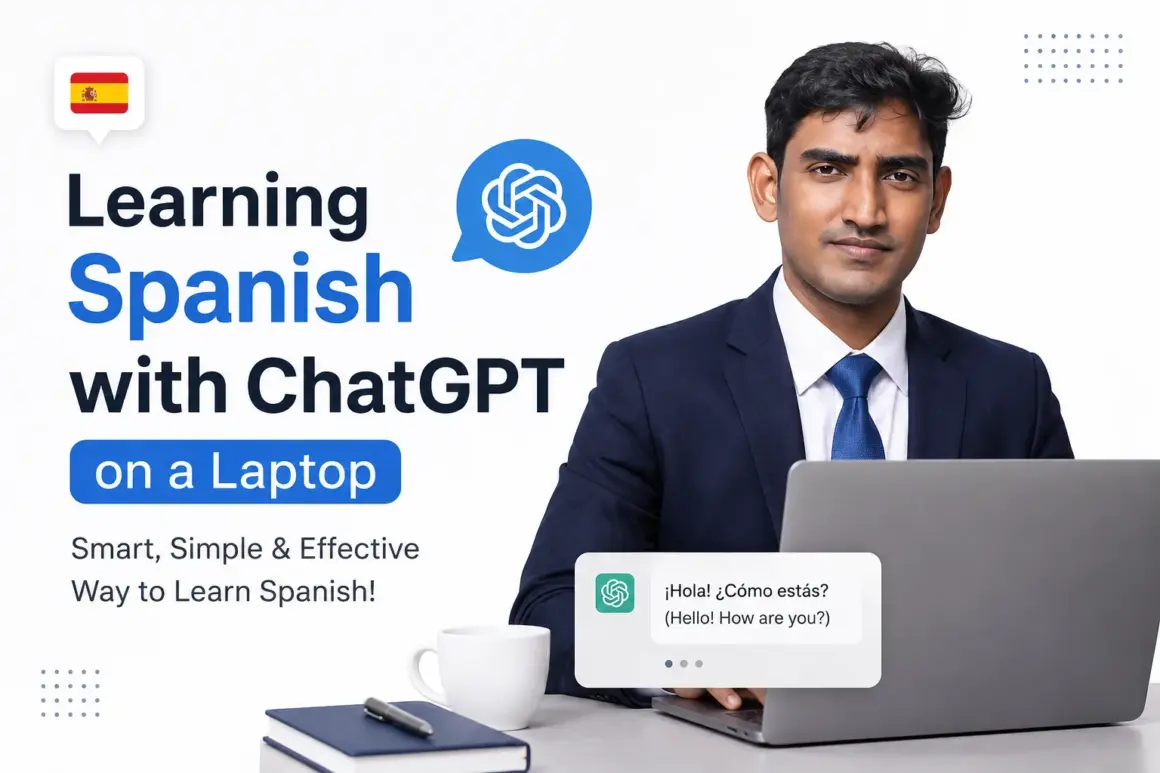
Are you looking for a simple way to learn Spanish without spending a lot of money on classes?
You’re not alone. Many beginners struggle to find someone to practice with every day. The good news is that ChatGPT can become your personal Spanish learning partner anytime you want.
Whether you’re starting with basic greetings or preparing for real conversations, ChatGPT can help you practice vocabulary, grammar, pronunciation tips, writing, reading, and speaking activities. By the end of this guide, you’ll know exactly how to use ChatGPT to build your Spanish skills faster and more confidently.
Quick Summary Table
| Topic | What You’ll Learn |
|---|---|
| Best For | Beginners to advanced Spanish learners |
| Time Needed | 15–30 minutes daily |
| Cost | Free or ChatGPT Plus (optional) |
| Skills You Can Practice | Vocabulary, grammar, conversation, writing, reading, listening |
| Learning Style | Interactive AI tutor |
| Difficulty | Beginner-friendly |
| Main Benefit | Personalized practice anytime |
Why Use ChatGPT to Learn Spanish?
Learning a language becomes easier when you practice regularly.
That’s where ChatGPT shines. Instead of reading the same textbook every day, you can have interactive conversations that change based on your level.
ChatGPT can explain difficult grammar in simple English, create exercises, correct mistakes, and even pretend to be a native Spanish speaker.
Unlike traditional apps, you can ask unlimited questions without feeling embarrassed.
Benefits Table
| Benefit | Why It Matters |
| Available 24/7 | Practice whenever you have free time |
| Personalized Lessons | Learn at your own pace |
| Instant Feedback | Correct mistakes immediately |
| Unlimited Conversations | Never run out of practice |
| Beginner Friendly | Easy explanations |
| Multiple Learning Styles | Reading, writing, speaking, quizzes |
What Can ChatGPT Help You Learn?
ChatGPT is much more than a chatbot.
It can act as your teacher, conversation partner, quiz creator, translator, and writing coach.
You can learn:
- Spanish vocabulary
- Grammar
- Verb conjugations
- Everyday conversations
- Travel Spanish
- Business Spanish
- Reading practice
- Writing correction
- Pronunciation guidance
- Cultural expressions
- Idioms
- Exam preparation
Did You Know? 💡
Language experts generally agree that consistent daily practice is one of the strongest predictors of language progress. Even short sessions of 15–20 minutes a day often work better than studying for several hours only once a week.
How to Use ChatGPT to Learn Spanish (Step by Step)
Step 1: Tell ChatGPT Your Level
Start with a clear prompt.
Example:
“Act as my Spanish tutor. I’m a complete beginner. Teach me one lesson at a time.”
This helps ChatGPT adjust the lessons to your experience.
Step 2: Learn Basic Vocabulary
Ask for themed vocabulary.
Examples:
- Food
- Family
- Colors
- Travel
- School
- Shopping
Prompt:
“Teach me 15 Spanish words about food with pronunciation and example sentences.”
Step 3: Practice Real Conversations
Conversation is one of the fastest ways to improve.
Ask ChatGPT to role-play.
Example:
“Pretend you’re a waiter in Madrid. Speak only in easy Spanish.”
Now reply naturally.
If you make mistakes, ChatGPT can explain and correct them.
Use ChatGPT for Spanish Grammar
Grammar doesn’t have to feel difficult.
Instead of reading long rules, ask for short explanations.
Examples:
- Present tense
- Past tense
- Future tense
- Gender rules
- Articles
- Sentence structure
Prompt:
“Explain the difference between ‘ser’ and ‘estar’ like I’m 12 years old.”
Common Grammar Topics
| Grammar Topic | Ask ChatGPT |
| Ser vs Estar | Explain with examples |
| Verb Conjugation | Create exercises |
| Past Tense | Compare with Present |
| Gender Rules | Give simple tricks |
| Articles | Fill-in-the-blank quiz |
| Sentence Order | Correct my sentences |
Improve Your Spanish Speaking
Although ChatGPT doesn’t replace speaking with native speakers, it can help you prepare.
You can:
- Write conversations
- Read answers aloud
- Practice pronunciation tips
- Build confidence before speaking with real people
Example prompt:
“Give me a beginner Spanish conversation about ordering coffee.”
Then practice reading both parts aloud.
Real-Life Example
Imagine you’re planning a trip to Spain.
Instead of memorizing random phrases, ask ChatGPT to create an airport conversation, hotel check-in dialogue, restaurant ordering practice, and directions around the city.
Now you’re learning exactly what you’ll use.
Learn Spanish Vocabulary Faster
Vocabulary grows through repetition.
Ask ChatGPT to create:
- Flashcards
- Matching games
- Fill-in-the-blank exercises
- Memory quizzes
- Daily word lists
Prompt:
“Teach me five new Spanish words every day and quiz me.”
Vocabulary Learning Checklist
✅ Learn 10–15 new words
✅ Read them aloud
✅ Use them in sentences
✅ Review yesterday’s words
✅ Take a short quiz
✅ Repeat difficult words
Best ChatGPT Prompts for Learning Spanish
Here are some prompts you can copy.
Vocabulary
Teach me 20 Spanish words about travel.
Grammar
Explain Spanish past tense with simple examples.
Conversation
Have a five-minute conversation in beginner Spanish.
Quiz
Test me on today’s vocabulary.
Reading
Write a short Spanish story for beginners.
Listening Practice
Create a short dialogue and mark where I should pause while reading aloud.
Translation
Translate this paragraph and explain each sentence.
Writing
Correct my Spanish paragraph like a teacher.
Mistakes to Avoid
Many learners slow their progress without realizing it.
Avoid these habits:
- Only translating instead of thinking in Spanish
- Skipping conversation practice
- Learning too many words at once
- Ignoring grammar completely
- Never reviewing old lessons
- Practicing only once a week
Limitations of Using ChatGPT
ChatGPT is a powerful learning tool, but it’s not perfect.
Keep these points in mind:
- Pronunciation feedback is limited in text-only chats.
- AI can occasionally make mistakes, so double-check important grammar rules with trusted learning resources.
- Cultural nuances and regional differences may vary across Spanish-speaking countries.
- Real conversations with native speakers are still important for building fluency.
The best results come from combining ChatGPT with listening practice, books, videos, and conversations with real people.
Pros vs. Cons
| Pros | Cons |
| Personalized learning | Doesn’t fully replace native speakers |
| Available anytime | May occasionally give imperfect answers |
| Unlimited practice | Requires self-discipline |
| Great for beginners | Speaking feedback depends on your setup |
| Creates custom lessons | Should be combined with other resources |
Sample 20-Minute Daily Study Plan
| Time | Activity |
| 5 Minutes | Learn 10 new words |
| 5 Minutes | Review grammar |
| 5 Minutes | Conversation practice |
| 3 Minutes | Short writing exercise |
| 2 Minutes | Quick quiz and review |
Expert Tips
- Use one main prompt for a week. This helps ChatGPT stay consistent with your learning goals.
- Ask for examples before rules. Seeing Spanish in context makes grammar easier to remember.
- Practice speaking aloud, even if you’re chatting in text. Your pronunciation improves through repetition.
- Keep a vocabulary notebook with new words, meanings, and example sentences.
- Review old lessons every few days. Spaced repetition helps move words into long-term memory.
- Ask ChatGPT to explain mistakes, not just correct them. Understanding the reason prevents repeating the same error.
- Create real-life scenarios, such as shopping, travel, or job interviews, to make learning practical.
- Increase difficulty gradually. Move from beginner to intermediate conversations as your confidence grows.
Frequently Asked Questions
1. Can ChatGPT really help me learn Spanish?
Yes. ChatGPT can help you practice vocabulary, grammar, writing, reading, and conversations. It works best when used consistently alongside other learning resources.
2. Is ChatGPT good for complete beginners?
Absolutely. You can ask ChatGPT to explain everything in simple English and teach one lesson at a time.
3. Can I become fluent using only ChatGPT?
ChatGPT is an excellent study tool, but complete fluency also requires listening to native speakers and having real conversations.