Most English learners reach a point where the grammar is fine and the describing is not. You can form tenses correctly. You know the articles. You can hold a conversation. Then somebody asks you to describe a room, a person or a photograph, and what comes out is correct, short and vague.
A table. Some chairs. A window. That is not a grammar problem. It is a vocabulary and precision problem, and it is the hardest thing to practise because nobody tells you when your description was insufficient. A teacher corrects mistakes. Almost nobody says your sentence was accurate and conveyed nothing.
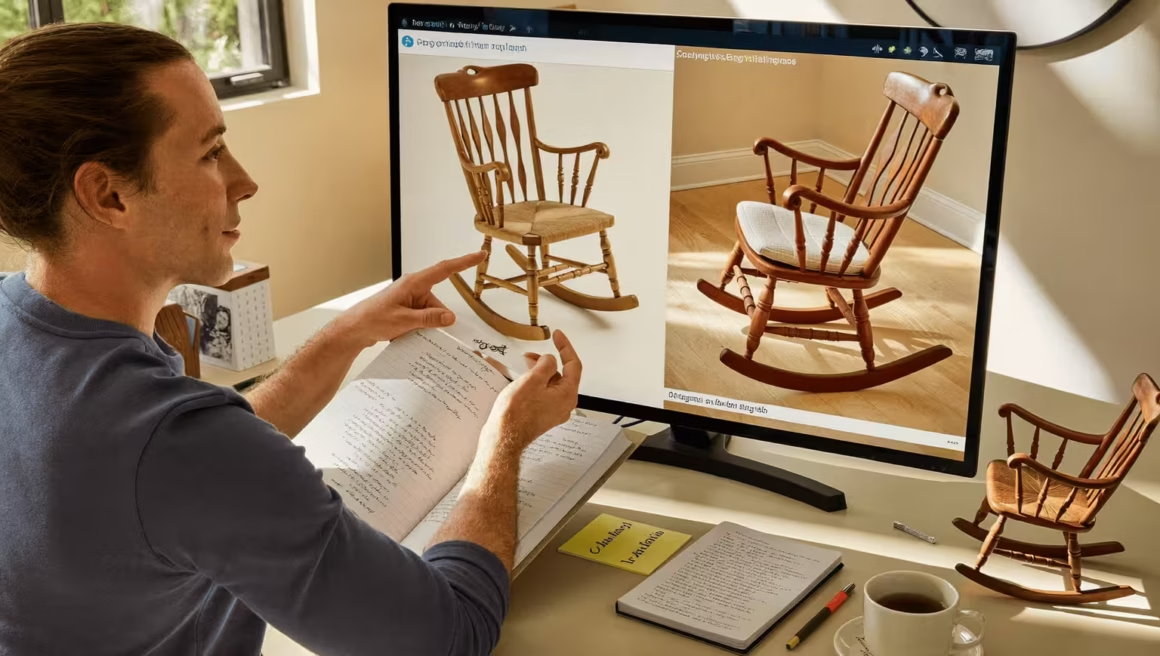
An AI Image Generator makes that process immediate: you describe something and see what your words produce. Higgsfield gives users room to experiment with different visual concepts, helping reveal the gap between what you intended to communicate and what your English actually conveys.
Why is describing harder than grammar?
Because grammar has rules you can learn and description has choices you have to make.
A tense is either correct or incorrect. You study the rule, you apply it, and a teacher can mark it. Thousands of learners reach a high level of grammatical accuracy this way.
Description has no equivalent. There is no rule that says your sentence about a room should contain four details rather than one. There is no correction for a description that is grammatically perfect and tells the listener nothing.
So learners stop improving at exactly the point where improvement matters most, which is being understood precisely rather than merely correctly.
This shows up everywhere. Explaining a problem to a colleague. Describing a fault to a customer. Answering an interview question about a project you worked on. Telling a doctor what hurts.
All of those require detail, and detail requires vocabulary you can reach for quickly.
Read Also : Best AI tools to learn English speaking
What does the feedback loop actually show you?
The difference between what you meant and what you said, which is normally invisible.
Write a prompt for an AI Image Generator describing a kitchen. If you wrote a kitchen with a table, you will get a kitchen with a table and almost nothing you were imagining.
The chairs will be wrong. The light will be wrong. The size of the room will be wrong. The window you pictured will not be there.
That is not the tool failing. That is an accurate rendering of the information you provided, and seeing it is considerably more instructive than being told your description was thin.
Then you add detail and run it again. A small kitchen with a wooden table, two chairs, morning light from a window on the left. The result moves closer, and you can see which word moved it.
That AI Image Generator loop runs in seconds and you can run it twenty times in an evening. No classroom exercise gives feedback at that rate.
Does this teach adjective order?
Directly, and adjective order is one of the hardest things in English for learners whose first language orders them differently.
English has a fixed sequence that native speakers follow without knowing it exists. Opinion comes first, then size, then age, then shape, then colour, then origin, then material, then purpose.
A lovely small old round brown Indian wooden serving bowl.
Reverse any two of those and it sounds wrong to a native speaker even though every word is correct. Most learners are never taught this explicitly and acquire it slowly through exposure.
Writing AI Image Generator prompts forces practice because prompts are almost entirely adjectives and nouns. You stack descriptors constantly, and doing it in the wrong order produces results that drift in ways you can see.
Write the same prompt twice with the adjectives reordered. Compare. That is a five-minute exercise that teaches a rule most learners carry incorrectly for years.
What happens with prepositions of place?
They become immediately testable, which is unusual. On, in, under, beside, behind, in front of, above, over, across from, next to. Learners confuse these constantly and the errors are hard to self-correct because a listener usually works out what you meant.
An AI Image Generator does not work out what you meant. Write a book on the table and you get a book on the table. Write a book under the table and the book is under the table.
Describe a scene with four objects in specific positions relative to each other, then check whether the result matches what you pictured. Where it does not, your preposition was wrong or your description was ambiguous.
That exercise is particularly useful for anybody who has to give directions, describe a workplace layout, or explain where something is located over the phone, which covers a great deal of professional English.
Run the AI Image Generator with a partner for a better version. One person writes the prompt from a photograph, the other sees only the result, and you compare.
Does this work for learners whose first language orders words differently?
Particularly well, and that group is most of the people reading this.
Many South Asian languages place modifiers in a different sequence from English and mark relationships between objects differently. A learner who has internalised one system is applying it underneath the English, usually without noticing.
That interference is extremely hard to self-correct, because the sentence sounds right to the person who produced it. A teacher can mark it, and teachers are not available at eleven at night when you are practising.
An AI Image Generator gives you a second opinion that has no patience for ambiguity and no ability to guess what you meant. Where the result drifts, your word order or your preposition was doing something you did not intend.
It is also worth describing the same scene in your own first language first, then in English, and noticing where the structures diverge. That comparison makes the interference visible rather than invisible, which is the first step to fixing it.
Higgsfield running an AI Image Generator in a browser matters here specifically, because this kind of practice happens in short bursts on whatever device is to hand rather than in a planned study session.
One caution. The tool is trained mostly on English and handles it best. Practising in English is the point, so resist writing the prompt in your first language and translating it.
How does it affect vocabulary?
By showing you which words you were missing rather than which words you got wrong.
Most vocabulary study works forwards. You learn a word, you try to use it. The problem is that you cannot study a word you do not know you need.
Describing something exposes the gap the other way round. You want to convey a specific thing, you reach for a word, and there is nothing there. You write something approximate, the result is approximate, and now you know precisely which concept you lack a word for.
That gap is the most valuable thing in the whole exercise. Look it up at that moment and the word will stick, because you wanted it before you learned it.
Texture, material and light vocabulary come up constantly and are weak areas for most learners. Rough, smooth, polished, worn, chipped, faded, glossy, matte, woven, carved.
Keep a list of the words you reached for and did not have. That list is a better vocabulary syllabus than any book, because it is yours.
Is prompt English the same as normal English?
No, and this is the most important limitation in the article. Prompts are fragments. They are lists of noun phrases and modifiers with no verbs, no articles in many cases, and no sentence structure. A prompt is not a sentence and writing prompts does not practise sentences.
That matters because fluent English requires the structure that prompts omit. Somebody who practises only prompt writing gets better at stacking adjectives and no better at speaking.
The fix is simple and it doubles the value of the exercise. After each prompt, write the same description as a proper sentence or two.
Prompt: small kitchen, wooden table, two chairs, morning light from left window.
Sentence: It is a small kitchen with a wooden table and two chairs, and morning light comes in through a window on the left.
Doing both means you practise the precision and the structure. Doing only the first means you practise half of it.
What exercises work best?
Four, roughly in order of difficulty. Describe a photograph you already have, then compare the AI Image Generator result against the original. The differences show exactly what your description left out.
Describe a place you know well from memory, which is harder because nothing is in front of you and you must retrieve the vocabulary.
Write an AI Image Generator prompt, then rewrite it three times, changing one element each time. Only the adjective order. Only the prepositions. Only the lighting. Comparing the results isolates what each change actually does.
And describe something abstract in the AI Image Generator, which is the most advanced version. A feeling, an atmosphere, a time of day. That forces metaphorical and sensory language, which is where intermediate learners most need work.
Higgsfield runs an AI Image Generator in the browser as part of an AI creative suite, with a free tier, which matters for a student practising on a shared computer or a phone.
Write the prompt before you open anything, so you are composing rather than editing.
Can this help with interview preparation?
Indirectly and genuinely, which is worth explaining because the connection is not obvious.
Interview answers fail on vagueness more than on grammar. Asked to describe a project, many candidates produce something accurate and empty. A system was built. It was for the company. It went well.
The skill that fixes that is the same skill this exercise builds, which is reaching for specific detail quickly under pressure.
It will not teach you interview structure or professional register. Those need their own practice.
What it does build is the habit of noticing when your own description is thin, which is the thing most candidates never develop because nobody tells them.
Practise describing your own work the way you would describe a photograph. What exactly was it. What did it look like. What was difficult. Specific nouns, specific numbers where you have them, specific outcomes.
What are the limits?
Several, and being honest about them keeps the exercise in proportion.
An AI Image Generator does not practise speaking, which for most learners is the actual goal. This is written practice that supports speaking indirectly.
It does not practise listening at all. It does not teach formal or professional register, since prompt language is informal and fragmentary.
It rewards visual description specifically, which is only one kind of description. Explaining a process, an argument or a feeling uses different language.
And it should never be used to produce work you were supposed to write or draw yourself. Academic honesty rules apply, and using a tool to complete an assignment that was meant to assess you is a different matter entirely.
Treat it as one exercise among several rather than as a method.
How would a week of practice look?
Fifteen minutes a day, which is enough for this to work. Pick one photograph each day and describe it in a prompt before opening Higgsfield. Generate in the AI Image Generator, compare, and note what your description missed.
Write the same description as two proper sentences. Write down any word you reached for and could not find.
On one day of the week, do the reordering exercise with adjectives in Higgsfield. On another, do the preposition exercise with a partner if you have one.
At the end of the week, close Higgsfield and look at your list of missing words. That is your vocabulary for next week, and it is a list nobody else could have written for you.
FAQ’s
Does this replace normal English practice?
No. Prompts are fragments without sentence structure, so this practises precision rather than fluency. Always rewrite each prompt as a full sentence.
What does it teach best?
Adjective order, prepositions of place, and the specific vocabulary you discover you are missing while trying to describe something.
Is an intermediate level high enough?
If you can form sentences and hold a basic conversation, yes. This suits learners who have grammar and lack precision, which is most intermediate learners.
Can an AI Image Generator correct a learner’s English?
Not directly. It shows you the result of your description, and the mismatch is the correction.
Can this be used for school work?
Not for anything you were asked to produce yourself. Use it for practice, not for assignments.
Is there a free way to start?
Higgsfield has a free tier, which covers a week of daily practice without any cost.
Conclusion
The reason description is hard to improve is that nobody corrects a sentence that is accurate and empty. A teacher marks mistakes, and vagueness is not a mistake.
An AI Image Generator corrects it constantly and without judgement, by showing you precisely what your words conveyed. Higgsfield runs it in a browser, which is all a student needs.
Write the prompt. Look at what came back. Then write the same thing as a sentence, properly, because that is the part you will actually say out loud.