Have you ever frozen up when someone asked you a question in English?
You know the answer. You understand the words. But when it is your turn to speak, your mind suddenly goes blank. This happens to thousands of Indian students, freshers, job seekers, and working professionals every day.
The good news is that you do not need an expensive course or a speaking partner to improve your English. You can practice spoken English at home and still become a confident speaker.
Many people believe they need a friend, teacher, or language partner to learn to speak. That is not true. With the right methods, you can train your brain to think and speak in English even when you are alone.
In this article, you will learn simple daily techniques, step-by-step methods, common mistakes to avoid, useful tools, and real-life examples that will help you improve your spoken English from the comfort of your home.
Just 20 to 30 minutes of daily practice can completely change your confidence in English.
What is Practicing Spoken English Alone at Home?
Practicing spoken English alone at home means improving your speaking skills without depending on a teacher, friend, or conversation partner.
You create situations where you speak English by yourself every day. This can include talking to yourself, reading aloud, recording your voice, describing objects around you, or practicing interview answers.
For example, imagine you are preparing for a TCS interview. Instead of waiting for someone to practice with, you stand in front of a mirror and answer common interview questions in English.
💬 Example:
“Good morning. My name is Rahul Sharma. I completed my B.Com from Allahabad University and I am interested in customer service roles.”
This simple practice helps you build confidence, improve pronunciation, and develop fluency over time.
Why Practicing Spoken English Alone at Home Matters for Indian Students and Professionals
Many Indian learners understand English but struggle to speak it confidently. Here is why solo practice is important:
- It builds confidence naturally. The more you speak, the less fear you feel. Daily practice helps your brain become comfortable with English conversations.
- It prepares you for interviews and exams. Whether you are preparing for CAT, UPSC interviews, Bank PO interviews, or BPO jobs, speaking confidence can make a huge difference.
- It improves fluency faster. Regular speaking practice helps your brain think in English instead of translating from Hindi or another language.
- It costs nothing. You do not need expensive coaching classes. Your smartphone and a few minutes every day are enough.
💬 Example:
“I practice English for 20 minutes every day before breakfast.”
Simple sentences like this build fluency over time.
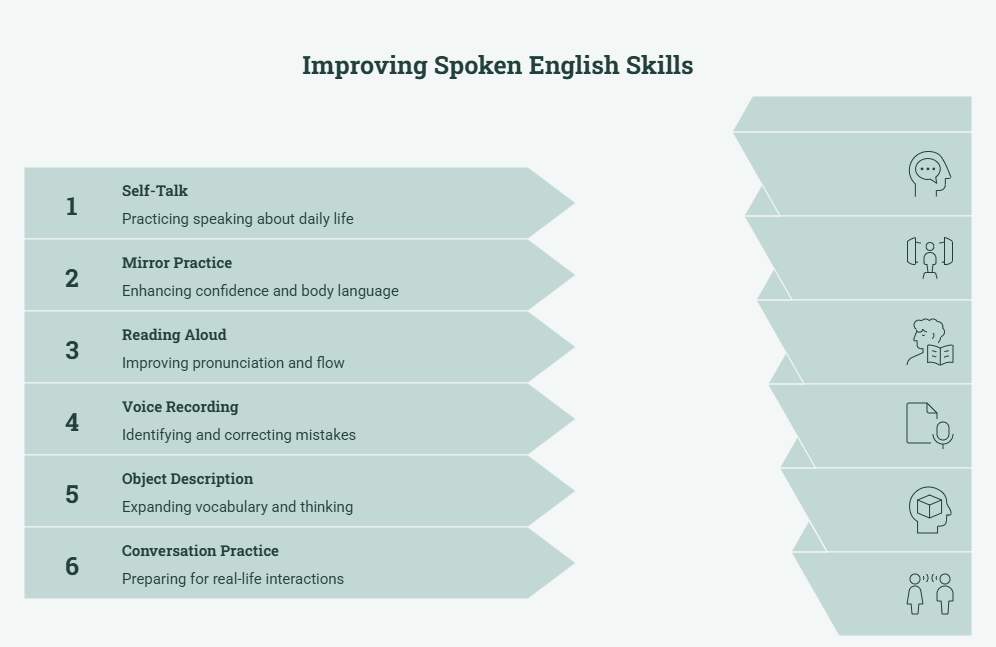
How to Practice Spoken English Alone at Home Every Day — Step by Step
Step 1: Talk to Yourself in English
The easiest way to start is by talking to yourself.
Many learners feel strange doing this at first. But it is one of the most effective methods. Speak about your day, your plans, your work, or anything happening around you.
When you wake up, describe your morning routine in English.
💬 Example:
“I woke up at 6 AM. Now I am making tea. After breakfast, I will study for my Bank PO exam.”
The goal is not perfection. The goal is speaking.
Action Tip: Spend 5 minutes every morning talking to yourself in English.
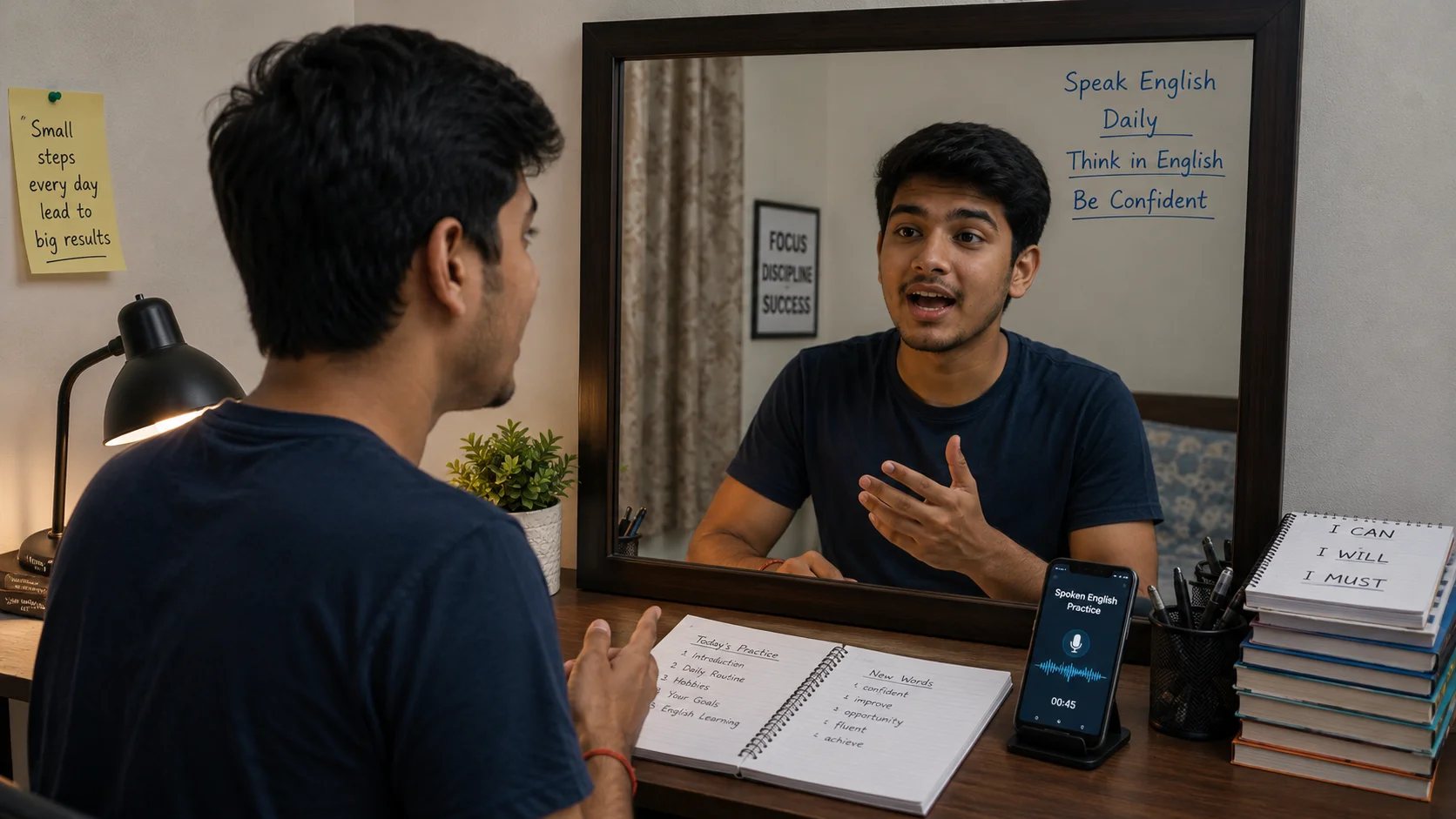
Step 2: Practice in Front of a Mirror
Mirror practice helps improve confidence and body language.
Many people feel nervous because they are not used to seeing themselves speak English. A mirror helps you become comfortable with eye contact and facial expressions.
Pretend you are speaking to an interviewer or a customer.
💬 Example:
“Good afternoon, sir. Thank you for giving me this opportunity.”
Watch your posture and smile while speaking.
Action Tip: Practice one topic for 10 minutes in front of a mirror daily.
Step 3: Read English Aloud Every Day
Reading silently improves understanding.
Reading aloud improves speaking.
Choose a newspaper article, blog post, story, or English lesson. Read slowly and clearly.
Focus on pronunciation and sentence flow.
💬 Example:
“India’s digital economy is growing rapidly and creating new job opportunities.”
Reading aloud trains your mouth to produce English sounds naturally.
Action Tip: Read one English article aloud every day for 10 minutes.
Read also : How to Improve English Pronunciation Fast
Step 4: Record Your Voice
Most learners never hear themselves speak.
Voice recording helps you identify mistakes in pronunciation, grammar, and fluency.
Record yourself speaking about a topic for one minute.
Listen carefully afterward.
Ask yourself:
- Did I pause too much?
- Did I repeat words?
- Did I speak clearly?
💬 Example:
“Today I want to talk about my favorite subject, which is mathematics.”
The more recordings you make, the more improvement you will notice.
Action Tip: Save your recordings weekly and compare your progress.
Step 5: Describe Everything Around You
Turn your home into an English classroom.
Look at objects around you and describe them.
Talk about colors, sizes, functions, and locations.
💬 Example:
“This is my laptop. It is black. I use it for online classes and job applications.”
This exercise improves vocabulary and thinking in English.
Action Tip: Describe five objects daily for at least five minutes.
Step 6: Practice Common Conversations
Prepare for real-life situations.
Think about situations you face regularly and practice them alone.
These could include:
- Job interviews
- Ordering food
- Customer service calls
- Office meetings
- College presentations
💬 Example:
“Hello, I would like to order one vegetable sandwich and a cup of coffee.”
Practicing real conversations makes actual interactions easier.
Action Tip: Practice one real-life conversation every day.
See Also: Daily English Speaking Sentences for Beginners
Step 7: Think in English
Many learners first think in Hindi and then translate into English.
This process slows down speaking.
Instead, try thinking directly in English.
When walking, cooking, shopping, or studying, describe your actions mentally.
💬 Example:
“I need to buy vegetables from the market today.”
Thinking in English reduces hesitation during conversations.
Action Tip: Spend at least 10 minutes daily thinking only in English.
Step 8: Follow a Daily Speaking Routine
Consistency beats talent.
A simple 30-minute routine can transform your English within months.
Suggested Routine:
- 5 minutes self-talk
- 10 minutes reading aloud
- 5 minutes object description
- 5 minutes mirror practice
- 5 minutes voice recording
💬 Example:
“Today I learned five new English words and practiced them in sentences.”
Small daily efforts create big results.
Action Tip: Follow the same routine for 30 days without skipping.
Common Mistakes to Avoid
Mistake 1: Waiting Until Your English Is Perfect
❌ Wrong: “I will start speaking after learning all grammar.”
✅ Right: “I will start speaking and improve grammar gradually.”
Speaking improves through practice, not waiting.
Mistake 2: Translating Every Sentence
❌ Wrong: Thinking in Hindi first.
✅ Right: Thinking directly in English.
Translation creates delays and reduces fluency.
Mistake 3: Fearing Mistakes
❌ Wrong: “People will laugh at me.”
✅ Right: “Mistakes help me learn.”
Every fluent speaker once made mistakes.
Mistake 4: Practicing Only Grammar
❌ Wrong: Studying grammar books all day.
✅ Right: Speaking daily while learning grammar.
Grammar knowledge alone cannot make you fluent.
Mistake 5: Being Inconsistent
❌ Wrong: Practicing once a week.
✅ Right: Practicing every day.
Daily exposure creates faster improvement.
Spoken English Practice Pro Tips
- Always speak out loud instead of practicing silently. Your speaking muscles need training.
- Never compare yourself with fluent speakers. Compare yourself with your previous version.
- Try learning useful phrases instead of memorizing difficult vocabulary lists.
- Remember that confidence grows through action. Speak first and improve later.
- The secret is consistency. Twenty minutes every day is better than three hours once a week.
Real-Life Examples and Sample Scripts
Example 1: Self-Introduction for Interview
Interviewer: Tell me about yourself.
You: Good morning, sir. My name is Amit Kumar. I am from Prayagraj. I completed my graduation in commerce. I am hardworking, eager to learn, and interested in customer service roles.
Best Tools and Resources to Help You Practice
1. Duolingo
A beginner-friendly app that helps you build vocabulary and speaking habits.
2. ELSA Speak
Excellent for improving pronunciation and spoken English accuracy.
3. YouTube
Watch English interviews, speeches, and daily conversation videos.
4. Voice Recorder App
Use your phone’s recorder to track speaking progress.
5. English Newspapers
Read articles aloud daily to improve fluency.
Best English Learning Apps for Beginners
How to Speak English Fluently Without a Partner
Frequently Asked Questions
Q1: How can I practice spoken English alone at home?
You can talk to yourself, read aloud, record your voice, practice in front of a mirror, and describe daily activities in English. Consistent practice for 20–30 minutes daily can improve fluency significantly.
Q2: Can I become fluent without a speaking partner?
Yes. Many learners improve through self-practice. The key is speaking regularly, listening to English content, and creating real-life speaking situations at home.
Q3: How many minutes should I practice English every day?
Beginners should aim for at least 20 to 30 minutes daily. Consistency matters more than long study sessions.
Q4: Is mirror practice effective for spoken English?
Yes. Mirror practice improves confidence, pronunciation, facial expressions, and communication skills. It also reduces speaking anxiety.
Q5: Why do I understand English but cannot speak it?
This usually happens because you spend more time reading and listening than speaking. Regular speaking practice trains your brain to produce English naturally and confidently.
Conclusion
Now you know exactly how to practice spoken English at home and improve your speaking skills every day.
The three most important things to remember are simple: speak daily, think in English, and follow a consistent practice routine. These habits will gradually increase your confidence, fluency, and communication skills.
Remember — your English does not have to be perfect. It just has to be clear and confident.
Every fluent English speaker started as a beginner. If they can do it, you can too.
Explore more English tips on spokenenglishtips.com and take your communication skills to the next level.