

Have you ever felt nervous while speaking English? Maybe you understand English when watching videos or reading articles, but when it is time to speak, the words simply do not come out. If this sounds familiar, you are not alone.
Millions of people dream of speaking English fluently. They believe they need expensive courses, private tutors, or years of classroom learning. The truth is much simpler. You can improve your English speaking skills from the comfort of your home without spending any money.
The biggest challenge is not learning English. The real challenge is practicing it consistently. Many learners wait for the perfect opportunity to speak, but fluency comes from daily practice, even if you make mistakes. Every confident English speaker was once a beginner who struggled with pronunciation, vocabulary, and confidence.
The good news is that modern technology has made learning easier than ever. Free YouTube channels, mobile apps, podcasts, and online resources can help you practice every day. With the right plan and a little dedication, you can build confidence and speak English more naturally.
In this guide, you will discover a simple 30-day plan, free learning resources, daily practice activities, and proven methods that can help you speak English fluently at home without spending a single rupee.
What Does It Mean to Speak English Fluently?
Speaking English fluently does not mean speaking like a native speaker. It simply means expressing your thoughts clearly and confidently without stopping too often to think about every word.
Fluency comes from regular practice. The more you listen, speak, read, and think in English, the easier it becomes. You do not need a perfect grammar score or a huge vocabulary to communicate effectively.
A fluent speaker can:
- Express ideas clearly
- Understand everyday conversations
- Respond naturally
- Speak with confidence
- Continue a conversation without fear
Remember, progress is more important than perfection. Focus on communicating your message rather than worrying about small mistakes.
Step-by-Step Guide to Start Speaking English at Home
Follow these simple steps every day:
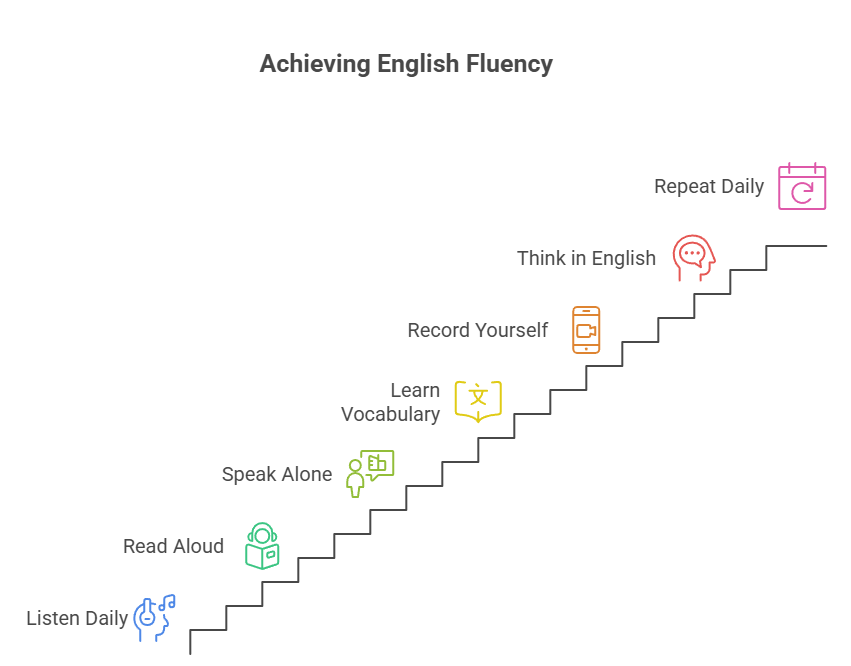
Step 1: Listen to English Daily
Spend at least 15–20 minutes listening to English videos, podcasts, or conversations. This helps your brain become familiar with pronunciation and sentence patterns.
Step 2: Read Out Loud
Choose a short article, story, or news report. Read it aloud for 10 minutes. This improves pronunciation and confidence.
Step 3: Practice Speaking Alone
Stand in front of a mirror and talk about your day, hobbies, or goals for 5–10 minutes.
Step 4: Learn New Vocabulary
Learn five new words daily and create your own sentences using them.
Step 5: Record Yourself
Use your phone to record your voice. Listen carefully and identify areas for improvement.
Step 6: Think in English
Try describing your surroundings, plans, or activities in English inside your mind.
Step 7: Repeat Daily
Consistency is the secret. Even 30 minutes of daily practice can create significant improvement over time.
The 30-Day English Fluency Method Template
Use this simple template every day. Copy and follow it whenever you practice English.
Daily English Speaking Template
Day Number: [DAY]
Today’s Topic: [SUBJECT]
Examples:
- My Family
- My Job
- My Favorite Movie
- My City
- My Daily Routine
- My Future Goals
Listening Practice (10 Minutes)
Watch a video from:
- BBC Learning English
- Speak English With Vanessa
- English Addict with Mr Duncan
- Learn English with TV Series
Write down:
- [NEW WORD 1]
- [NEW WORD 2]
- [NEW WORD 3]
- [NEW PHRASE]
Speaking Practice (10 Minutes)
Speak about:
“I want to talk about [SUBJECT].”
Answer these questions:
- What is it?
- Why is it important?
- How does it affect your life?
- What do you like about it?
- What would you improve?
Vocabulary Practice (5 Minutes)
Word 1: [WORD]
Sentence: [YOUR SENTENCE]
Word 2: [WORD]
Sentence: [YOUR SENTENCE]
Word 3: [WORD]
Sentence: [YOUR SENTENCE]
Mirror Speaking Practice (5 Minutes)
Stand in front of a mirror and explain:
“[SUBJECT] is important because…”
Continue speaking without stopping for at least one minute.
Self-Evaluation
Rate yourself:
- Confidence: [1-10]
- Pronunciation: [1-10]
- Vocabulary: [1-10]
- Fluency: [1-10]
Weekly Challenge
At the end of every week:
- Record a 3-minute speech
- Listen to it carefully
- Note improvements
- Identify mistakes
- Repeat the same topic after one week
This simple routine can be used for all 30 days and helps create a strong speaking habit.
Suggested Read:
- Use of “I’m Able to + Verb” in English Speaking | Easy Daily Use Guide
- Use of “I’m Supposed to + Verb” in English Speaking (Easy Guide)
- Use of “I’m Expected to + Verb” in English Speaking (Easy Guide with Examples)
- Use of “I’m Responsible for” + Noun / Verb-ing in English Speaking
- Use of “It’s Possible to + Verb” in English Speaking | Easy Rules and Examples
Why This Method Works
1. Daily Exposure Builds Familiarity
Your brain learns language through repetition. Listening and speaking every day helps English feel natural.
2. Speaking Creates Confidence
Many learners spend months studying grammar but rarely speak. Daily speaking practice removes fear and builds confidence.
3. Small Goals Prevent Overwhelm
Learning five words and speaking for a few minutes daily feels manageable. Small actions repeated consistently create big results.
4. Self-Feedback Accelerates Growth
Recording yourself allows you to notice pronunciation mistakes and speaking habits. This helps you improve faster than passive learning.
3 Practical Examples
Example 1: Talking About Your Daily Routine
Topic: My Daily Routine
“I wake up at 6 o’clock every morning. After brushing my teeth, I go for a short walk. Then I eat breakfast and start my work. In the evening, I spend time with my family and read books. Before sleeping, I practice English for thirty minutes.”
This topic helps beginners practice present simple tense and everyday vocabulary.
Example 2: Talking About Your Favorite Movie
Topic: My Favorite Movie
“My favorite movie is 3 Idiots. I like this movie because it teaches important life lessons. The story is interesting and inspiring. The actors performed very well. I have watched this movie many times and still enjoy it.”
This practice improves descriptive language and opinion sharing.
Example 3: Talking About Your Future Goals
Topic: My Future Goals
“In the future, I want to improve my English speaking skills and get a better job. I also want to travel to different countries and communicate confidently with people. To achieve my goals, I practice English every day and continue learning new skills.”
This example helps learners practice future tense and motivational speaking.
Tips for Better Results
Speak Every Day
Even five minutes of speaking is better than no practice at all.
Do Not Fear Mistakes
Mistakes are a normal part of learning. Every mistake teaches something valuable.
Shadow Native Speakers
Listen to short English clips and repeat exactly what you hear. This improves pronunciation and speaking rhythm.
Use Free YouTube Channels
Some excellent channels include:
- BBC Learning English
- Speak English With Vanessa
- Learn English with TV Series
- English Addict with Mr Duncan
- EnglishClass101
Join Free Online Communities
Participate in English-speaking groups on social media and language exchange platforms.
Think in English
Try describing everything around you in English throughout the day.
Stay Consistent
Consistency beats intensity. Thirty minutes every day is more effective than five hours once a week.
30-Day English Speaking Plan
Week 1: Build the Habit
Days 1–7
- Listen for 10 minutes daily
- Learn 5 new words daily
- Speak for 5 minutes daily
- Record yourself twice
Week 2: Improve Vocabulary
Days 8–14
- Learn 10 new words daily
- Watch English videos with subtitles
- Practice mirror speaking for 10 minutes
Week 3: Build Confidence
Days 15–21
- Speak on one topic for 3 minutes
- Record daily speeches
- Focus on pronunciation
Week 4: Improve Fluency
Days 22–30
- Speak for 5–10 minutes without stopping
- Use advanced vocabulary naturally
- Have conversations with language partners online
- Review all recordings and track progress
Conclusion
Speaking English fluently at home for free is completely possible when you follow a simple and consistent plan. You do not need expensive classes or special equipment. All you need is dedication, daily practice, and the willingness to speak even when you make mistakes.
Start with small steps. Listen, speak, read, and think in English every day. Follow the 30-day plan, use free learning resources, and track your progress regularly. With patience and consistency, you will notice a significant improvement in your confidence and communication skills.
Remember, fluency is not about being perfect. It is about expressing yourself clearly and confidently. Start today, and your future self will thank you.